Sunday, October 13, 2024
So You Think You Want to Be a Clinician/Presenter...
Tuesday, December 27, 2022
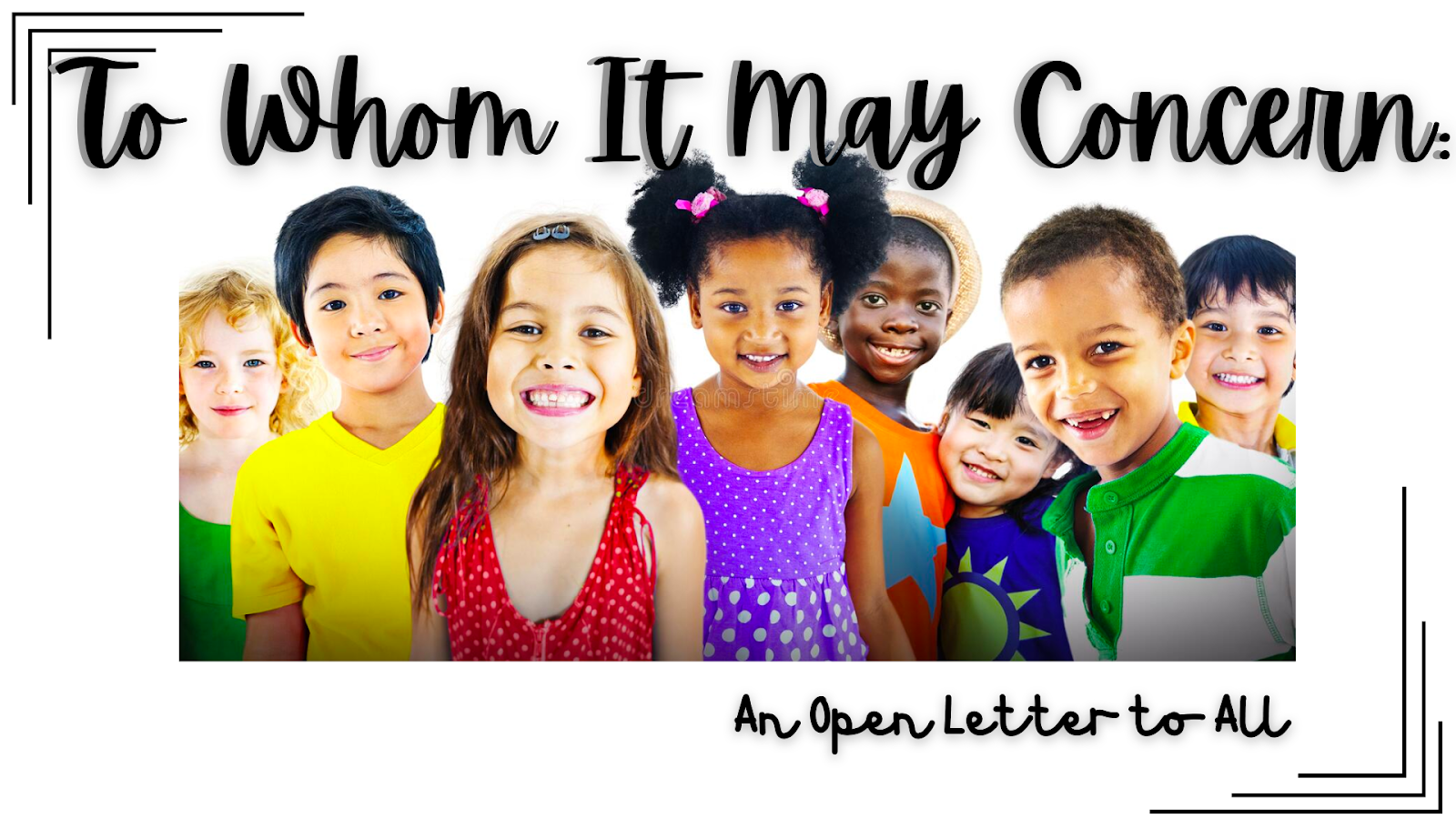
To Whom It May Concern: An Open Letter to All
The ending of a year is a contemplative time for me. Thinking about the past year leads to thoughts of what I want to change and improve upon in the coming year. This is a letter I have wanted to write for a while and one which I wish someone would have shared with my first year teacher self and continue to share with other music educators. I hope it encourages you.
To Whom It May Concern:
I don't teach music. I teach children music. There is a big difference in what and who is centered in those two sentences.
Teaching music begins not with the teaching of music concepts and skills, but with focusing on WHO we teach. Children first. That means that for most of us who teach elementary music, there is a steep learning curve in understanding the wide range of developmental ages and stages we teach. In a single classroom, we have at least five, and often MANY more various stages of typical childhood development. Add to that neurodivergence, medical and cognitive differences, social and emotional variances, and cultural and personality differences and there is much to be learned.
We have a responsibility as music teachers who teach a high quality music curriculum; a responsibility that allows all students to experience music from people around the world without bias. High quality music should not include music that is problematic, questionable, or racist. Do your research and don't rely on others to do it for you. Google is free and available for all. Music history, musicians, and music created by various identities, religions, and genders will be used in our classrooms. Identity formation is a critical aspect of social development in children as they develop sense of self, understanding, belonging, and acceptance. The idea that classroom curriculum should serve as "windows and mirrors" for children has been around for over 30 years - first coined by educator Emily Styles in 1988. Approaching children's music and music education through the lens of windows, mirrors, and sliding glass doors prioritizes diversity, honors cultural experiences, and promotes empathy and understanding. It also helps all children to feel included and a part OF, not apart from, as they see themselves in the music and musical experiences.
Our greatest responsibility is not in data collection, meetings, trainings, and PD's that are unnecessary, irrelevant, or do not promote the advancement of our craft and art. Our greatest responsibility is to help each child become the best version of themselves which means everything we do should be steeped in doing what is best for children, not adults. Children are at their best when they feel seen and loved. It isn't always easy to love and even like every child and the "prickly pears" and "frequent fliers" can be downright difficult. It isn't always easy to connect and be relational with every child. The reality is we sometimes struggle to find just one way to connect with a child. But to that child who finally feels seen it means the world. Find the one thing.
There are many outside forces demanding teachers time, talents, and energy. Music teachers don't stop being musicians or music teachers at 3:45 when they are "off the clock." Music teachers often teach private lessons or have secondary jobs directing ensembles or playing or singing in adult music ensembles. We often listen to music passively while wondering how to create a lesson to go with it. We have families and lives outside of school. Boundaries are necessary - hold to them and live your life. Stop comparing yourself to others and start advocating for yourself. Period. Do the next best thing for you.
Finally, be kind. To yourself, your fellow teachers, to your students, and to strangers. A kind word or gesture goes a long way in this filtered world where "likes" and "followers" dominate.
With much affection,
Monday, September 26, 2022
Repetition and PLAY in the Music Classroom
Hi friends,
Hope you are doing well.
Let's talk repetition in the music classroom today!
True, right? Why is that? When new things are introduced, there is often a sense of wonder as their brains make sense of the new information.
- Helps language development.
- Ensures emotional comfort (predictability).
- Assists in concept attainment as they learn something new each time.
- Feeling of mastery improves self-confidence.
- Improves children's abilities to plan and organize.
- Assists in children's emotional regulation and helps them get along with others.
- Helps with language, math and social skills.
- Helps children cope with stress.
Thursday, August 25, 2022
Words of Experience
Well, I had hoped to not get in the weeds of life and post almost every day since my last post but that didn't work out! 😂 Oh well.. best laid plans!
Here is the rest of the advice I had hoped to post - see previous post for the first two.
Friday, December 31, 2021
Behavior Reboot
Behavior. Say that word to any teacher this school year and you will get a multitude of responses and emotions including hands thrown up in the air, eye rolls, shaken heads, and sighs of frustration, disappointment, and discouragement.
How many of us are feeling the effects of Covid in our classrooms? Every. Single. One of us. And it isn't their fault - it seems we pressed the "pause" button on child development in March of 2020. You have probably seen the meme about the last time our fourth graders had a normal school year - they were in FIRST grade. Our second graders have NEVER had a normal school year. Once back from Remote Learning students came back into schools that tried to make them sit in desks, work in groups, walk in lines, be present, focused, on task, be around other children, with or without masks, and expect no differences. Our students have been impacted by all of this in ways we cannot possibly understand. We can understand what we understand, but we need to understand we will never truly understand. We are not children who have been through what our children have been through.
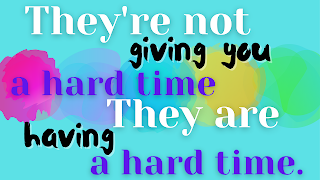
They are trying to tell us something. Maybe we need to
That means we have more opportunities to show consistent and positive kindness and love, to set consistent and positive boundaries, to figure out how to love on those "prickly" kids, and to help our students be their best selves.
It also means to expect the unexpected.
With the winter break it is now time for a Behavior Reboot in 2022.
With each class:
- Before the class even comes in - are YOU ready? Are your materials close at hand, do you have a backup plan in case the lesson goes sideways? Do you have some pocket songs or books nearby you can sing or read in case that is what the class needs?
- Are YOU centered and focused? I find that closing the door before the children come in the room and taking a 30 second inventory - closing my eyes, taking 3 deep breaths, setting an intention of positivity, care, and kindness, helps me enormously to feel grounded.
- Are YOU prepared to meet the children where they are? If they come in hyped up on sugar are you ready to do the Seven Jumps dance (my next post will be on how I use this dance - it's not the traditional one) or something else to get the wiggles out? This helps in leading them down the path to where we need for them to be. Doing so is purposeful yet playful, and encourages relational teaching and builds community.
Enforcing immediate compliance without time to transition into your class is similar to a prison guard trying to re-establish control during a prison riot and can lead to you and the students being at odds. - Set clear expectations and boundaries. Then set them again. And again. KEEP those lines drawn. What I say is what I mean and what I mean is what I say. The consequence may be different for different children and that is OK- fair and equal are not the same. Part of this is knowing your students and being relational. A child who is trying to get away with behavior is not the same as a child who is acting out of anger or frustration. A child with mental health challenges is not the same as a child who is sneaky and manipulative.
- What is your lesson flow or structure? Children, like adults, thrive with routine and structure. That doesn't mean there is rigidity and inflexibility. Here are some ideas for the first 5 minutes of class. Here are some ideas for the last 5 minutes of class or for when you need an additional quick activity.
- When difficult behaviors happen, don't get in a power struggle. Just don't. It doesn't work for you OR the child.
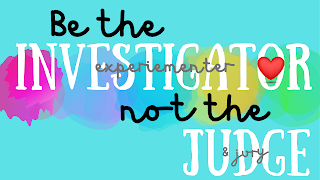
- Be the investigator - what does this student need? Do they need a chance to feel successful? Do they need to be a helper and turn lights on or off or get things for you in the classroom? Do they need a time out or a time in? Are they overstimulated - Do they need a quick trip to get a drink of water/go to the bathroom? Do they need a side hug or just to be told they are not in trouble or that you care about them?
- Remember we teach children. Say it with me. I teach children. I teach tiny humans. Then say, "I teach tiny humans music." When teachers say, "I teach music" it takes out the human element. We teach music to children, but we teach children first.
- If what you are doing isn't working, put on the investigator/experimenter hat and try something different. Talk to classroom teachers to find out what is working for the class or specific children and try, try again.
- Also, it's important to say we as teachers are going through a lot. A LOT. A LOT A LOT A LOT. Take your mental health as important as you would a serious physical illness. Take a walk, do yoga, get a massage, cry, play piano, sing, journal, see a counselor, talk to someone, ask for a hug. DO the things you need to and don't feel you have fall on your sword as a teacher - you matter, your life matters, your health matters. Teaching is not more important than you. Prioritize your health and well being.
Thursday, March 11, 2021
All Are Welcome - Or All Are Assimilated
Social Justice, Anti-Racist, Decolonization
Five words with power. Five words that confuse. Five words that need to be talked about right now.
Most of us are hearing words and having conversations about needing to do the hard work, but what does that mean? Reading books like Waking Up White, How to Be an Anti-Racist, White Awake, Blind Spot, and the plethora of books on the subjects of helping all of us to understand the struggle, biases, and injustices is only a START. Acknowledging white privilege, acknowledging bias, helping our littles to see color and to call out injustice is also a part.
Here is my latest read- I will need to go back and re-read. SO good.
Having hard conversations with friends, family, and yes, students also needs to happen. Yes, even in the music room.
Problematic Song Material
If you haven't been here before, or you have forgotten about some other posts on the subject - this post is about being sensitive (and inclusive, not exclusive or hurtful) with our song material. Songs are listed in alphabetical order and source information is included as is a short synopsis of why the material is problematic.
Why I No Longer Use Seuss in the Music Classroom
This post delves into the research study conducted in 2019 that researches the CONTENT of Dr. Seuss books and the stereotypes, anti-Semitic, disproportionally male characters, and other content issue within Dr. Seuss books.
Diverse and Inclusive Children's Literature
A few years ago I started taking a hard look at my curriculum, songs, and children's literature and went through ALL my song books and started making X's through songs and adding a note as to why a song was problematic. For future music teachers, I wanted there to be an immediate understanding (if they were not already aware) of why a particular song should not be used. I also wanted the reminder for myself. I also threw away books - yes, really. It was hard to do that, but I will never use, nor do I want anyone else to use those books that mock, harm, and perpetuate stereotypes. That is what is meant by disrupting the system. That is part of being ant-racist. The songs, stories, and books we use should be mirrors that reflect our students, windows into another's story or culture or way of being and doing, sliding glass doors to let students walk (or sing/dance/play) into another culture or way of being and doing, and sometimes we need to close the curtains.
I recently heard this quote and had to make it into a quick post for instagram.
If you haven't joined already, join the Diverse and Inclusive Children's Books for the Music Classroom page on facebook. There are wonderful books with lesson ideas posted.
Are we Welcoming or Assimilaiting?
We also need to talk about teaching - how we teach is MORE important than what we teach. Examining our bias, the words, gestures, speech, etc. in our teaching- especially with students that are having a hard time in school for whatever reason- trauma. learning differences, ability, developmental maturation, family changes, home life, equity, etc. It is a LOT. But the littles in our life are EVERYTHING. Remember teaching is a marathon, not a sprint or a 5K. Yes, we will make a plethora of mistakes. We are, after all, human.
I recently saw a conversation on facebook that was an "Ouch" moment. When we say, "All are welcome" do we really mean all and do we really mean welcome or do we mean ASSIMILATED?
Our school recently finished a 21-Week Racial Equity Challenge where we had small and large group conversations- REAL, hard, tough to hear conversations. It was amazing. We wondered what to do next. I am honored to serve on our YBG - You Belong Group - that focuses on issues of Social Justice and Equity. We are reading this book:
Each week we will look at a word and one person will share about the word. I chose the word, "Assimilation" after some heavy conversations with friends.Friday, October 30, 2020
Checking In, Checking Up
My daughter, Caiya, is about to turn 13. With that is all the expected eye rolling, sarcasm dripping from the tongue, and the need for independence. She is an awesome kid- funny, incredibly artistic, and still loves hugs and talks with Mom. She loves to be around us (yay) and is very sweet and tender-hearted, all of which I am incredibly grateful for. Here is some of her amazing art:
Sunday, August 4, 2019
Music Education - Blogs and Podcasts

As we set sail on a new school year, many of us are in our first or second week of school and many others are preparing classrooms for students to enter in the next couple of weeks. Still others are on their final countdown of summer with their last few weeks spent swimming and adventuring.
This summer has been very different than my typical summer - school ended and the next day we left for 2 weeks in Maine, home a week, then my daughter and I went to NYC for a week, home a week and a half then I left for Estonia and the International Music Village, which was ESTonishing (Soili Perkio's word), just got home Monday and I will be in school tomorrow to get my room ready! Not sure I like how little time I have had at home to do my usual re-organizing and relaxing. :)

The best teaching ideas are often borrowed and adapted from others. I have learned so much from watching, listening, and talking to other teachers. There are so many excellent podcasts and blogs with ideas, activities, philosophical discussions, and information that is interesting and helpful! Thankfully, some teacher friends have organized and collated these into single sites that help us navigate and find the ones of most use!
Podcasts
Evan Tobias recently published a HUGE list of podcasts both current and archived. It is well organized and categorized. He also provides a list of ways to listen to podcasts for newbies.

Blogs
Tuesday, May 29, 2018
The Top 5 Things I Would Tell My First Year Teacher Self
Teaching is a Marathon, Not a Sprint.
You don't have to do it all in one year, or in the first three, or first five years. For most of us, we don't really "figure out" teaching; content, classroom management, protocols of school, student development, how to deal with those "frequent fliers", political/social/emotional context of school, etc. until about year four or five!Create/make/enjoy five lessons and activities that worked well the first year, add five more the next year. Within four years you will have TWENTY slam dunk lessons and activities. But don't stop changing them - never feel like you are "done" with lessons - always change them to meet the students needs and whatever direction they choose or need to take them.
Get into Orff!
Find a local chapter and get involved in workshops and in the organization. It will change your teaching and the students learning in a beautiful, musical, artful, creative, and wonder-filled way! I didn't really know about Orff until year 6 of teaching! Oh how I wish I had known about it earlier and gotten Levels courses earlier! Open yourself to all the experiences - your teaching and your students will be drastically changed - for good!Be Kind, Then Be Kinder.
Be kind to those teachers who call you "green", or treat you as inferior simply because you are new. You have value, ideas, and strengths to contribute. Be kind to those who come over to slam your door or complain because they placed you next to the reading teacher and she can hear your music. Be kind to the front office staff, the school secretary, cafeteria workers, bus drivers, and the janitors.Their jobs are hard and full of juggling and discouragement. Be kind and then be kinder to students - they are little and someone loves them- yes, even the ones who frustrate and annoy you to beyond the world's end - they are someone's sweetheart, and sadly, if they are not, YOU need to find a way to love on them.Love the Cactus Kids.
Prickly, sticky, mean, grumpy, dirty, matted, annoying, frustrating. Describe any of your students? These are the kids who need you the most- not the perfect singer or dancer, not the kid who can rap like crazy and throw down "beats". The ones who you know are not getting enough - food, shelter, hugs, warmth, affection, and yes, love. What the world needs now is love, sweet love - it's not just a song- it is the sad reason many school shootings have happened. Find a way to make the outcast become part of, not apart from. Love the unlovable and lead by example. You never know what seeds you are planting. A little kindness goes a long way.It's OK, Just Breathe.
Your first year will be stressful - reach out to others for help and advice. There will be very busy times and not so busy times - breathe and ask questions. There is a wonderful network of teachers who are wanting and waiting for you to ask questions. I started teaching pre-internet (dinosaur era) and now teachers have access to thousands of years of experience via facebook and online groups for music teachers. I wish I had spent more time asking what I felt were "stupid questions". Suck up your pride and ask. Stay balanced with a healthy amount of school time and maintain your other "you" - continue to read historical fiction, make jewelry, go antiquing, take walks, perform, etc. Your identity as "music teacher" is not your only identity.