Crystal Briley is a wonderful friend who also happens to be a gifted music teacher. Today she shares a lesson for upper elementary to go with the book, Esperanza Rising by Pam Munoz Ryan.
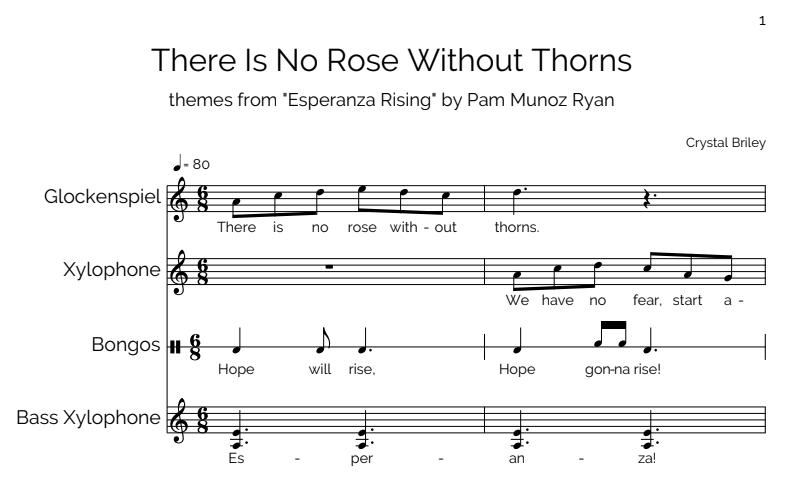
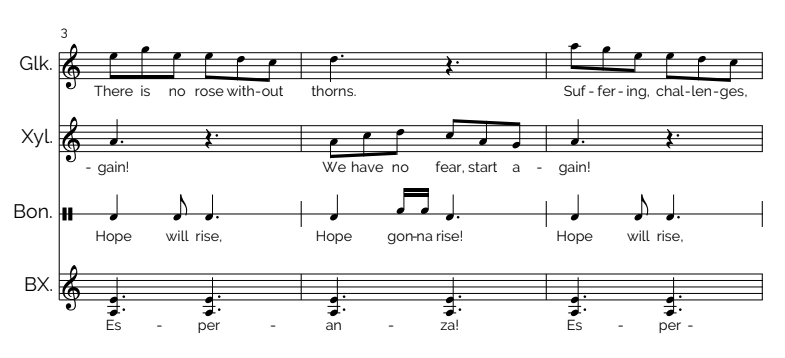
At my school in Charlotte, NC we value the motto “arts+academics=success.” We are firm believers that the arts enhance and can totally integrate with the core content. The main theme of the book is that “there is no rose without thorns.” Over the course of the 9 weeks of study, students used that theme to build upon the following arrangement I wrote with the same title.
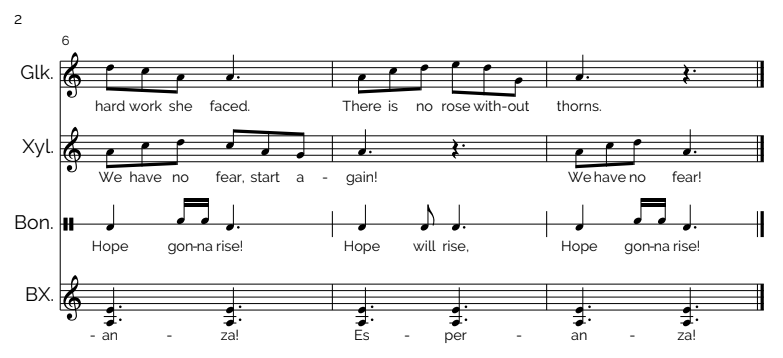
Because this piece is in 6/8 meter, I began with movement so that the students would be familiar with the pulse. Several ideas of movement that we explored were:
Mark time on the spot
Walking in place
Walking in place with clapping
Walking in place with a hand drum
Travel around the room
Flowing movement with the teacher playing recorder / melody
Rhythmic echo play
Clapping freer rhythms
Gunild Keetman has many ideas for movement exploration in her book, “Elementaria.” We tried various exercises from her book to help make the 6/8 meter feel successful.
Upon success with the meter, I moved to the melody of the piece for the students. We explored singing various patterns of solfege to get their ear in the la pentatonic scale. Eventually, we landed on the solfege patterns of the melody itself. Finally, we began exploring those patterns on the glockenspiel and other barred instruments. I believe this melody would work well on recorder if your students are more proficient and need a challenge. The only caveat would be needing to play a few of the notes up or down the octave because of the soprano recorder range.
With the additional parts in the arrangements, students created body percussion patterns to help them learn the rhythm patterns. Here are some example ideas:
Bass Xylo part-- “Es- per- an- za!” (Stomp L, R, L, R)
Bongos-- “Hope will rise! Hope gonna rise!” (pat clap clap, pat clap clap snap)
SX / AX-- “We have no fear start again.” (pat pat pat pat, clap clap snap)
After figuring out the ostinatii of these patterns, we put them on the barred instruments and unpitched percussion by rote.
To tie in the literacy standards and writing from their core content, it was important to explore the content of the book itself. Over the course of several weeks, we went through these steps to integrate the main idea and themes of the book in my classroom.
Review the main theme of the book: “There is no rose without thorns.”
Ask them to list the thorns (challenges) in Esperanza's (main character) life.
Students should find at least three to four challenges that Esperanza must face and explain how she meets these challenges.
Finally, they should explain how meeting these challenges changes Esperanza for the better.
Have students write about the challenges they face in their own lives and how they meet these challenges. Guiding questions I used with students:
What are the challenges we face in society?
What is something that challenges you at home?
What is a challenge you face at school?
What can you say to someone who is facing a challenge?
How are you meeting these challenges on a daily basis?
Have students create giant roses.
Using construction paper, cut out large red petals. Template HERE.
On each petal, have the students write down a challenge they wrote down previously.
Create three to four petals, then glue them into the shape of a rose. We spent more time on these and ended up with seven layers of petals.

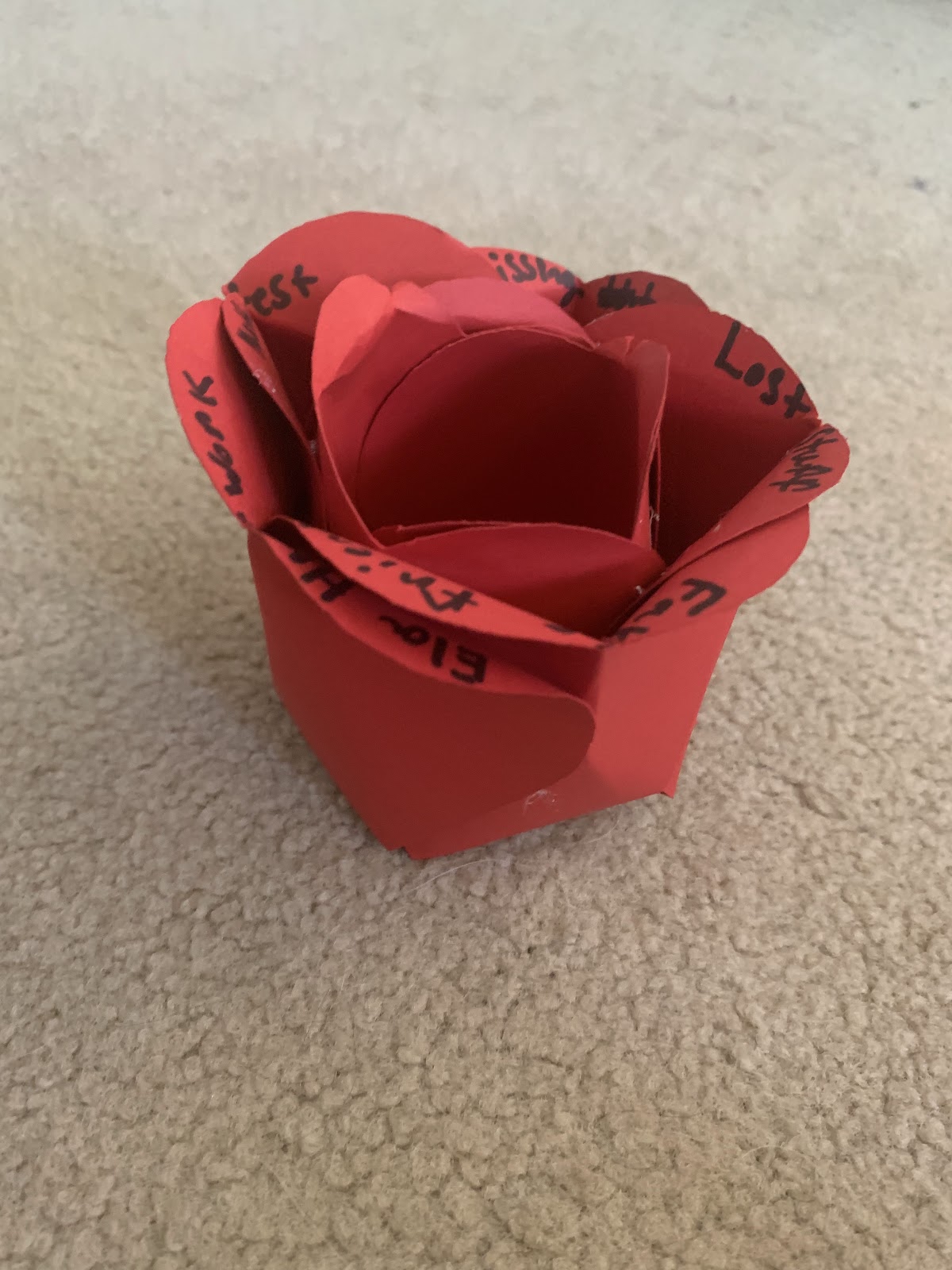
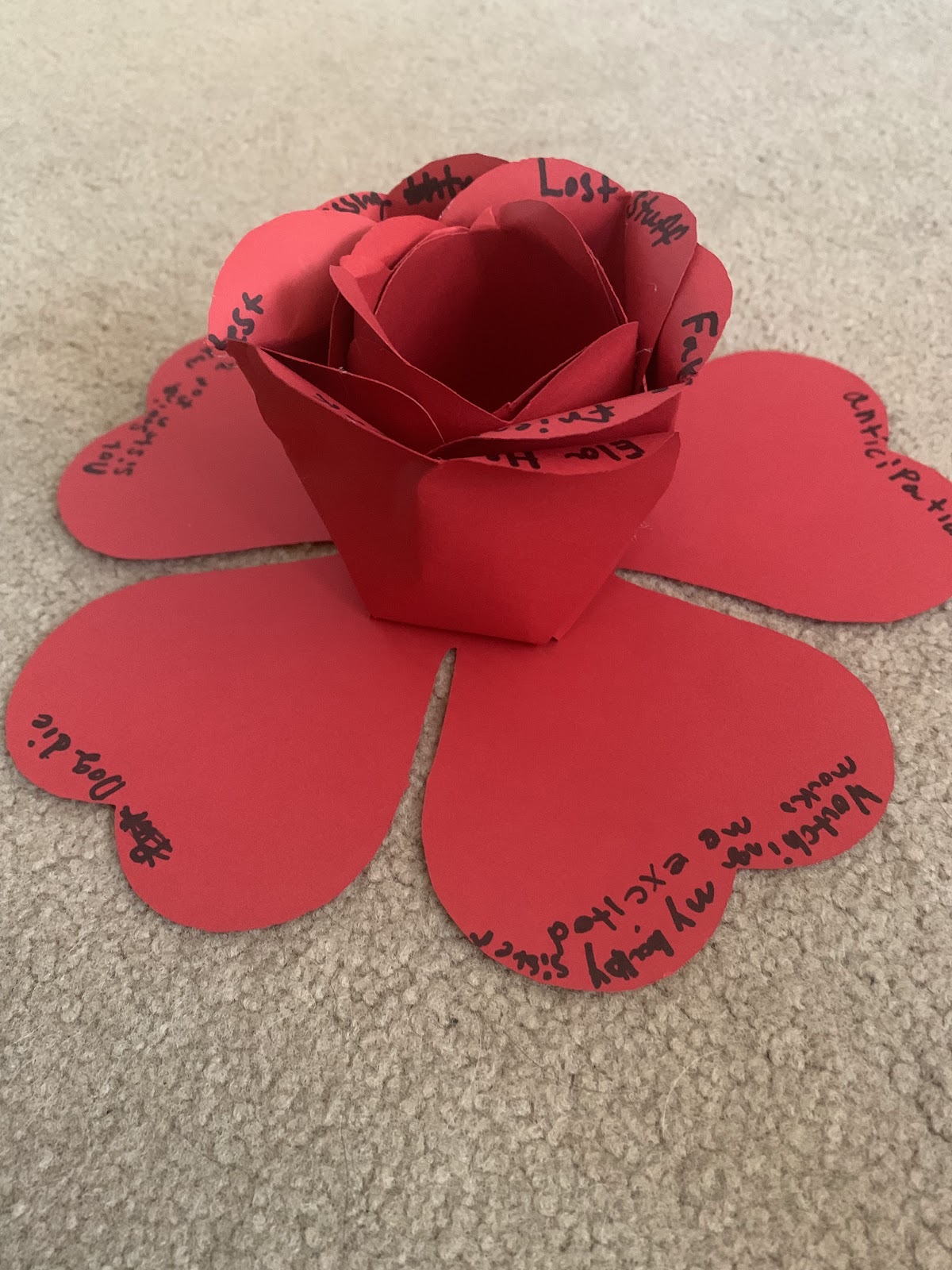
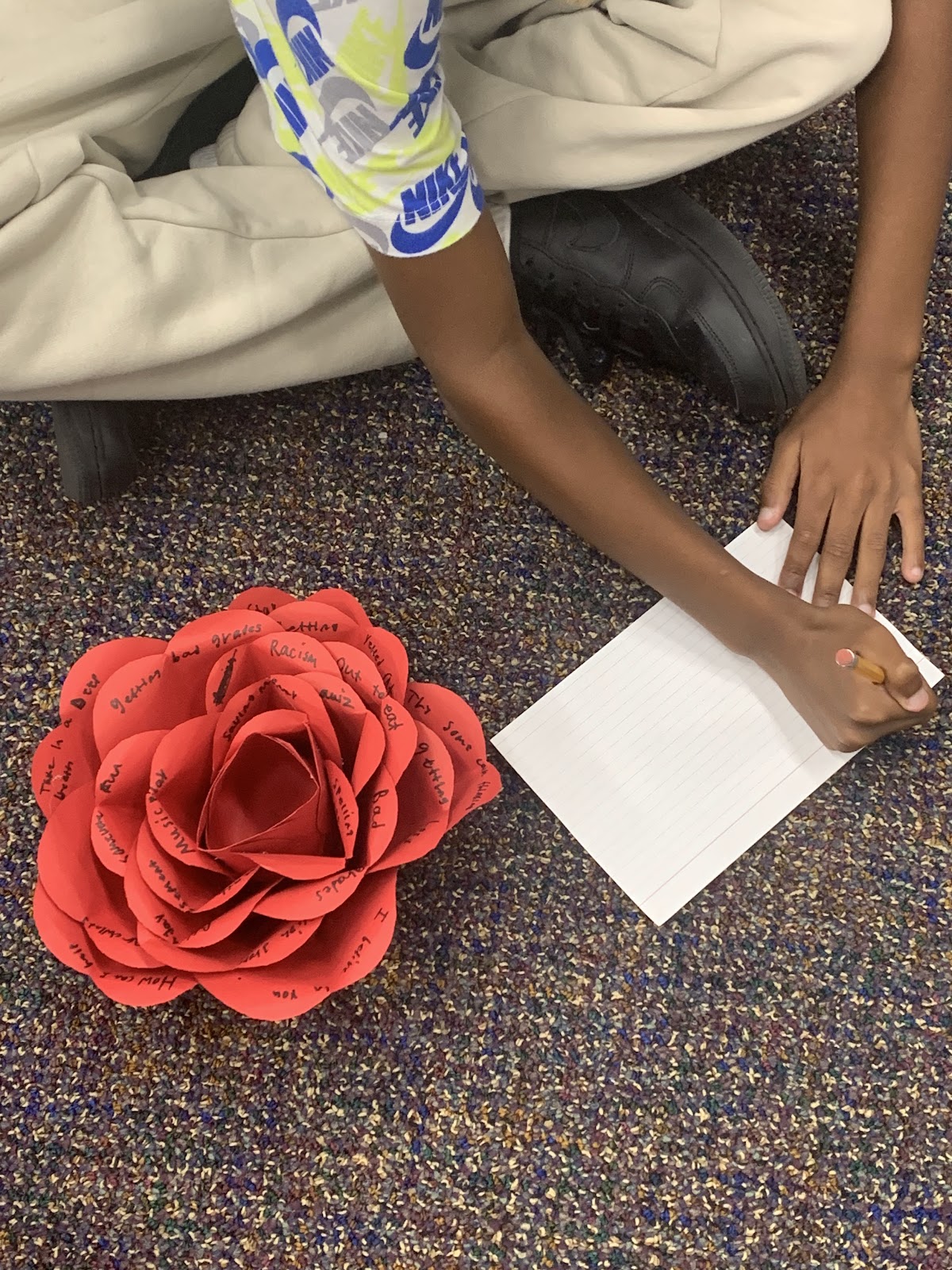

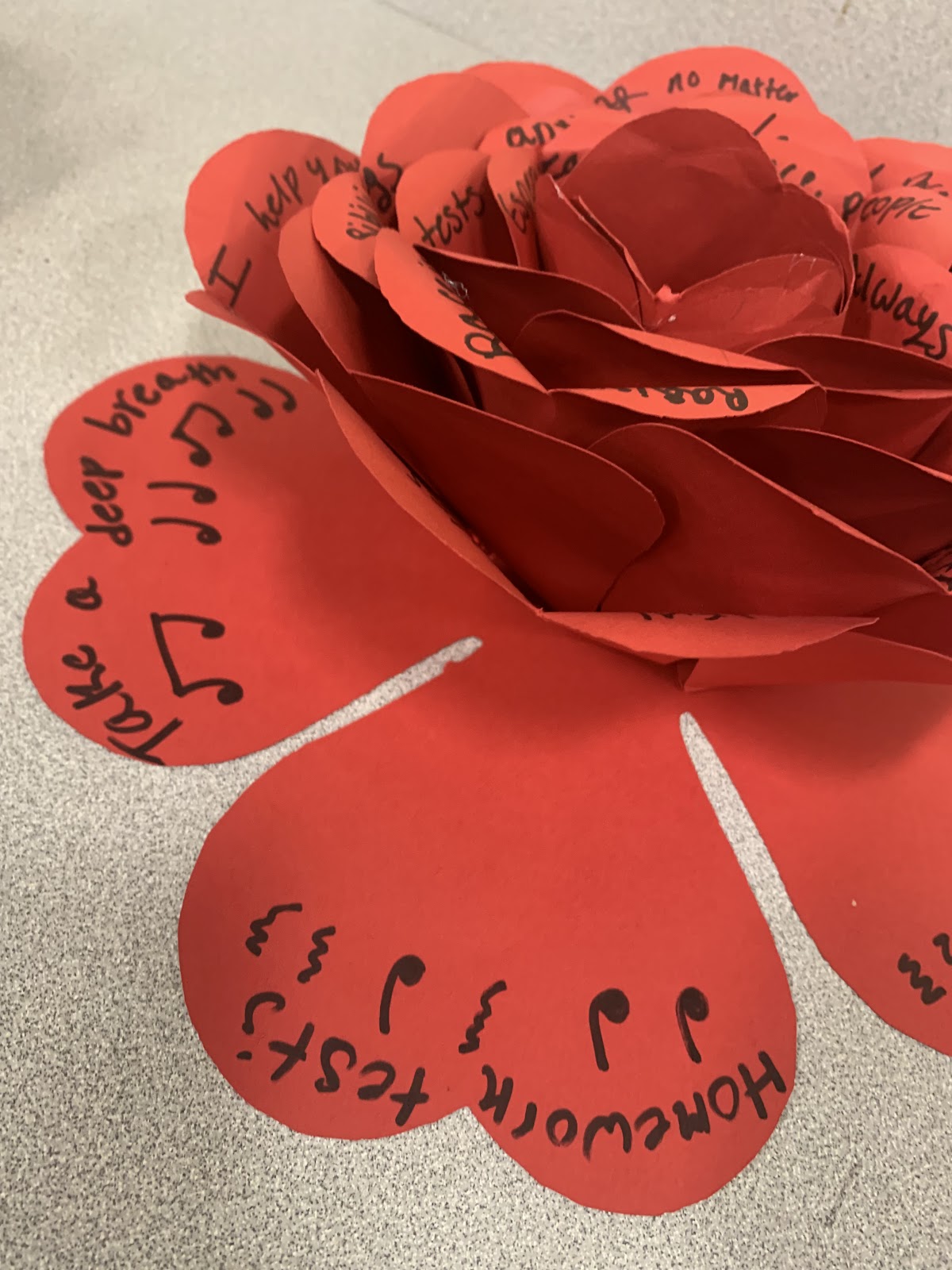
Using the challenges from the petal art, we spent time mining for rhythmic building blocks and /or ostinati These ostinati became the alternating sections of our Rondo Form for a final performance. Students created 8- beat phrases using elemental forms such as abab, abac, abba, etc.
The final performance order was decided by my students in order to vary the A section each time and create a flowing theme of their “challenges.” Invite your students to create their own ideas.
A Song – Sing melody
B
A Song – Xylos melody
C
A Song – Singing Part 1 & 2
D
A Song – Playing ALL Parts
E
Song – Everything
Performance Video
https://drive.google.com/file/d/1bjjN3vonSnH4Ee7V6mBJcn34EisXxDoj/view?usp=share_link
One idea my students had was to go back to the movement exploration and incorporate the rose petal art as props into their movement. I expect this will be a beautiful addition to their in person performance for their families.
My goal has been to motivate upper school students with lessons and ideas that keep their interest. We are on our way to this as we integrate the core content in my room. The ultimate goal will be to bring their own musical interests in our classroom and continue this pattern of success! If you are interested in integrating core content with your lessons, all it takes is an intentional conversation with your grade level classroom teachers to make a plan of attack! Please don’t hesitate to reach out to me as well– arts integration is a passion of mine and I’m always willing to flesh out ideas with you!
Bio: Crystal Briley, a National Board Certified Teacher, received a bachelor of music from Samford University, Birmingham, AL and a master of music from Chicago College of Performing Arts at Roosevelt University, Chicago, IL. She is the Kindergarten through Grade 5 general music teacher at University Park Creative Arts Elementary School in Charlotte, NC, and is the Charlotte Symphony Orchestra teaching artist for the Link Up with Carnegie Hall program. Crystal has completed AOSA Teacher education levels I - III, The Elemental Style: Composing and Arranging, and Developing an Orff Schulwerk Curriculum. She is an active member and the past president of the Piedmont North Carolina Chapter of AOSA.