I think we've all heard someone recently say, “Kids have changed and teaching isn't what it used to be”. It's seen and heard on social media, in teachers lounges, and something I've experienced as an elementary music teacher of 30+ years.
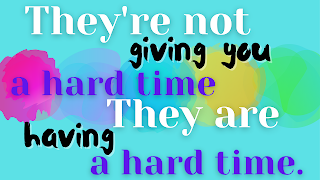
Shorter attention spans, lower frustration tolerance, lack of independence, inability to follow directions, lack of grit, BIGGER emotional reactions, and DySrEgUlAtIoN.
Children didn’t wake up one day and collectively decide to be different. It's so much more complex. Over the last 10–15 years, parenting, technology, nutrition, and culture have shifted dramatically. Children today are growing up in a world fundamentally different from the one their teachers experienced as children.
These shifts are not moral failures. They are environmental changes and when that happens, behavior follows. If we want different outcomes in classrooms, we have to understand what is "driving the bus".
Recently I polled teachers on social media asking what teachers needed the most. It seems a lot of people struggle with those sweet, other-worldly Kindergarteners! Others wanted singing games and canons, so for the next two weeks (at least) I will posting twice a day on my socials - insta/tiktok -@aimee_ofortunaorff.
Today, we will chat about Kindergarten. Oh, how I love these little special people. If I had to pick three words to describe Kinders it would be: 1. Adorable 2. Chaotic 3. Curious.
The songs, rhymes, movement experiences, and instrument play in Kindergarten form the foundation for all other musical experiences that will happen in later years. Musical concepts of rhythm, melody, form, expression, and harmony originate and are explored through the active musical experiences in Kindergarten. Students also learn crucial skills about interacting with others, following rules and procedures, and making music in a collaborative ensemble.
Structure
Structure and routine is oh-so necessary for our Kindergarten wee ones, and so is leaving room for exploration and play. Clear and consistent routines, expectations, and an organized learning environment help our little musicians develop self-control, manage emotions, reduce anxiety, and focus on learning. See more here. So, what does that look like in our music classrooms? Maybe something like this:
Greeting/Walking In/Sitting Down
Each of these has musical opportunities- even the music you may have playing as students walk in and sit down - maybe it is a song they have sung before, or maybe it is something you will use in the lesson or in a lesson to come. Maybe there is a rhythmic element you want the students to refer back to - there are so many playful and musical possibilities.
Beat & Melodic Exploration
*The links below are videos - I would love to have embedded them here but unfortunately, blogger did not like it when I did that!
We've all seen it right? Especially at this time of year. The posts on social media or THAT classroom in the building with walls completely cluttered with word walls, diagrams, explanations, definitions, and visuals. Why do we do this? And is what we are doing best for students?
Our classroom spaces speak volumes. They fill our bodies, brains, senses, and emotions with loads of sensory information, called the environmental load, which is how the amount, the complexity, the flow, and the intensity of environmental stimuli affect our behavior and feelings.
While some may love the plethora of colors and shapes bombarding their sensory input, however, for many others, particularly children who are neurodivergent and children with ADHD and ADD, visually stimulating classrooms may contribute to sensory overload and adds to their daily struggle to be organized, concentrate, and keep their bodies calm and focused. An overtly stimulating space may create unwanted behaviors that take away from learning.
The intention behind decorating a classroom is important - to create a welcoming and engaging learning environment. However, if the environment is causing harm to some, ask yourself what you need now and leave space for later. Is it relevant to ongoing instruction? In other words, curate, don't decorate.
In a recent study, 24 kindergarten students were placed in laboratory classrooms for six lessons on topics they were unfamiliar with. Three lessons were taught in a heavily decorated classroom, and three lessons were given in a sparse classroom. The results showed learned more when the room was not heavily decorated. The optimal amount is 20-40% of the wall space be covered.
So, what to do?
Purpose, Prioritize, and Adjust
Decor should have a clear purpose that relates directly to ongoing learning and/or creates a positive, functional classroom environment.
Clarity over clutter - well organized visual environments reduce distractions and allow students to focus. Leave space for the eye to rest.
Involve students in the process of selecting and creating classroom displays and think of the classroom as a continually evolving work in progress.
Adjust as necessary.
Ultimately, the goal is to create a stimulating and nurturing environment in which all students feel they belong, can focus, and engage in our music lessons.
Hello everyone!
I hope you have all had a great summer! Mine was a mix of yin and yang with an amazing trip to Japan and coming home to learn our sweet dog, Mo (Mozart) had passed away. He was my baby and I loved him so very much. It has been a time of so much sadness while also processing this amazing trip to such an incredible place on the other side of the world.
School begins next Thursday and today was our first day back with meetings.
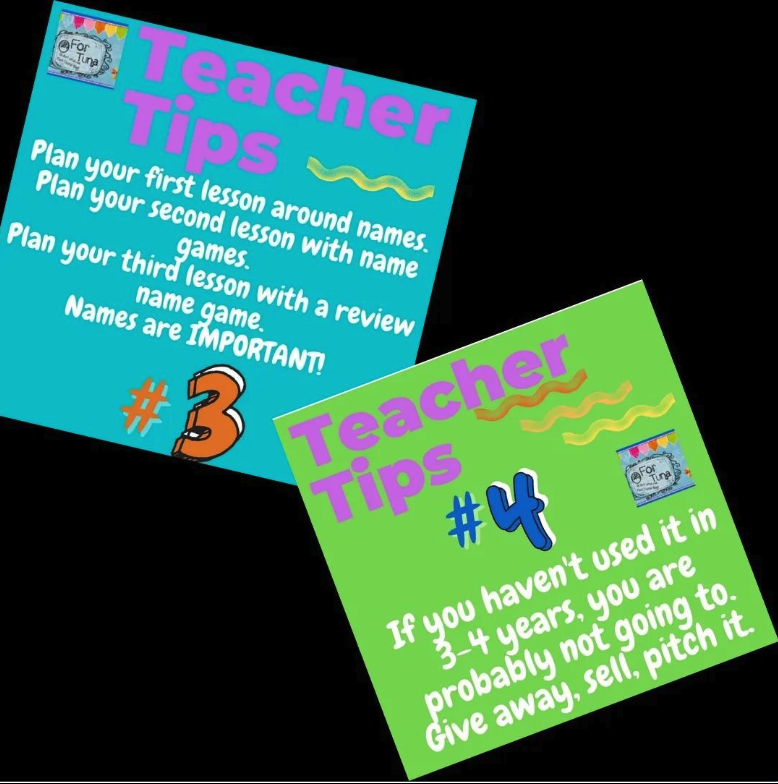
I am ggetting ready for the first couple of weeks with lots of name games.
Here is a post with a bunch of name games and songs. Enjoy!
Many years ago on facebook a music teacher shared these amazing poster cards I have used often. My copies of the card got water stained over the summer with a leak in my storage room while my classroom was being painted, so I had to make new ones. I have tried to find the original teacher who shared but was unable to. So, thank you, unknown person.
There are many ways to use these - display and ask students to analyze what is happening or for choice in what they want to do next or simply use these as a reminder for yourself about what options you have for different activities. Remember that "Play" doesn't always mean instruments - it can be games, body percussion, or instruments.
For a copy of 8 x 11 cards to print for your classroom, click here (this will force a copy).
I was about to write, "words of wisdom" in the post title, but I don't feel that is correct as I am certainly not wise, simply experienced.
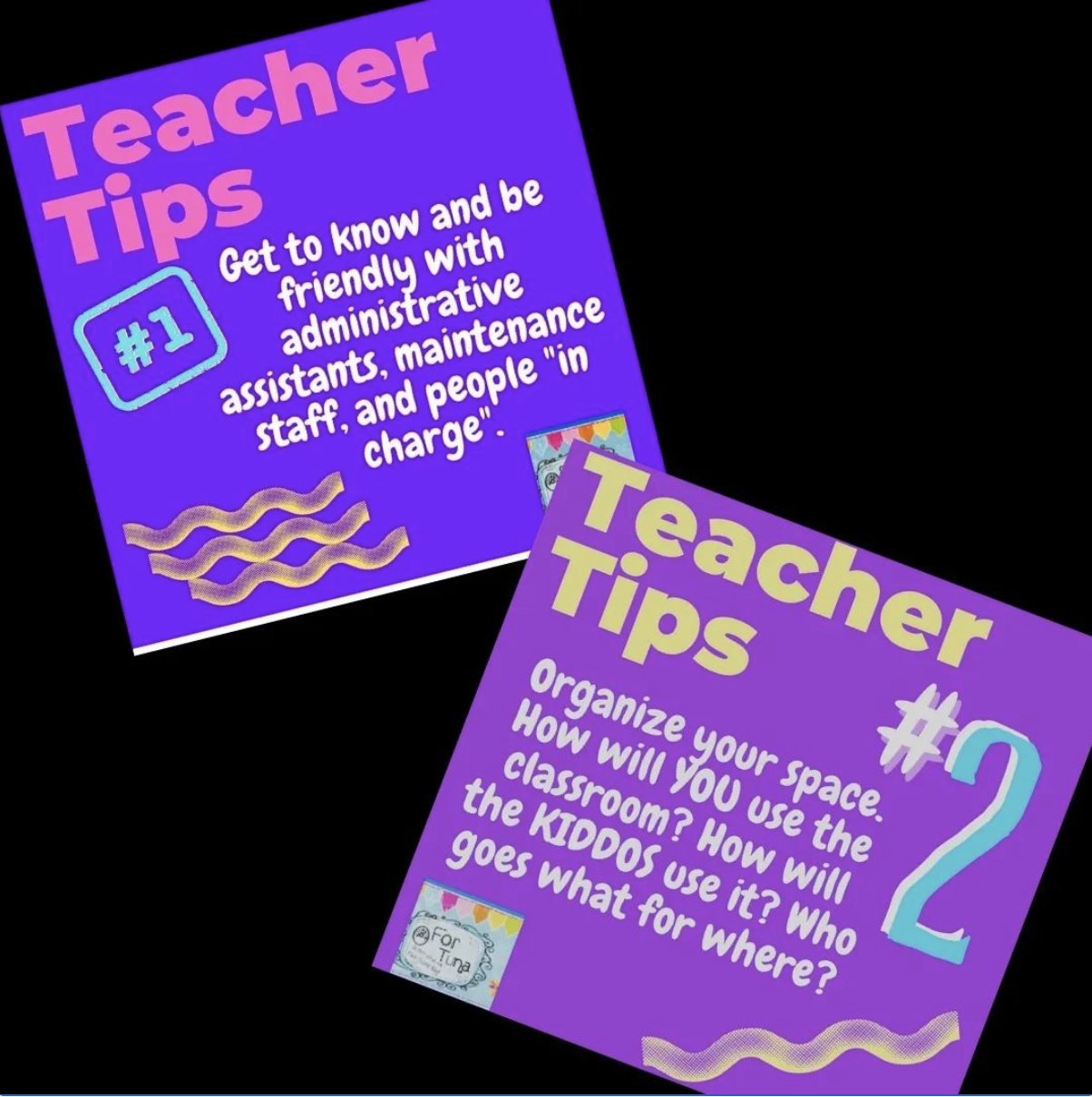
So, for the next several days I will be offering some advice from 29 years of teaching. Hope you enjoy!
Be sure to be looking on facebook as my "Live" broadcasts will be starting next Tuesday at 7:00 AM EST and every Tuesday thereafter. These are all recorded and available on the O For Tuna page so if you aren't awake or available at 7:00 EST, you can always go check them out - there are already SO many from the past couple years of videos where I share songs, books, activities, and teacher ideas.
So, onward we go! Welcome to the 2022-2023 school year!
Behavior. Say that word to any teacher this school year and you will get a multitude of responses and emotions including hands thrown up in the air, eye rolls, shaken heads, and sighs of frustration, disappointment, and discouragement.
How many of us are feeling the effects of Covid in our classrooms? Every. Single. One of us. And it isn't their fault - it seems we pressed the "pause" button on child development in March of 2020. You have probably seen the meme about the last time our fourth graders had a normal school year - they were in FIRST grade. Our second graders have NEVER had a normal school year. Once back from Remote Learning students came back into schools that tried to make them sit in desks, work in groups, walk in lines, be present, focused, on task, be around other children, with or without masks, and expect no differences. Our students have been impacted by all of this in ways we cannot possibly understand. We can understand what we understand, but we need to understand we will never truly understand. We are not children who have been through what our children have been through.
Students who have never been in a school before. Students who don't know how to lock the door on the bathrooms because they have never been in a public restroom. Students who don't know how to line up, even after 3 months of being in school. Students who don't know how to be around other children or in large groups, or work in a small group. We have probably all seen or know someone who has seen students tearing things off walls, throwing chairs, running out of classrooms, screaming, arguing, or just falling apart.
They are trying to tell us something. Maybe we need to
That means we have more opportunities to show consistent and positive kindness and love, to set consistent and positive boundaries, to figure out how to love on those "prickly" kids, and to help our students be their best selves.
It also means to expect the unexpected.
With the winter break it is now time for a Behavior Reboot in 2022.
With each class:
Before the class even comes in - are YOU ready? Are your materials close at hand, do you have a backup plan in case the lesson goes sideways? Do you have some pocket songs or books nearby you can sing or read in case that is what the class needs?
Are YOU centered and focused? I find that closing the door before the children come in the room and taking a 30 second inventory - closing my eyes, taking 3 deep breaths, setting an intention of positivity, care, and kindness, helps me enormously to feel grounded.
Are YOU prepared to meet the children where they are? If they come in hyped up on sugar are you ready to do the Seven Jumps dance (my next post will be on how I use this dance - it's not the traditional one) or something else to get the wiggles out? This helps in leading them down the path to where we need for them to be. Doing so is purposeful yet playful, and encourages relational teaching and builds community. Enforcing immediate compliance without time to transition into your class is similar to a prison guard trying to re-establish control during a prison riot and can lead to you and the students being at odds.
Set clear expectations and boundaries. Then set them again. And again. KEEP those lines drawn. What I say is what I mean and what I mean is what I say. The consequence may be different for different children and that is OK- fair and equal are not the same. Part of this is knowing your students and being relational. A child who is trying to get away with behavior is not the same as a child who is acting out of anger or frustration. A child with mental health challenges is not the same as a child who is sneaky and manipulative.
What is your lesson flow or structure? Children, like adults, thrive with routine and structure. That doesn't mean there is rigidity and inflexibility. Here are some ideas for the first 5 minutes of class. Here are some ideas for the last 5 minutes of class or for when you need an additional quick activity.
When difficult behaviors happen, don't get in a power struggle. Just don't. It doesn't work for you OR the child.
Be the investigator - what does this student need? Do they need a chance to feel successful? Do they need to be a helper and turn lights on or off or get things for you in the classroom? Do they need a time out or a time in? Are they overstimulated - Do they need a quick trip to get a drink of water/go to the bathroom? Do they need a side hug or just to be told they are not in trouble or that you care about them?
Remember we teach children. Say it with me. I teach children. I teach tiny humans. Then say, "I teach tiny humans music." When teachers say, "I teach music" it takes out the human element. We teach music to children, but we teach children first.
If what you are doing isn't working, put on the investigator/experimenter hat and try something different. Talk to classroom teachers to find out what is working for the class or specific children and try, try again.
Also, it's important to say we as teachers are going through a lot. A LOT. A LOT A LOT A LOT. Take your mental health as important as you would a serious physical illness. Take a walk, do yoga, get a massage, cry, play piano, sing, journal, see a counselor, talk to someone, ask for a hug. DO the things you need to and don't feel you have fall on your sword as a teacher - you matter, your life matters, your health matters. Teaching is not more important than you. Prioritize your health and well being.
Many thanks to my friend Jeaneau Julian for sharing this lovely lesson she created!
Don't forget to check out my new Patreon community of music teachers for exclusive content, workshops, and mentoring opportunities.
Click here to download the Google Slides and make a copy.
There are a couple "pathways" you can use for this- the composed song below or the one from the Volumes (see lesson idea below). Either way you go, this is a MUST READ book for every child- and adult, too!
Yay, school planning should be starting. Ummm... Covid.. higher numbers, Delta variant, what does that mean for school this year? Will we be able to sing, play instruments, get back to "normal" or does that mean we will have to continue social distancing, quarantining, masking, no instrument playing? How do I plan for that?
The short answer- I don't know. The long(er) answer - much depends on CDC recommendations, Governor, state, and local school board decisions. And then there is vaccination issues, and the comfortability of those wanting to mask or unmask. SO many decisions.
I am making plans as I know my students will be in person and we will be able to do a little singing and will be able to share instruments as long as we are sanitizing hands and cleaning.
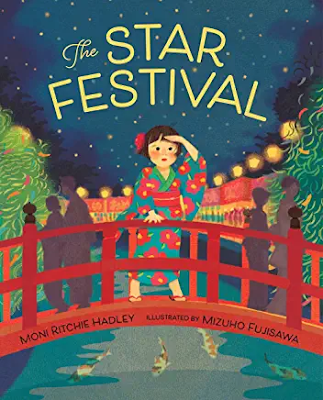
I have been enjoying the Olympics, which in turn renewed my interests in learning about Tanabata, a Japanese holiday celebrated on July 7. Although the holiday will be over when we return to school, I am going to be teaching about Tanabata as part of the first few lessons.
Tanabata
First, share these images:
We will chat about the Olympics and events students may have seen or cheered for, then we will talk about the holiday of Tanabata and read this book which shares the story of Tanabata, also called the Star Festival. For older students, we might make this origami "paper river":
We may also watch this story of the two stars, Orihime and Hikoboshi:
Then we will learn this speech piece and develop the lesson.
Since Tanabata are wishes, we can create wishes for students for the new school year.
Then we will learn the Tanabata-sama song. Many thanks to Beth from bethsnotes! Check out the beautiful video!
Then to further connect culture and knowledge of Japan, here is another book to share about an artist who wants to fill the world with polka dots and a couple further books featuring polka dots!
Hi everyone! I have been singing a lot of Hamilton lately and the one that seems to be stuck for me (perpetually) is "The World is Upside Down". I FEEL this so strongly right now.
Can you relate? I also feel like we are playing the strangest game of Hide and Seek - Ready or not, here it comes! The craziest school year we will probably ever experience. Masked, shielded, and distanced, high-risk teachers like me streaming from my music room into grade level classrooms half the time and the other half standing behind a large Plexiglas barrier with mask, face shield, and air purifiers sucking potential virus droplets from the air. Students in cohorts and assigned seats for contact tracing teams for WHEN, not if, a student or teacher contract Covid. *sigh* *Bigger Sigh* *BIGGEST SIGH EVAH*
On Singing
Let's be careful, folks, how we approach the concept of "singing" with our students. The very first class we will be having a conversation with students about how singing will look and feel differently for now, but this too shall pass. We will be singing in our "Heads, Hearts, Hands, maybe a little Humming, and at HOME!" The worst thing we can do to our students is intertwine the words "singing" and "dangerous" in a sentence- our children and impressionable, and we do NOT want to leave the impression that singing is dangerous. Words have great impact, and we all know it can be long-lasting.
Ok, off my soapbox! :)
We've got this, though! We CAN get through this but only by leaning on one another for support, encouragement, and a million ideas! Here are a few things to get you started this year:
1. Non-Verbal Cards for Remote/Digital Learning
Right click on these to save, print, and enjoy! There are two volume buttons included as some platforms use a mic image like below, and some others use the mic in the 2nd picture. My friend, Michael printed each of these on one color and glued the bottom of each card to a popsicle stick to hold up and show onscreen. Great for letting students know to write a response in the chat, or that you have you "eyes" on them, or for when to mute or unmute.
3. Greet and PASS
This is a year unlike any other and many of our students are going to want to return from 4-5 months of not being around friends and bear hug everyone in sight. I am not crazy about the term, "Socially Distanced" but prefer the friendlier "Physically Distanced" way to express keeping ourselves apart from our neighbors and friends. I taught this to all my teachers this week and they have posted the words in their classrooms and are adding it to their morning meetings the first month of school as a fun and playful reminder of how to greet their friends and teachers each day.
Most of us are feeling some of each of these emotions right now. Worried about our own health, our families and students health, scared about the upcoming year and all the changes and unknowns Covid 19 has brought into our lives, and some of us are feeling scared AND worried at the same time as they are making preparations for what will surely be the strangest year we have ever experienced. Just remember (as I will be) that emotions are like waves and we don't have to choose to ride each and every one.
I have not posted a lot this summer and have been intent on taking all the wonderful PD and making connections with fellow music teachers. I have met and made some wonderful new friendships with teachers I wouldn't ordinarily have had time or energy to connect with and for that, I am so very grateful.
The 1 in 4
I also have to admit that I have been trying to stay busy so I didn't have to fixate on the fact that I am one of the 25% of teachers with high risk. I am immuno-compromised, which means that my Dr. does not want me teaching face to face with students this fall (and perhaps longer, depending on community spread and availability of vaccine). SO, this means my school is trying to accommodate me but they are unsure if they will be able to. It has been an emotional roller coaster and I have experienced every possible emotion in the last several weeks. To top it all off, my mother was diagnosed with cancer in early July and she lives in Arizona in the winter and Maine in the summer. This summer she and my stepdad stayed in Arizona as they did not want to travel home to Maine for their usual spring/summer/fall months. So, she is in Arizona with raging coronavirus cases, and I am in NC.
Remote/Online/Synchronous/Asynchronous Learning
You probably already have had some successes with lessons last spring during emergency remote teaching and learning. Think of this year as a 10 month-long marathon, not a 5K.
Much depends on the platform (Google, Seesaw, Powerschool etc.) your school/district is using. I would also encourage you to do 3 things:
Be consistent in lesson flow/structure (younger children; more structure, older children; more choice)
Be relational in your teaching (videos or lessons featuring YOU)
Choose and use the MOST essential concepts and skills - focus on what you NEED your students to understand THIS year - not in a typical year
Face to Face Learning
This varies from state to state and districts, towns, cities, and even schools within a district! HOW your school instructs students face to face can mean many different things. The above three bullets still apply. Being consistent, relational, and focusing on the essential skills and concepts of your music instruction will be important.
Your classroom setup, management, and other details will likely be out of your control as administration and guidelines will dictate much of what and how we do things.
One big challenge for those of us teaching face to face will be what and how we do instruments. Many teachers are making Percussion Packs or Instrument Kits. I have a video on my facebook page @o for tuna orff with what goes in the packs and the kinds of activities I will use them for.
Keeping instruments clean and sanitized for future students will be important. Also maintaining the integrity of our costly instruments will also be important. My friend, Emily, has a great blog post about Orff instrument covers that are easy clean made from clear shower curtains.
.
Lesson Planning
My friend, Elizabeth has a FABULOUS blog post about planning in Covid times. In the post she illustrates how to create lesson "Banks" for multiple scenarios. Super smart thinking!
And Jennifer, another amazing friend, has this incredible post that says everything I have been thinking about singing in her post, "Singing in the Age of Coronavirus" . I would also encourage you to create vocal files of yourself singing so students hear YOU as the model. Online you can use vocaroo.com, there are also many voice recording apps that are so straightforward and easy to use.
Activities/Lessons/Sharing
Join all the facebook groups and a local Orff chapter; most chapters are having workshops this fall and they will all be available virtually via zoom this year! Keep checking them out on facebook or the www.aosa.org page. Of course, you can scroll over on the right for hundreds of lesson tags (if on a mobile device scroll down to the bottom of the page and click, "View desktop version" which will bring up the tags for each post).