Showing posts with label culture. Show all posts

Tuesday, September 20, 2022

Agua de limón

 From September 15-October 15 Hispanic and Latinx/Latine Heritage Month is celebrated in the US.  The dates coincide with  national independence days in Chile, Costa Rica, El Salvador, Guatemala, Honduras, Nicaragua, and Mexico.

I have a very sweet friend in Quito, Ecuador that I met through the pandemic. I say, "through" because I do not know if our paths would have crossed had it not been for the pandemic. During quarantine, my dear friend Thom Borden and I began the American version of International Sunday Sharing, already begun by our dear friends across the ocean in Finland, JaSeSoi, the Finnish Orff Association. We met on Sunday mornings via zoom and had hundreds of music teachers from around the world show up to sing, dance, and share. It was a beautiful thing, and I met and befriended such beautiful people, including MaCarmen from Quito.  Ecuador has always held a special place in my heart as our family had an exchange student during my freshman year of college. Anita became very special to us and she is my Ecuadorian sister, now living in Cincinnati. When I got married, she came from Ecuador with her sons to be at our wedding and she is a beloved member of our family. 


For more songs, books, and dances to celebrate Hispanic and Latinx/Latine Heritage Month check out this post.

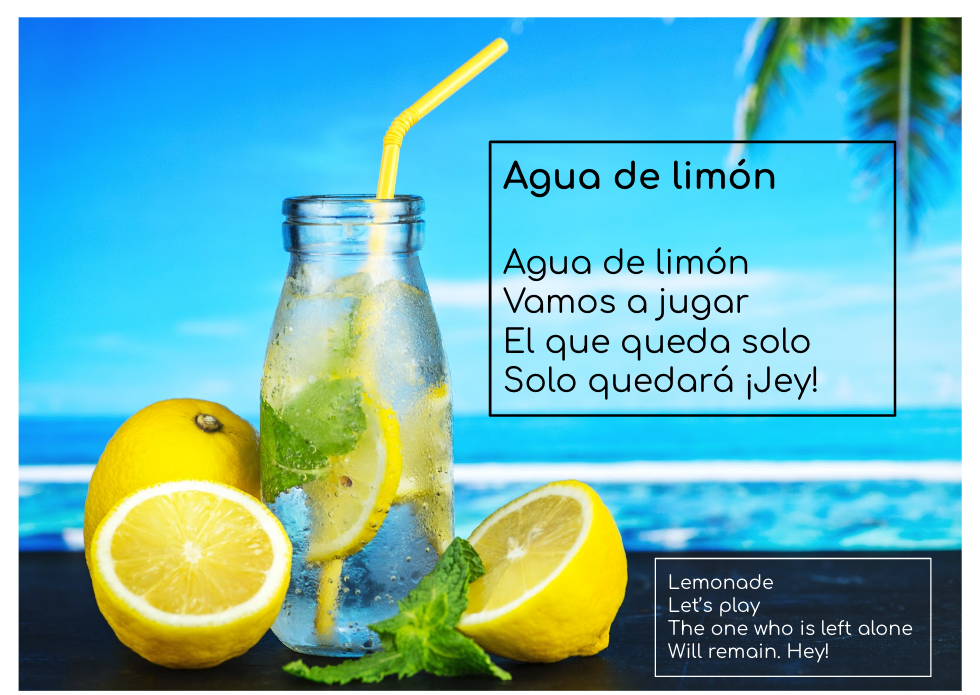
Here is beautiful MaCarmen's song she shared, the song is from Colombia and is SO FUN! 

For the full slide deck, check out my Patreon.

Enjoy!


Friday, November 26, 2021

Candy! Candy! Rondo

 December is a month full of holidays and is a perfect month to talk about sugar! 

This is an International Candy Rondo idea focusing on first American candies and then involving the students in an exploration of international candies. Thanks to my friend Tammy for creating this idea- she created this as a Project-Based Learning activity with her students so you could easily have your students research a cultures candy and/or treats. 

Click here to make a copy of the google slides. 


Enjoy!


Thursday, July 29, 2021

Planning for the New School Year - Celebrating Tanabata

 Are you feeling this way-

Yay, school planning should be starting.  Ummm... Covid.. higher numbers, Delta variant, what does that mean for school this year?  Will we be able to sing, play instruments, get back to "normal" or does that mean we will have to continue social distancing, quarantining, masking, no instrument playing?  How do I plan for that?

The short answer- I don't know. The long(er) answer - much depends on CDC recommendations, Governor, state, and local school board decisions. And then there is vaccination issues, and the comfortability of those wanting to mask or unmask. SO many decisions. 

I am making plans as I know my students will be in person and we will be able to do a little singing and will be able to share instruments as long as we are sanitizing hands and cleaning.

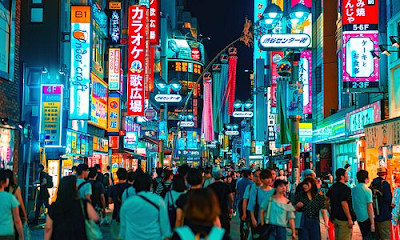
I have been enjoying the Olympics, which in turn renewed my interests in learning about Tanabata, a Japanese holiday celebrated on July 7. Although the holiday will be over when we return to school, I am going to be teaching about Tanabata as part of the first few lessons. 

Tanabata

First, share these images: 


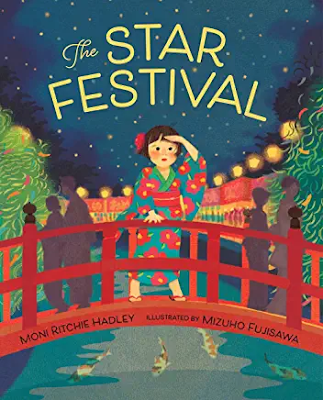
We will chat about the Olympics and events students may have seen or cheered for, then we will talk about the holiday of Tanabata and read this book which shares the story of Tanabata, also called the Star Festival.
For older students, we might make this origami "paper river":

We may also watch this story of the two stars, Orihime and Hikoboshi:
Then we will learn this speech piece and develop the lesson.


Since Tanabata are wishes, we can create wishes for students for the new school year. 

Then we will learn the Tanabata-sama song. Many thanks to Beth from bethsnotes!  Check out the beautiful video! 


Then to further connect culture and knowledge of Japan, here is another book to share about an artist who wants to fill the world with polka dots and a couple further books featuring polka dots! 

Hope you enjoy these ideas!


Saturday, September 15, 2018

Being Sensitive with Our Song Culture and History


*Updated 6.18.2025
A MUST read post by Robin Giebelhausen is here.

In the United States, the song literature we use in elementary music education is rooted in folk songs.  As we grow as a culture and deepen our sensitivity and understandings of our past history, we learn things about our culture that are problematic and offensive.  Some of our songs have histories with inappropriate themes and others have racist overtones, mocking or degrading various cultures, particularly Black or African American culture.  Just recently a music teacher friend learned that the folk song, "Jump Jim Joe" was racist.  The New England Dancing Masters changed the title of their book, "Jump Jim Joe", to "Rise, Sally, Rise" acknowledging the sensitive and negative history of the song.  Although the one song is problematic, the remainder of the collection is a treasure trove of children's song material.  It is available here.

By now you may have heard that "Ring Around the Rosie" is a song about the Black Plague. That is FALSE and urban legend according to historians. The plague began in 1347 and the earliest print appearance of “Ring Around the Rosie” did not occur until 1881 when Kate Greenaway’s Mother Goose or The Old Nursery Rhymes was published. 
What you may not know is that that "Sing a Song of Sixpence" is about piracy, and that "Lucy Locket" is about the prostitute Kitty Fisher.  Back in the day, Locket was a euphemism for a particular female body part.  Check out the full story, along with how Casanova plays into the story here.
Is your mouth hanging open yet?
Mine was.  Though many of these songs appear innocent at first glance, as the lyrics have been "whitewashed",  I cannot "unlearn" the offensive and often racist histories behind these problematic songs.

Below is an incomplete list - incomplete because the more we learn, the more we understand and uncover. The truth behind much of our song history has been whitewashed, in the most literal sense, and so this list will be continually updated and added to.  
I must add that, although sources are listed, if a link is broken please understand it is not only my responsibility to read and research and do the work. We are all capable of researching and questioning song material. Do the work, question songs, engage others in doing the work with you and check out Making Good Choices from a NAFME webinar. We are stronger together. 

Partial List of Problematic Song Material

  • "Black Joke" AKA "Hey Ho, Diddly Dum" original lyrics were vulgar and referenced sexual intercourse and female genitalia. Read more from the Traditional Tune Archive here. Original sheet music from the American Antiquarian Society.
  • "The Boatman's Dance" was originally titled “De Boatman’s Dance".  It was performed in minstrel shows and mocked the speech of enslaved people.  Read more from Song of America Project.
  • "The Cat Came Back" was originally titled, "“The Cat Came Back: A N...r Absurdity”. The lyrics mocked the speech of enslaved people and was sung in minstrel shows.  See the original sheet music from the National Library.
  • "Camptown Races" is a minstrel show which mocked the speech of enslaved people. Read more here.
  • "Chicken on a Fencepost" AKA "Can't Dance Josey"  the original lyrics contain racial slurs and theme of African American death. Original recording was on Holy Names University Folk Song Database and accessible until November 2019 when Holy Names was informed of racist lyrics and removed recording and sheet music. Library of Congress has the original recording.
  • "Coffee Grows on White Oak Trees" AKA "Four in the Middle" is a variant of "Can't Dance Josey" (See above).
  • "Cotton Eyed Joe" "Dinah" is a code word for an enslaved woman and contains a shortened racial slur. This song was used in minstrel shows. Original lyrics from On the Trail of Negro Folk Songs by Dorothy Scarborough. More information on use of "Dinah" from Collectors Weekly.
  • "Cumberland Gap" has derogatory terms for African Americans, "killing" of Indigenous people, "Hell", war, and "Dinah" (see Cotton Eyed Joe"), from American Ballads and Folk Songs, John A. Lomax and Alan Lomax, pages 346-347.
  • "Do Your Ears Hang Low" derived from "Turkey in the Straw" which was used in minstrel shows, see NPR Code Switch article. Also see "The Ice Cream Truck Song", "Turkey in the Straw", and "Zip a Dee Doo Da" below.
  • "Eenie Meenie Miney Mo" US variant uses racial slur. Oxford Dictionary of Nursery Rhymes shows the roots are probably Scottish or Irish where the "n word" was unknown in any English traditional rhyme or proverb. First recorded in New York City in 1815 as:     Hana, man, mona, mike;                                                                                                                 Barcelona, bona, strike;                                                                                                                   Hare, ware, frown, vanac;                                                                                                               Harrico, warico, we wo, wac
  • "Epo i tai tai" is often listed erroneously as "Hawaiian". From the Maori Indigenous people of New Zealand.  In personal communication, the Maori Cultural Center was clear that this was not a song for children as it references male genitalia, bull testicles, and the virility of male warriors. 
  • "Five Little Monkeys" was originally about enslaved people, one who was sick and the other one dead.  "Shortnin' Bread" is the chorus of "Five Little Monkeys".  "Monkeys" was a sanitized yet veiled epithet in reference to African Americans. Read the full story from Pancojams here.
  • "Hey Ya Na" AKA "Apache Melody" cannot be verified as being authentic.
  • "The Ice Cream Truck Song" is associated with a song called "N...r Love a Watermelon".  See NPR Code Switch article. Also see "Do Your Ears Hang Low", "Turkey in the Straw", and "Zip a Dee Doo Dah."
  • "Jimmy Crack Corn" AKA "Blue Tail Fly" is about an enslaved person whose master has died. Many historians believe the enslaved person is rejoicing in his master's death.
  • "John Kanaka" was sung by English speaking sailors who had difficulty speaking the names of their fellow Hawaiian sailors. The Hawaiian name "Kanaka," means "Hawaiian Man" and became a stereotypical name for any Hawaiian person.
  • "Jump Jim Joe" began as the song, "Jump Jim Crow".  From Wikepedia,  '"Jump Jim Crow" or "Jim Crow" is a song and dance from 1828 that was done in blackface by white minstrel performer Thomas Dartmouth (T. D.) ... As a result of Rice's fame, the term Jim Crow had become a pejorative meaning African American by 1838 and from this the laws of racial segregation became known as Jim Crow laws.'
  • "Jim Along Josie" is a song that began as a blackface minstrel song in which African Americans and enslaved people are mocked and demoralized. Read more at Decolonizing the Music Room.
  • "Johnny on the Woodpile", the name "Johnny" is often used as a euphemism for a racial slur and is related to the song "N...r on the Woodpile".
  • "Oh Susanna" contains racial slurs and theme of murder. The lyrics mock enslaved peoples speech.  It was originally sung in minstrel shows.  Read more from U. S. History Scene here.
  • "Old Dan Tucker" was sung in minstrel shows and the lyrics mock the speech of enslaved people. Read more from Pancojams.
  • "Pick a Bale of Cotton" pokes fun at the conditions enslaved people endured.  A bale of cotton weighed about 500 pounds. An average man picked about 200 pounds a day working sun up to sun down (and often beyond). It was not humanly possible to pick a bale in a day and therefore mocked enslaved people. The song also contains the "n" word as has been referenced previously. There is some thought that the song may not have been a work song at all but a song created at the time of minstrel shows as there is no documentation of it before the 1930's. Read The REAL History Of The Song "Pick A Bale Of Cotton" (Partial Time Line From the 1930s to 1979) from Pancojams.
  • "Run, Children, Run" had an original title of "Run N...r Run". 
  • "Tie Me Kangaroo Down" is an Australian song, the original lyrics include a racial slur against Aboriginal Australians.
  • "Turkey in the Straw" was used in minstrel shows. Possible root was minstrel song "Zip Coon", see Ferris State University's Jim Crow Museum of Racist Memorabilia article, "Old Zip Coon/Turkey in the Straw." Original sheet music from New York Public Library Digital Collections shows stereotype image of African Americans on cover.  See also "Do Your Ears Hang Low" and "Zip a Dee Doo Dah."
  • "Zip a Dee Doo Dah" -derived from "Turkey in the Straw", same tune as "Zip Coon", sung in minstrel shows, the chorus of which is "O zip a duden duden duden zip a duden day." See NPR Code Switch article.  See also "Turkey in the Straw", "The Ice Cream Song", and "Do Your Ears Hang Low."

Some of these songs came from minstrel shows, in which performers appeared in blackface makeup. 
Folkloreforum has this to say about the minstrel show;
The minstrel show was popular even before the Civil War, performed before audiences in both the North and the South. However, the shows’ materials changed once freedom was granted to the Negro slaves in the United States. Before the matter of freed slaves became a volatile issue, the typical minstrel show exhibited white men in black makeup performing song and dance exaggerated by lack of coordination and improper English, a style that became known as Jim Crow. After the Civil War, the stage opened itself up to new performers, recently freed slaves, willing to impersonate the impersonator. These performers, though already darker skinned, adhered to the minstrelsy tradition of blackface makeup. The tone of these black caricatures became less innocent and more damaging to blacks. 
Read the full Folklore Forum article, “Ten Little N...s”: The Making of a Black Man’s Consciousness by Tiffany M. B. Anderson, The Ohio State University.


What Now?

As music teachers, we control the narrative of musical culture and history for most of our students. We need to be aware of what we are supporting, perpetuating, and celebrating.  Prejudices, stereotypes, and biases can be subtle and unclear.  For me, I cannot use songs that have brought pain and humiliation, or devalue people. I cannot use the melodies and alter the words, either, as the melody has meaning and will be associated with the lyrics.  Imagine standing in front of attendees at a POC Conference and "celebrating" by humming Dixie or Pick a Bale of Cotton. How would that be received? These songs are recognizable for what they inherently communicate. Our personal ethics and integrity is at stake - knowing music contains racist, biased, hurtful words that mock, belittle, and ridicule people based on skin tone, culture, or ability I am bound by morals and ethics wherein I cannot use this music in the elementary music classroom. I cannot "unhear" or "unlearn" the history, racist, and mocking information. We can choose to ignore, but that is the root of ignorance. NO melody is that perfect or irreplaceable.


If we are committed to including ALL of our students and fighting systemic racism, we have to be prepared to let go of these songs that have the power to exclude and choose song material that is inclusive of every child and their families.

We are so fortunate to have such a variety of song literature - there are so many high quality songs that do not perpetuate stereotypes or racism.  Problematic songs have their place; studied at a time when children are developmentally ready. For me, that is not with my 4-11 year old children.
The choices we make matter, not only to us as individuals and educators, but also to our students sense of self and identity.  The potential impact, not our intentions, guide us in deciding the choice to use a song and if so, how much information to share. If  using a song may offend, or has the potential to do so, then we should reconsider our choices.
Continue to research, the more we learn, the more informed choices we can make. 
Do the best you can until you know better. Then when you better ...