Dolly has always been one of my favorites and with her recent passing, here is a way to bring her into the music classroom with a dance featuring one of her most popular songs, 9 to 5!
This was a lesson posted in my Patreon community two years ago. My students love this book and has a lovely connection to the famous tap dancer, Savion Glover!
Click here for the slides and please note, this will force a copy.
I love using these to get my students into movement and dance formations -I simply hold up the sign and students quietly (or silently) move into position. We practice moving into formations at the beginning of the school year and I use these often to get students quickly to where they need to be for various activities.
UPDATED - I made them with stick figures also so you have a choice of which ones to print & use.
I love this song at this time of year as there is SO much that can be done with it- add an ostinato with pie flavors, perform the dance, talk about dance styles, create a new dance, student created B Section, and a game from the wonderful Mrsmainsmusicians on insta!
Grab the full google slides here. Please note this will force a copy.
For the game, I glued my pies to paper plates. This helps them to slide easier as most inexpensive paper plates have a wax coating on them. This also makes them round and pie shaped!
Hello, friends - first, an exciting announcement! I have a new community full of music educators who are trying to simplify their planning and grow professionally. I welcome you to come join for exclusive video lessons, activities, organization ideas, children's literature lessons, workshops, and one on one mentoring opportunities. We are going to have so much fun learning and growing with each other!
Diwali is coming soon- November 4. Diwali (orDeepavali as it’s sometimes called) means “row of lights” in Sanskrit. During this festival, people decorate their homes with lights and oil lamps, calleddiyas. The lights and lamps are said to help the Hindu goddess of wealth, Lakshmi, find her way into peoples’ homes, bringing prosperity in the year to come. It is also a celebration of good triumphing evil.Diwali is areligious holiday and festival originating in India. People often think of Diwali as a Hindu festival, but it is also celebrated by Sikhs and Jains. The celebration lasts for five days and marks the start of the Hindu New Year. The exact dates change each year and are determined by the position of the moon but usually fall between October and November.
Check out the Nat Geo page for more interesting facts.
Last year was the first year I incorporated Diwali more fully. I began by talking with some of my families who are Indian. I had some wonderful moms come in and teach me some Dandiya (stick) dances and we created a very simple one for our young students. There is some footwork involved in Dandiya dances but we focus more on performing with the sticks. I also talked with a few of my students who are Indian privately, asking if they wanted to speak or tell us during class about how they celebrated, or if any of them were performing classical Indian dance or song (I have a first grader who takes classical Indian singing lessons!) and invited them to perform.
Book to Begin
This is a lovely book and a perfect introduction to the customs and celebrations. This year I am recording two sisters who are Indian reading the book to show to all my classes.
Diwali, Diwali Song
Then we learned Manju Durairaj's Diwali, Diwali song and sang the chorus together.
Dandiya (Stick) Dance
We created a simple Dandiya dance on the chorus of the song. All movements are to the beat. Facing a partner tap right sticks together, tap left sticks together, tap own sticks to the right, tap own sticks to the left. Step back with one foot and tap sticks behind back, step same foot forward and both stick face right (like windshield wipers) and tap both partners sticks making a # hashtag, then trade places while turning around in a circle. Of course this can be modified but this is what the Moms at school and I came up with.
I would highly recommend wooden sticks - aluminum ones are available from Amazon but my experience is they break far too easily. Rhythm Sticks or dowels could also be used as long as they are the longer ones (12" or so).
Here is a video of Dandiya Dancing.
And an excellent teaching video to show you the footwork and sticking. The first one is just right for beginners and children.
Concert with Indian Instruments, Songs
This is an excellent 30 minute concert made for children from Lincoln Center featuring Grammy nominated artist Falu. I like beginning at 7:47 and end at 15:00 if I am pressed for time as they talk about traditional solfege, then Indian solfege, then sing a song incorporating the solfege.
Sitar and Tabla - played by KIDS!
A fun little video about sitar made for children:
Garba Dancing
My students love to see both the women and the men dancing here - and they love the music!
More Books Featuring India and Indian Characters
The Many Colors of Harpreet Singh - this is a google slide presentation featuring a video of the book, rhythms created from colors, along with discussion points for students about tone color. The end features several Bhangra dance videos.
The Wheels on the Tuk Tuk is sung to the tune of The Wheels on the Bus and is a great introduction to India.
Festival of Colors is just one of the most beautiful books and is about the Indian festival of Holi.
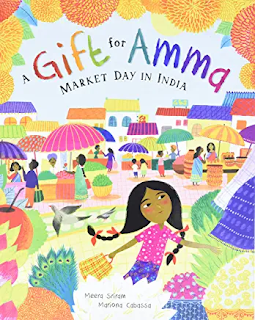
A Gift for Amma follows a girl as she goes through the vibrant rainbow colors of the market trying to find a gift for her mother.
10 Gulab Jamuns is the story of two brothers discovering a sweet treat from India.
Hope you enjoy all of these and Happy Diwali (in November)!
Diwali is one of the most important festivals of the year for Hindu people. Diwali or Divali comes from Deepavali, a Sanskrit word meaning "row of lamps." Small clay lamps filled with oil are lit, signifying the triumph of good over evil, light over darkness, hope over despair. The lamps remain lit throughout the night and homes cleaned to welcome the goddess Lakshmi. Noisy firecracker sounds scare away evil spirits. Everyone wears new clothes and share sweets and treats with family and friends.
This music I play as students enter the room and I engage the students with a movement and body percussion copycat game. Some of the movements prepare students for the Dandiya stick dance we will perform later in the class.
I use a Mystery Instrument of the Day to start my classes off. It ties to each lesson in some way. This week is the sitar. I found this video which, though a cartoon, does a great job introducing the sitar.
Then this video filmed just this spring during Covid times (April 2020) with Anoushka Shankar and several students of her father, Ravi Shankar, famed sitar player.
Then I share the refrain of this song, "Diwali" from Manju Durairaj. Manju was born and raised in India. She is an Orff educator, Seesaw guru, and loves to share her culture and music. I read the book Diwali, below, inserting the refrain every 2 pages.
Then it's time to show some excerpts of Indian Garba and Dandiya dances. These are some videos I have used before:
Level 1 Dandiya Dance
I have a very sweet Mom at school who has been an enormous help in teaching me and helping me develop Dandiya dances for students. So very fortunate to have a culture bearer who loves to help others learn! Thanks to Mrs. Shah for this lovely (and accessible) dance!
A Section (refrain of song): Half note pulse - Clap R, Clap L, Clap both, Clap both. In non-Covid times I would teach it first with clapping a partner but with social distancing we modify it to clap own hands on the right side of our bodies, clap own hands on the left side of our bodies, and clap our hands twice in the middle.
B Section: Half note pulse - Step one foot forward, tap sticks overhead at the same time. Step same foot backward, tap sticks behind backs at the same time. Repeat.
The Dandiya sticks are passed out (I have some a parent brought from India and they are amazing - the kids LOVE them) although I have made them in the past using ribbons and dowels and they work great- rhythm sticks also work well. We perform with the sticks and the "Diwali" song from Manju above.
Level 2 Dandiya Dance
A Section: Same as above but face partners and the Clap R and Clap L become tap R stick with partner, tap L stick with partner, tap own, tap own.
B Section: Same as above but turn in place at same time.
Level 3 Dandiya Dance
A Section: Same as Level 2 - tap R stick with partner, tap L stick with partner, both sticks "windshield wiper" to the R (tap partners sticks; this will make a # sign), both sticks "windshield wiper" to the L (tap partners sticks; this will make the opposite # sign).
B Section: Same as above, turn in place one direction for 1st phrase, opposite direction for 2nd phrase.
and we learn a very basic Dandiya dance!
You can also find a lesson from Teaching with Orff featuring a Diwali Dance from Manju here.
If you have time, students would love making these diyas from The Joy of Sharing.
Black History Month.
Those three words have power, value, and emotion. Though the story of Black History Month began in 1915, it was not officially recognized until 1976 when President Gerald Ford officially recognized Black History Month, calling upon Americans to “seize the opportunity to honor the too-often neglected accomplishments of black Americans in every area of endeavor throughout our history.” Want to read more? Check this out.
.Black History Month is a special "pause" in our year to reflect and celebrate the vast musical contributions of Black and/or African Americans, but it should not be the only time our students see themselves represented and reflected in the music we use in our classrooms.
Things to Consider
Where is my focus? Who and what am I celebrating and honoring? Personally, I do not want to be the white teacher telling a single narrative about Black and/or African Americans as slaves and that they are only worthy of celebrating when talking about slavery or the Civil Rights Movement. How does this impact our students view of musicians and composers who are Black and/or African American?
Sing, listen, and teach about music from a broad perspective; spirituals and Civil Rights songs are valuable, but they are not the only music to be celebrated and learned.
If we teach these songs we should keep our community and parents informed of our intention to teach about slavery. I have known many music teachers who begin to go down this path and receive emails and phone calls from upset parents who have not discussed slavery with their child and now they are forced into a conversation they were unprepared to have.
For me, I want my students to celebrate, honor and learn about Duke Ellington, BB King, Billie Holiday, Scott Joplin, Ella Fitzgerald, Leontyne Price, and Miles Davis. I also want them to celebrate, honor, and learn about Jimi Hendrix, Stevie Wonder, Nina Simone, Queen Latifah, Tina Turner, Alicia Keys, John Legend, Denyce Graves, Black Violin, Rihanna, The String Queens, will.i.am, Ne-Yo, Rhiannon Giddens, and Ranky Tanky, (who just won a Grammy and are amazing - listen to this podcast and you'll see why I love them for elementary aged students).
Sister Rosetta Tharpe - do you know her name? I didn't until this past year. Learning about her was eye-opening and a bit shocking- how did I NOT know her name until now? She was a pioneer and laid the foundations for Rock 'n Roll. Read more about her here from NPR.
Here are some of the things my students and I will be using throughout the year, not only during the month of February.
Children's Literature
Rap a Tap Tap: Here's Bojangles - Think of That
Change repetitive words to "Rap, Tap, Tap, Think of That". (3 quarter notes, 1 quarter rest, repeat same rhythm).
I use this with Kindergarten students after we first do some movement preparation to "Superstition" by Stevie Wonder.
1. Read Book, encourage students to speak repetitive words, "Rap, tap, tap, think of that".
3. Videos - Tap Dancing Group - I like this one - you will only watch until 1:20.
Next I show Savion Glover - this is such a cool commercial- just skip the end (commercial for a fridge).
How to Tap- this is really good for my younger kiddos - very slow, sequential. We only watch to about 3:00 and we stand up and practice tapping.
4. Then I break out the Heart Chart and we go back to the book of Bojangles - the Heart Chart is amazing and many music teachers have them or something like them - it is the perfect way to introduce quarter and eighth notes. Once we have explored, ""Rap, tap, tap, think of that" and learned how to clap it, etc. and have discovered quarter notes, we tap it on rhythm sticks. That leads into eighth notes, and before we know it we are reading stick rhythms with quarter and eighth notes.
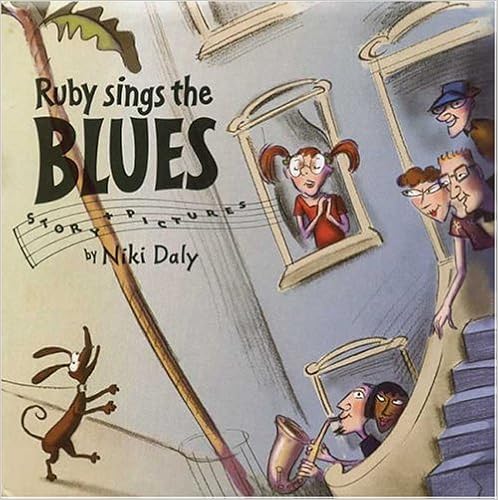
Ruby Sings the Blues
I love the animated video here with jazz music in the background. It is really well done!
Trombone Shorty
Great lesson to go with this from my friend Charissa! Check it out here.