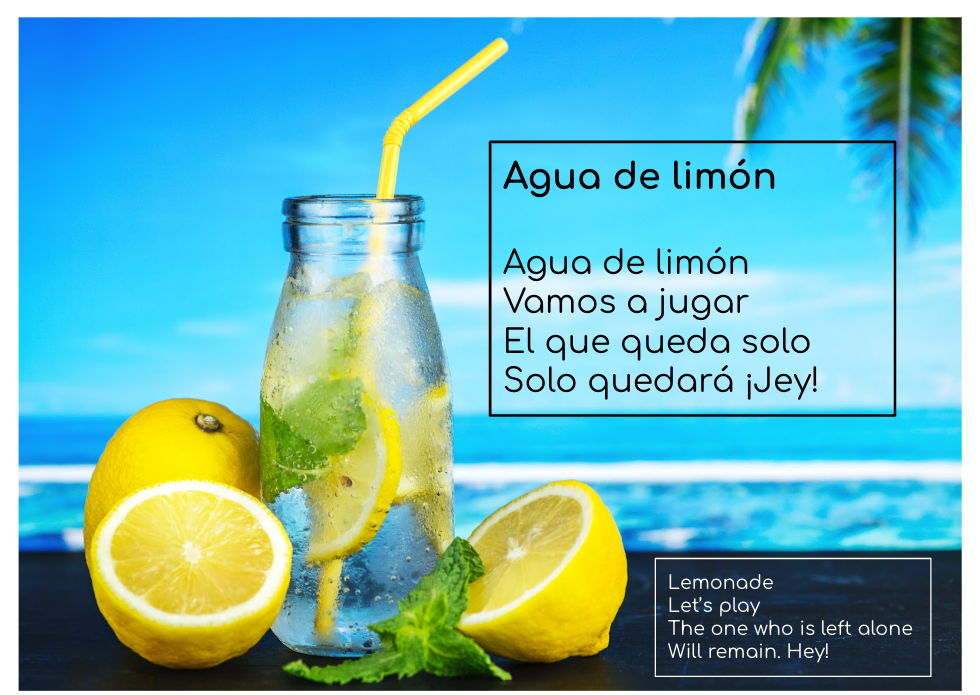
This is one of those games that is played many ways and has a myriad of concepts to focus on. I love using this in Kindergarten as a beat game, then later in the year as a rhythm game, and then spiraling it up into first grade as an introduction into La.
For the full slides, please click here and note this will force a copy.
I love fingerplays, do you? There are so many different ones and the text is typically rhythmic and short, perfect for working on steady beat, rhythmic division, and expressive elements like dynamics and the four voices. They are also perfect to use with older students to develop ostinato (short, repeating patterns that create harmonic texture) and for improvisation.
For the full slide set, click here.
Here are some of the slides in the set:
From September 15-October 15 Hispanic and Latinx/Latine Heritage Month is celebrated in the US. The dates coincide with national independence days in Chile, Costa Rica, El Salvador, Guatemala, Honduras, Nicaragua, and Mexico.
I have a very sweet friend in Quito, Ecuador that I met through the pandemic. I say, "through" because I do not know if our paths would have crossed had it not been for the pandemic. During quarantine, my dear friend Thom Borden and I began the American version of International Sunday Sharing, already begun by our dear friends across the ocean in Finland, JaSeSoi, the Finnish Orff Association. We met on Sunday mornings via zoom and had hundreds of music teachers from around the world show up to sing, dance, and share. It was a beautiful thing, and I met and befriended such beautiful people, including MaCarmen from Quito. Ecuador has always held a special place in my heart as our family had an exchange student during my freshman year of college. Anita became very special to us and she is my Ecuadorian sister, now living in Cincinnati. When I got married, she came from Ecuador with her sons to be at our wedding and she is a beloved member of our family.
For more songs, books, and dances to celebrate Hispanic and Latinx/Latine Heritage Month check out this post.
Here is beautiful MaCarmen's song she shared, the song is from Colombia and is SO FUN!
Hello, friends - first, an exciting announcement! I have a new community full of music educators who are trying to simplify their planning and grow professionally. I welcome you to come join for exclusive video lessons, activities, organization ideas, children's literature lessons, workshops, and one on one mentoring opportunities. We are going to have so much fun learning and growing with each other!
Diwali is coming soon- November 4. Diwali (orDeepavali as it’s sometimes called) means “row of lights” in Sanskrit. During this festival, people decorate their homes with lights and oil lamps, calleddiyas. The lights and lamps are said to help the Hindu goddess of wealth, Lakshmi, find her way into peoples’ homes, bringing prosperity in the year to come. It is also a celebration of good triumphing evil.Diwali is areligious holiday and festival originating in India. People often think of Diwali as a Hindu festival, but it is also celebrated by Sikhs and Jains. The celebration lasts for five days and marks the start of the Hindu New Year. The exact dates change each year and are determined by the position of the moon but usually fall between October and November.
Check out the Nat Geo page for more interesting facts.
Last year was the first year I incorporated Diwali more fully. I began by talking with some of my families who are Indian. I had some wonderful moms come in and teach me some Dandiya (stick) dances and we created a very simple one for our young students. There is some footwork involved in Dandiya dances but we focus more on performing with the sticks. I also talked with a few of my students who are Indian privately, asking if they wanted to speak or tell us during class about how they celebrated, or if any of them were performing classical Indian dance or song (I have a first grader who takes classical Indian singing lessons!) and invited them to perform.
Book to Begin
This is a lovely book and a perfect introduction to the customs and celebrations. This year I am recording two sisters who are Indian reading the book to show to all my classes.
Diwali, Diwali Song
Then we learned Manju Durairaj's Diwali, Diwali song and sang the chorus together.
Dandiya (Stick) Dance
We created a simple Dandiya dance on the chorus of the song. All movements are to the beat. Facing a partner tap right sticks together, tap left sticks together, tap own sticks to the right, tap own sticks to the left. Step back with one foot and tap sticks behind back, step same foot forward and both stick face right (like windshield wipers) and tap both partners sticks making a # hashtag, then trade places while turning around in a circle. Of course this can be modified but this is what the Moms at school and I came up with.
I would highly recommend wooden sticks - aluminum ones are available from Amazon but my experience is they break far too easily. Rhythm Sticks or dowels could also be used as long as they are the longer ones (12" or so).
Here is a video of Dandiya Dancing.
And an excellent teaching video to show you the footwork and sticking. The first one is just right for beginners and children.
Concert with Indian Instruments, Songs
This is an excellent 30 minute concert made for children from Lincoln Center featuring Grammy nominated artist Falu. I like beginning at 7:47 and end at 15:00 if I am pressed for time as they talk about traditional solfege, then Indian solfege, then sing a song incorporating the solfege.
Sitar and Tabla - played by KIDS!
A fun little video about sitar made for children:
Garba Dancing
My students love to see both the women and the men dancing here - and they love the music!
More Books Featuring India and Indian Characters
The Many Colors of Harpreet Singh - this is a google slide presentation featuring a video of the book, rhythms created from colors, along with discussion points for students about tone color. The end features several Bhangra dance videos.
The Wheels on the Tuk Tuk is sung to the tune of The Wheels on the Bus and is a great introduction to India.
Festival of Colors is just one of the most beautiful books and is about the Indian festival of Holi.
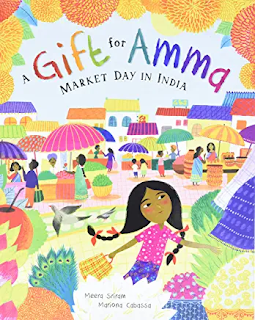
A Gift for Amma follows a girl as she goes through the vibrant rainbow colors of the market trying to find a gift for her mother.
10 Gulab Jamuns is the story of two brothers discovering a sweet treat from India.
Hope you enjoy all of these and Happy Diwali (in November)!
After searching for a while for butterfly songs, books, etc. I realized I needed to put it all in one place on a google slide. You can get it all here: http://bit.ly/butterfly_ACP
This google slide collection has books, songs, fingerplays, movement ideas and even the EASIEST butterfly finger puppet you could ever want to make! Here are some of the slides:

.jpg)

.jpg)
.jpg)
.jpg)
.jpg)
.jpg)
.jpg)
.jpg)
.jpg)
.jpg)
.jpg)
.jpg)
.jpg)
.jpg)
.jpg)
.jpg)