Yay, school planning should be starting. Ummm... Covid.. higher numbers, Delta variant, what does that mean for school this year? Will we be able to sing, play instruments, get back to "normal" or does that mean we will have to continue social distancing, quarantining, masking, no instrument playing? How do I plan for that?
The short answer- I don't know. The long(er) answer - much depends on CDC recommendations, Governor, state, and local school board decisions. And then there is vaccination issues, and the comfortability of those wanting to mask or unmask. SO many decisions.
I am making plans as I know my students will be in person and we will be able to do a little singing and will be able to share instruments as long as we are sanitizing hands and cleaning.
I have been enjoying the Olympics, which in turn renewed my interests in learning about Tanabata, a Japanese holiday celebrated on July 7. Although the holiday will be over when we return to school, I am going to be teaching about Tanabata as part of the first few lessons.
Tanabata
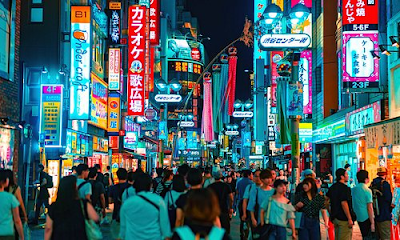
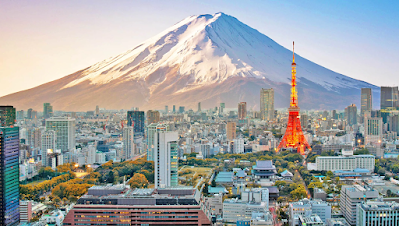
First, share these images:
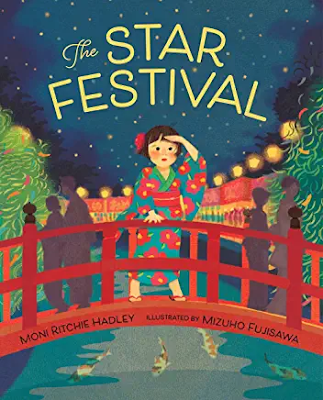
We will chat about the Olympics and events students may have seen or cheered for, then we will talk about the holiday of Tanabata and read this book which shares the story of Tanabata, also called the Star Festival. For older students, we might make this origami "paper river":
We may also watch this story of the two stars, Orihime and Hikoboshi:
Then we will learn this speech piece and develop the lesson.
Since Tanabata are wishes, we can create wishes for students for the new school year.
Then we will learn the Tanabata-sama song. Many thanks to Beth from bethsnotes! Check out the beautiful video!
Then to further connect culture and knowledge of Japan, here is another book to share about an artist who wants to fill the world with polka dots and a couple further books featuring polka dots!
One of the wonderful things about social media is finding wonderfully inclusive children's literature. JoJos Book Club is one of my favorite pages on instagram. I appreciate the honest and straightforward reviews and have found some really beautiful inclusive books there. A couple days ago I found The Ocean Calls which is very new- just published in August 2020. Written by Asian American Tino Cho and illustrated by Asian Canadian Jess Snow this is a beautifully told and illustrated story of a South Korean island community of haenyeo - deep-sea divers. Grandma and her fellow divers, all older women, dive without oxygen deep into the ocean to gather abalone, sea urchins, and other treasures. Granddaughter Dayeon wants to be a haenyeo like her "treasure hunting Grandma" but she’s scared. Grandma shows patience as she listens then says, “Can’t you hear what the waves are saying? They’re calling to us to come home.”
The book can be used as a jumping off point to connect culture in so many ways.
A recent social media post asked if camp songs are still culturally relevant. The post challenged me to consider how and why I use "camp" songs and I realized I do use some "camp" songs but the emphasis is on singing around a campfire a wide variety of diverse and inclusive songs and they aren't all considered to be "songs learned at camp." It is all about the kinds of songs used, not the experience of camping. The post also asked how others use camp songs in their classrooms and this was my response.
Your post challenged me to think about why I use campfire songs with my students. First, the emphasis is on singing around a campfire (community singing) not about going to summer camp. It simply isn't discussed and is not the focus. Appropriate, diverse, and inclusive campfire songs are repetitive, easy to learn, playful, memorable, and meaningful. That does not mean that they are culturally exclusive if done with a lens of using culturally relevant song material (not exclusively American "camp song literature") that acts as a mirror, window, or door. For the last month of school students sing campfire songs that feature call and response, canons and rounds, expressive singing, instrument play, movement, and ensemble singing. Playful songs from cultures not my own are included that are diverse and inclusive. Each class on their last day comes in to experience a campfire and we sing around the (pretend) fire. Some of my students talk about sitting in the backyard with fires, or of building fires while going camping with family and friends, and using fire to celebrate Diwali, Hanukkah, the Persian fire festival (related to Nowruz), and many other holidays and festivities. Many students share how they have sung these memorable songs to siblings and family members and they quickly become multi-generational songs for all to sing.
It is worth noting that campfire songs are made up of folk songs, spirituals, work songs, sea shanties, cumulative songs, call and response songs, fingerplays, movement activities, and often include folk dances and storytelling elements.
Our ancestors, wherever they were in the world, sang while cleaning animal skins, paddling canoes, pounding grain, hoisting sails, or gathering food. One person tapped a beat, another sang a melody, and others would join in or add harmony. Often, at the end of the workday, they might have joined around a fire to sing songs about love, family, travel, and hope.
Singing songs around a campfire leads to ensemble singing, reinforces concepts and skills, and can be celebratory, inclusive, and meaningful. They can lead to collaborative, enjoyable, memorable, and playful musical moments. It’s not about camping, at least not for me. It is about making memorable and enjoyable music with my students while celebrating the end of a school year.
My students love this time of playful music making and ending our year in this way keeps the music and laughter flowing.
A couple years ago I posted on a facebook live for how my campfire is made- here it is- How I Make My Campfire Video
This year it will be about TWICE AS BIG!!!
Here are pics of how my campfire is made- all materials from Dollar Tree except the wire stands (which are my glockenspiel stands), and the brown construction paper (from school).
After searching for a while for butterfly songs, books, etc. I realized I needed to put it all in one place on a google slide. You can get it all here: http://bit.ly/butterfly_ACP
This google slide collection has books, songs, fingerplays, movement ideas and even the EASIEST butterfly finger puppet you could ever want to make! Here are some of the slides:
I love folk dancing and movement although with this crazy school year and social distancing protocols, we haven't been able to move in our normal way.
Movement is so very important in what we do in music education. There are a veritable plethora of reasons "why" - this is not that post.
Judith Thompson-Barthwell wrote a wonderful article here about creative movement in the music classroom. This is a MUST read!
Movement
As a teacher who uses the Orff Approach, experiencing beat, rhythm, melody, form, and expression happens first in the body with movement. From the beginning, with youngest ages, we move, experiencing non-locomotor (in place) and locomotor (traveling) movement. Reaction training games are elemental, basic games - playing a beat on a drum, students move. When drum stops, students freeze. Subdivided beats (eighth notes) played on temple blocks indicate running. This is such a playful beginning exercise in responding to music, awareness of physical space, pathway, and personal space. Adding a wind chime and asking students what to do (float, turn in place, wiggle), and alternating between walking, stopping, running, stopping, and wiggling/floating/turning allows students to playfully experience responding to musical cues and signals.
Once students experience basic movements (walk, hop, turn, skip, freeze, jump, etc.) we add direction (forward/backward, sideways, etc.), and levels of high, medium, and low, we are ready for more complicated and sophisticated movements but we never stop working on the basic concepts- they simply spiral. Dalcroze movement stories are IDEAL experiences to help students growth and they are easy to implement. My students love this one!
Once we have experienced structured (this is what we do here) and unstructured movement (what should we do here?), we are ready to continue adding on with formal "folk dances."
Highland Gates
This is one of my favorite first experiences with "folk dancing". The song gives the directions: Go all around the circle (walking clockwise), go up and down the ladder (moving in and out of a circle), kneel and face a partner, and swing and swing your partner (right elbow swing). It is a wonderfully playful dance and students gain rich experiences in moving, changing partners, all while singing! It is a fast favorite and a fabulous opener if you have a family folk dance night or experience with a multi-age community of children and adults.
Sasha
Another fast favorite, this song is a changing partners "game" and dance in one!
Alabama Gal
Working with partners, "peeling the banana", etc. - a favorite!!
Pata Pata
This one is a good "Four Walls Dance" - students perform the dance individually, then do a quarter turn to face a new wall, dance again, quarter turn again, etc.
The Sweets of May
Such a fun dance from the New England Dancing Masters!
EVERYTHING by the New England Dancing Masters! Click on the picture to be taken to their shop - I would HIGHLY recommend this bundle!
Teaching Movement and Dance by Phyllis Weikart - this is THE RESOURCE everyone needs. Yes, it is $55.00 but oh so worth it. The way in which Weikart breaks down dance and movement steps is simply amazing. Forward, 2, 3, 4, side close, in, 2, 3, 4 - this is the language students learn to speak to make dances accessible and attainable in a VERY short amount of time.
Creative Dance for All Ages by Anne Greene Gilbert - a sequential curriculum, 40 lesson plans, instructional strategies, assessments, etc.
We will be using plastic bottle caps on a hard surface and sliding the caps on the yellow arrows. The bell will be played by me or a chosen student on my desk bell. The black "splat" is really a placeholder and does not signify something to be played.
I have always loved clouds. Fascinating things. I have memories of being a kid laying on a blanket on the grass in the summer, just watching and finding shapes, animals, faces, and things in the shapes of the ever-changing clouds. Hope you enjoy these and find some ways to use them with your students.
And some wonderful books to add! These are my favorites!