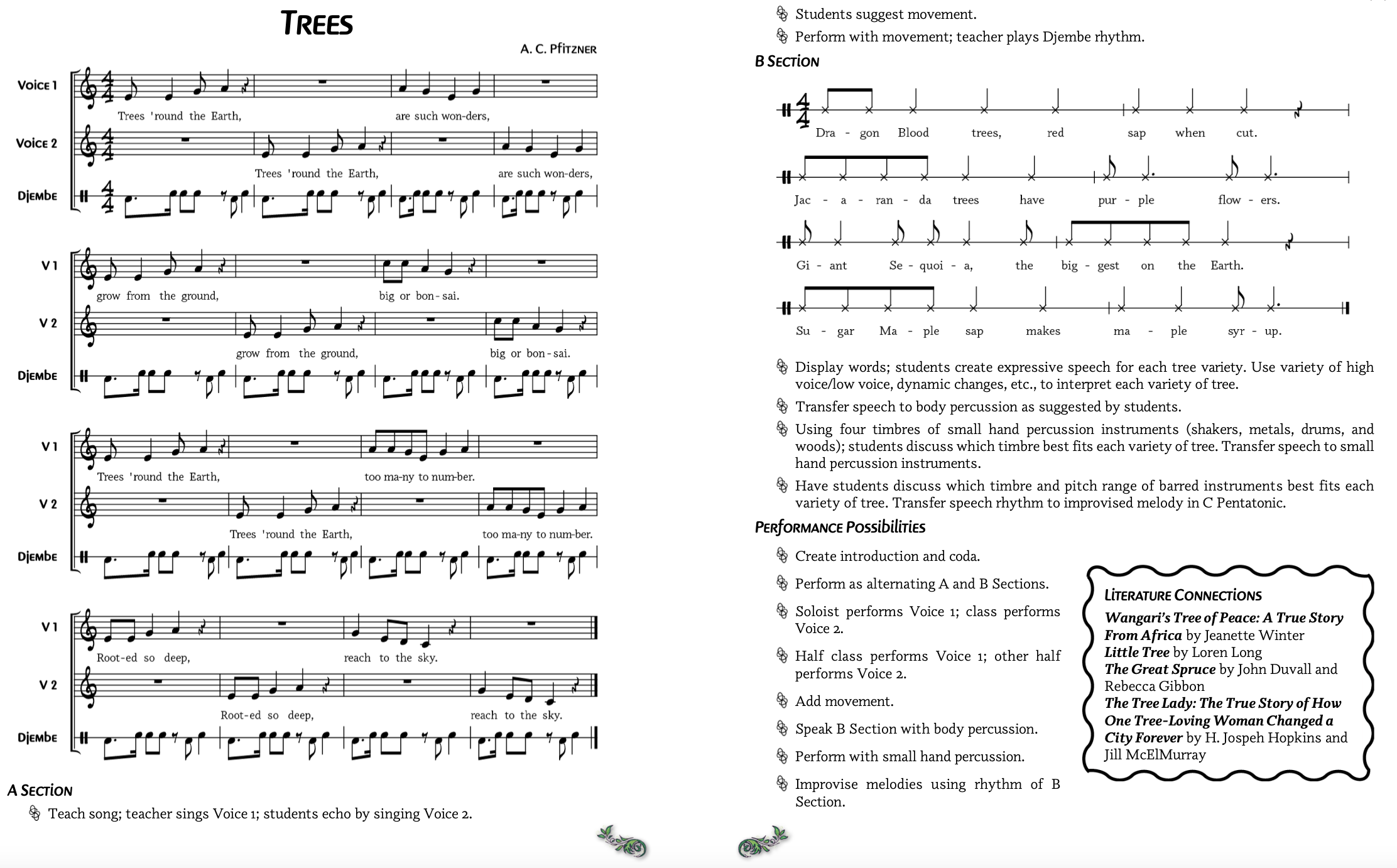
This has been a favorite post for several years but it was time for an update - get the google slide here! Please note this will force a copy.
Here are a few pages from the google slides.


This has been a favorite post for several years but it was time for an update - get the google slide here! Please note this will force a copy.
Here are a few pages from the google slides.
Hike by Pete Oswald (of The Good Egg and The Bad Seed fame) is a beautiful (almost) wordless picture book.
Follow a Dad and son into the mountains as they witness the magic of the wilderness, overcome challenges, and plant a tree to give back to the forest. This beautiful book is full of possibilities for movement and vocal and barred instrument exploration (images that move down or up, small and large trees, mountain peaks, hills and of course those beautiful winding trails). Or, have small groups create movement tableaus for different pages or create 2-beat building bricks about what the father and son are doing or seeing.
Perfect for back to school talks about summer trips or for Earth Day.


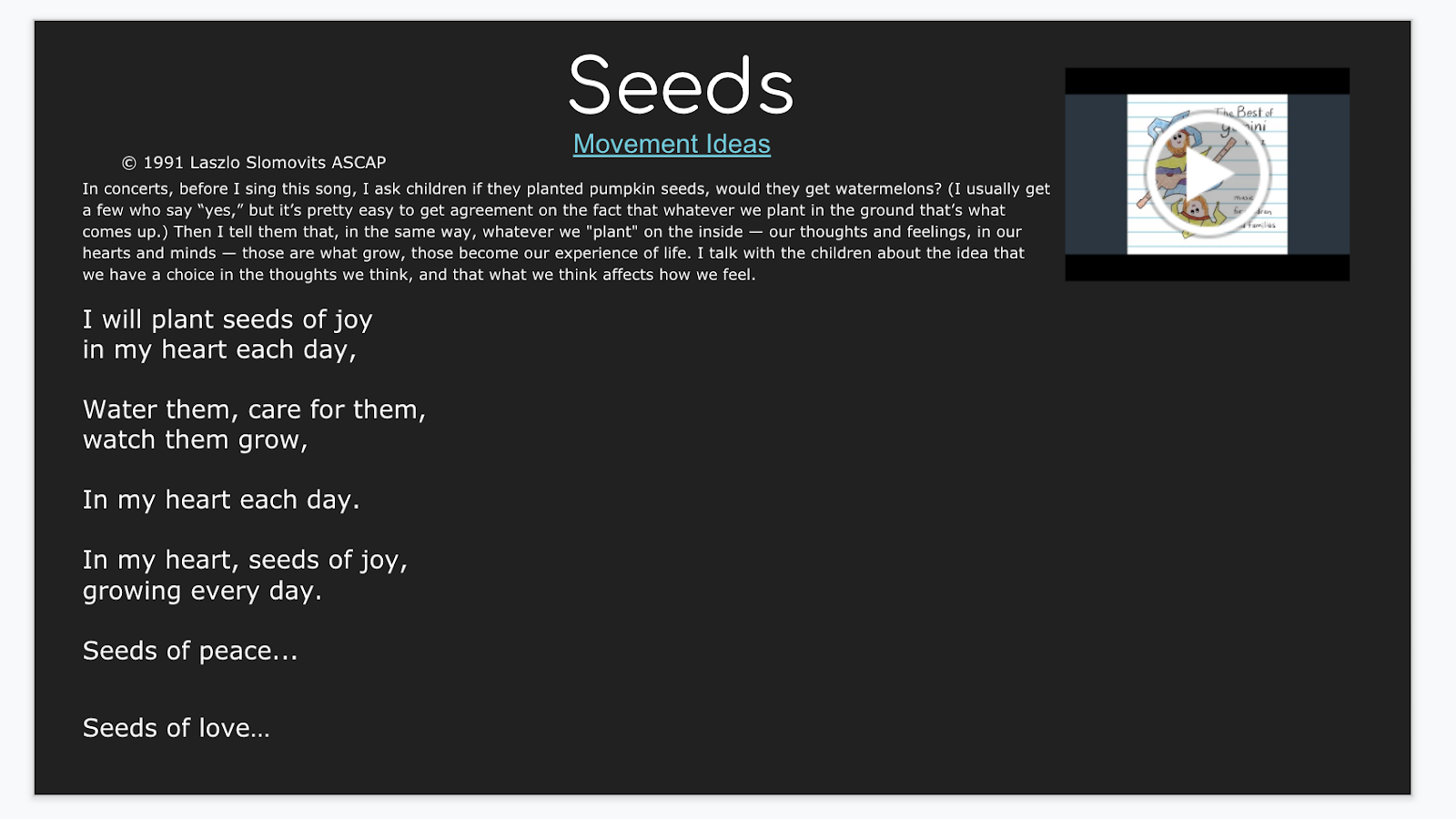
Another great tie in would be the beautiful canon, This Pretty Planet.


Sounds. Noises. Music. Squeals, splashes, tweets, whistles, zonks, and barks.
This is a fun video to get children thinking about sounds.
Clangery bash, splish a ma splash.
Whomp, rumble, wah wah squeak.
So many sounds to make, to hear.
Listen, listen, use your ears.
I love starting with this book and every couple of pages insert the speech above.

Then we review the ways we use our voices and bodies while we play Boom Chicka Boom. We speak this with various voices; cow sounds, baby style, low and high voices, whisper voices, etc. We also explore new ways to keep the body percussion ostinato.

Next we read The Listening Walk by Paul Showers and Aliki.

Once we have read the book, we go on a silent listening walk outside. You could also choose to take your walk through your building. Students work in pairs with one pencil, a clipboard, and one recording sheet below.

Students then discuss their favorite 5-7 sounds and how to recreate them with voices or bodies.
Next we talk about how to show the sounds visually. I love this post from Classicfm on how art and music collide in graphic notation. Here is one of the graphic scores shown, isn't it gorgeous and a great example of linear non-traditional notation?!

Here's another fun one for singers:
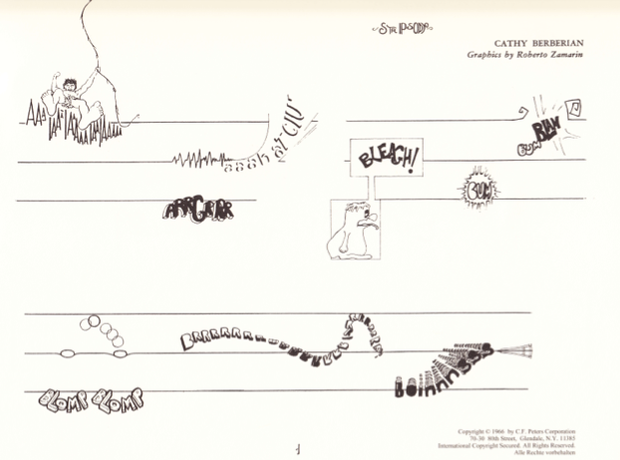
Students will choose an order for their sounds - what comes first, second, etc.? Are they all quiet sounds or is there a mix of quiet and loud? Is there a mix of high and low sounds?
On a blank piece of paper in landscape orientation, students draw a “road” and write their favorite 5-7 sound names or representation. Add dynamics of p or f for quiet or loud for each sound. Perform.
Then we discuss how composers interpret sounds with instruments. Here is a student sample:
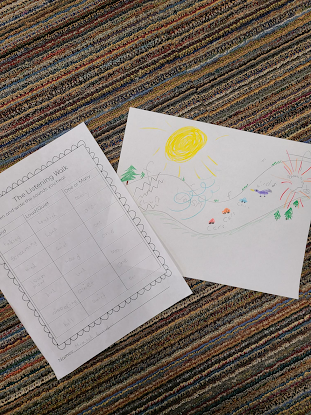
Next students circle up to three sounds to try to interpret on instruments. The other instrument sounds continue to be performed with voices or bodies. Students choose the kinds of instrument timbres that best represent the sound. This part can get NOISY, but allow for the noise and for the exploration as students make choices and decisions. There is no right or wrong answer.
Now we are ready for the song to create a Grand Rondo!

Perform in rondo form with song as A Section, student creations will be contrasting sections.
Then we listen to excerpts from Beethoven's Pastoral Symphony (No. 6). Beethoven deeply loved nature and often traveled to the countryside outside of the busy city.
As Beethoven's favorite place was being in nature, while listening students draw pictures of their favorite places and add a few sentences about this favorite place.

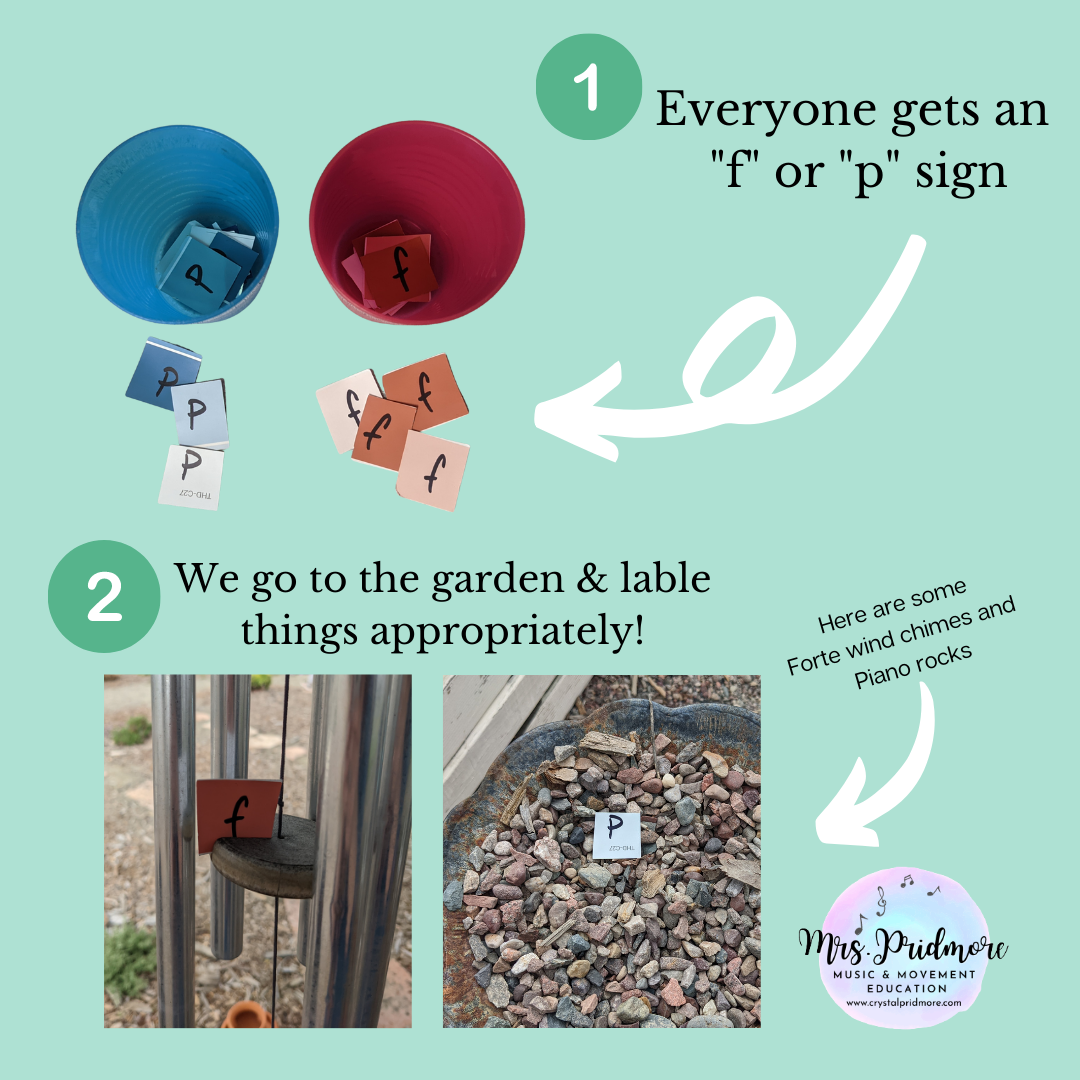
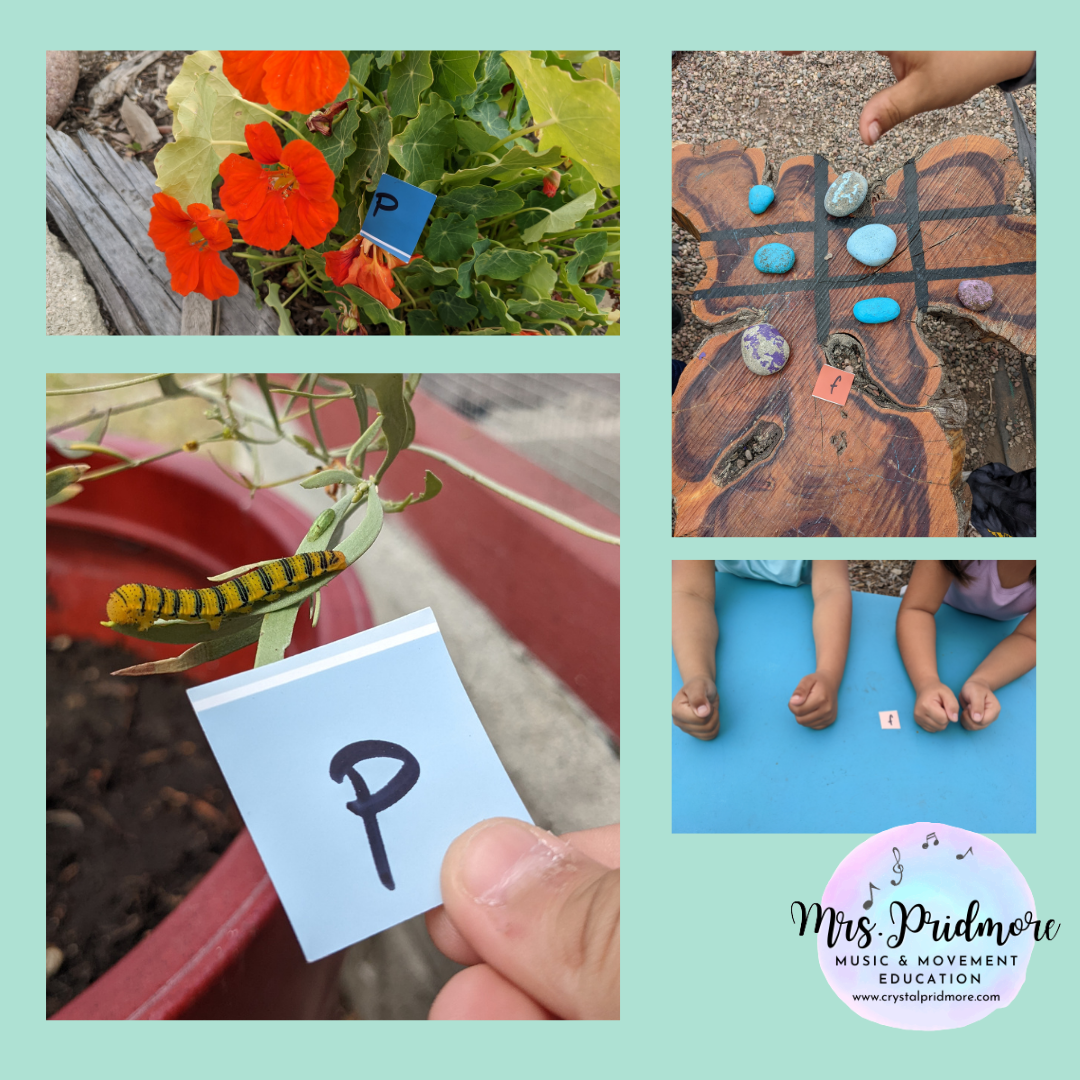


I love spring! All the flowers, the new leaves budding, and green; so much green!!!
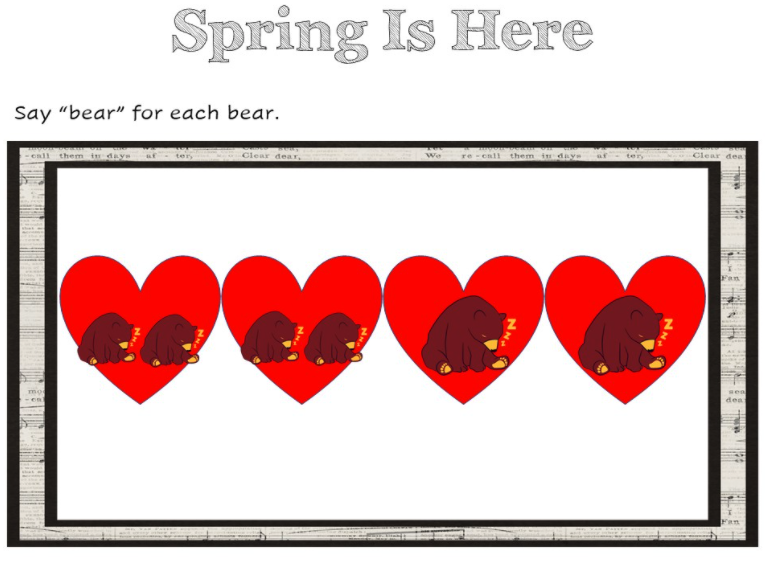
I have been playing with some older lessons I created years ago and have had so much fun using Spring is Here by Will Hillenbrand with my students. This is a Bear and Mole story and is so cute - kids love the ending!
It is a nice introduction into half note, too! Check out the lesson below. Click on this link which will take you to the full Google slide complete with a 6-minute video lesson that will talk you through how to teach the lesson as well as give you the 2-beat building bricks. Like everything else you see and want more lessons like this? Come and join our Patreon community for exclusive content, monthly mini workshops and mentorship opportunities. All for about the cost of a cup of coffee per month!



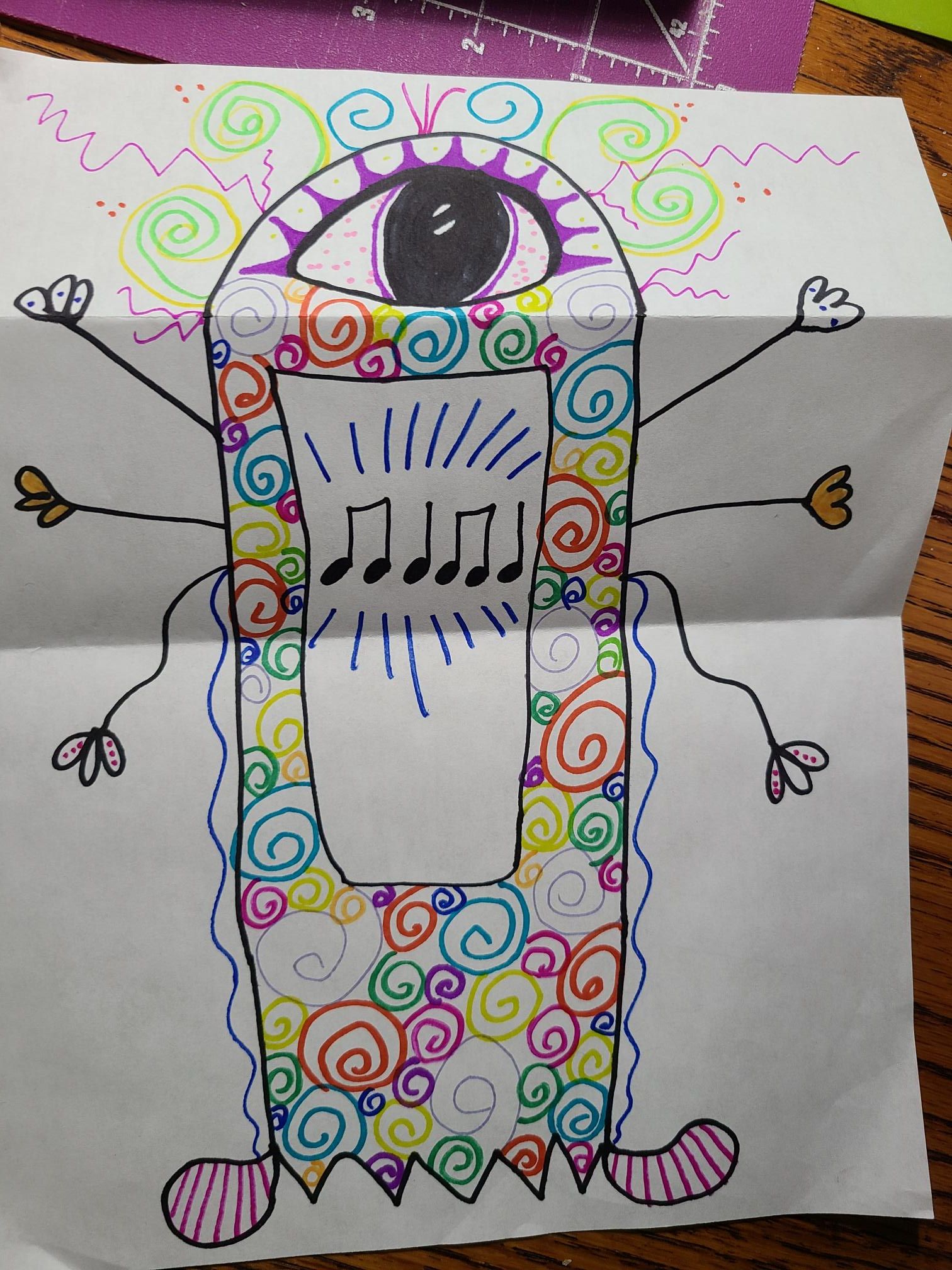
Monsters, Monsters, how much do I love thee?
I love using In the Hall of the Mountain King but with little ones I do this activity. It is a fun activity using locomotor movement and a modified melody.
If you have the book, In the Hall of the Mountain King, I start this lesson by reading the book.




Many thanks to my friend Jeaneau Julian for sharing this lovely lesson she created!
Don't forget to check out my new Patreon community of music teachers for exclusive content, workshops, and mentoring opportunities.
Click here to download the Google Slides and make a copy.
There are a couple "pathways" you can use for this- the composed song below or the one from the Volumes (see lesson idea below). Either way you go, this is a MUST READ book for every child- and adult, too!