
Showing posts with label second grade. Show all posts
Showing posts with label second grade. Show all posts
Friday, February 13, 2026

Thursday, October 16, 2025
Candy Building Bricks
Rhythmic Building Bricks or Blocks are often used as compositional tools in elementary music classrooms.
Developed by Carl Orff's fellow teacher, Gunild Keetman, these simple 2-beat patterns use quarter notes, quarter rests, and paired eighth notes (and sometimes a half note). These are elemental rhythms most commonly found in children's rhymes, fingerplays, and simple songs and can be combined to create more complex rhythmic patterns.
Rhythmic building bricks break down composition into small, manageable units, enabling students to create their own pieces from simple patterns. This approach reduces the intimidation of composing and encourages creativity through structure. By experimenting with different combinations of rhythmic bricks, students explore concepts like repetition and arrangement, fostering creative ownership of their musical output. The use of repeated patterns helps students internalize how repetition contributes to musicality and familiarity. Additionally, rhythmic bricks allow for differentiation, as teachers can adapt pattern length, rhythmic complexity, and instrumentation to meet diverse learning needs.

Specific Learning Goals
- Rhythm: Building bricks should follow natural speech (the way a word is spoken).
- Repetition: Musical themes often repeat.
- Form Exploration: Try various elemental forms of aabb, abab, abba, aaab, and abac.
I Get It, Now What?
Rhythmic Building Bricks/Blocks are often thematic and should always use natural speech (which is why names don't work well as there are too many accents and pickups that don't fit the elemental quarter notes and eighth notes).
Small groups of students are given 4 building bricks (this will create an 8-beat rhythm). The rhythms should be ones already learned. They practice arranging them, speaking them, adding body percussion and perhaps transferring these to non-pitched percussion. They may be used as a contrasting section to a short speech piece or song.
These candy building bricks/blocks are perfect for fall and winter holidays and include some variations including sixteenth notes! Please note this will force a copy.


Tuesday, January 16, 2024
Bounce High, Bounce Low
This is one of those games that is played many ways and has a myriad of concepts to focus on. I love using this in Kindergarten as a beat game, then later in the year as a rhythm game, and then spiraling it up into first grade as an introduction into La.
For the full slides, please click here and note this will force a copy.
.jpg)

.jpg)
.jpg)
.jpg)
.jpg)
.jpg)
.jpg)
.jpg)
.jpg)
.jpg)
.jpg)
.jpg)
.jpg)
.jpg)
.jpg)
.jpg)
Tuesday, October 11, 2022
Pass the Pumpkin *Updated!
Pass the Pumpkin is a fall favorite and I have remade the slides in google slides with some small tweaks to the visuals and the directions.
Click this link for the google slides - please know this will force you to make a copy.


Enjoy!

Friday, April 29, 2022
The Listening Walk
Sounds. Noises. Music. Squeals, splashes, tweets, whistles, zonks, and barks.
This is a fun video to get children thinking about sounds.
Clangery bash, splish a ma splash.
Whomp, rumble, wah wah squeak.
So many sounds to make, to hear.
Listen, listen, use your ears.
I love starting with this book and every couple of pages insert the speech above.

Then we review the ways we use our voices and bodies while we play Boom Chicka Boom. We speak this with various voices; cow sounds, baby style, low and high voices, whisper voices, etc. We also explore new ways to keep the body percussion ostinato.

Next we read The Listening Walk by Paul Showers and Aliki.

Once we have read the book, we go on a silent listening walk outside. You could also choose to take your walk through your building. Students work in pairs with one pencil, a clipboard, and one recording sheet below.

Students then discuss their favorite 5-7 sounds and how to recreate them with voices or bodies.
Next we talk about how to show the sounds visually. I love this post from Classicfm on how art and music collide in graphic notation. Here is one of the graphic scores shown, isn't it gorgeous and a great example of linear non-traditional notation?!

Here's another fun one for singers:
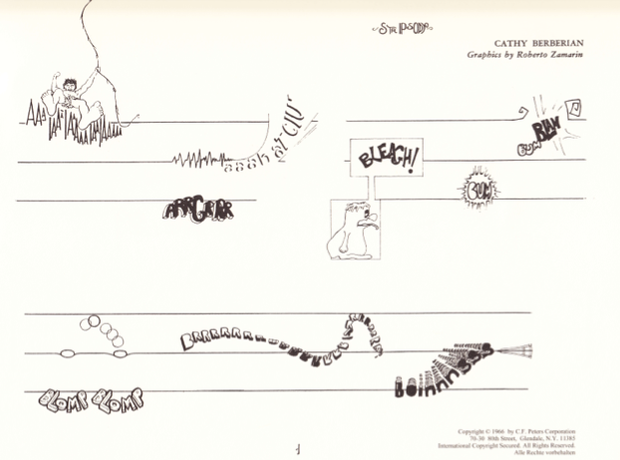
Students will choose an order for their sounds - what comes first, second, etc.? Are they all quiet sounds or is there a mix of quiet and loud? Is there a mix of high and low sounds?
On a blank piece of paper in landscape orientation, students draw a “road” and write their favorite 5-7 sound names or representation. Add dynamics of p or f for quiet or loud for each sound. Perform.
Then we discuss how composers interpret sounds with instruments. Here is a student sample:
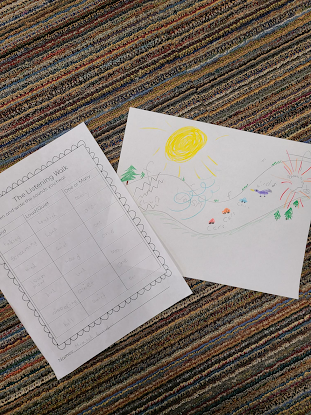
Next students circle up to three sounds to try to interpret on instruments. The other instrument sounds continue to be performed with voices or bodies. Students choose the kinds of instrument timbres that best represent the sound. This part can get NOISY, but allow for the noise and for the exploration as students make choices and decisions. There is no right or wrong answer.
Now we are ready for the song to create a Grand Rondo!

Perform in rondo form with song as A Section, student creations will be contrasting sections.
Then we listen to excerpts from Beethoven's Pastoral Symphony (No. 6). Beethoven deeply loved nature and often traveled to the countryside outside of the busy city.
As Beethoven's favorite place was being in nature, while listening students draw pictures of their favorite places and add a few sentences about this favorite place.
This takes 2-3 classes (depending on length of class) and is a fun activity my students have enjoyed for several years!
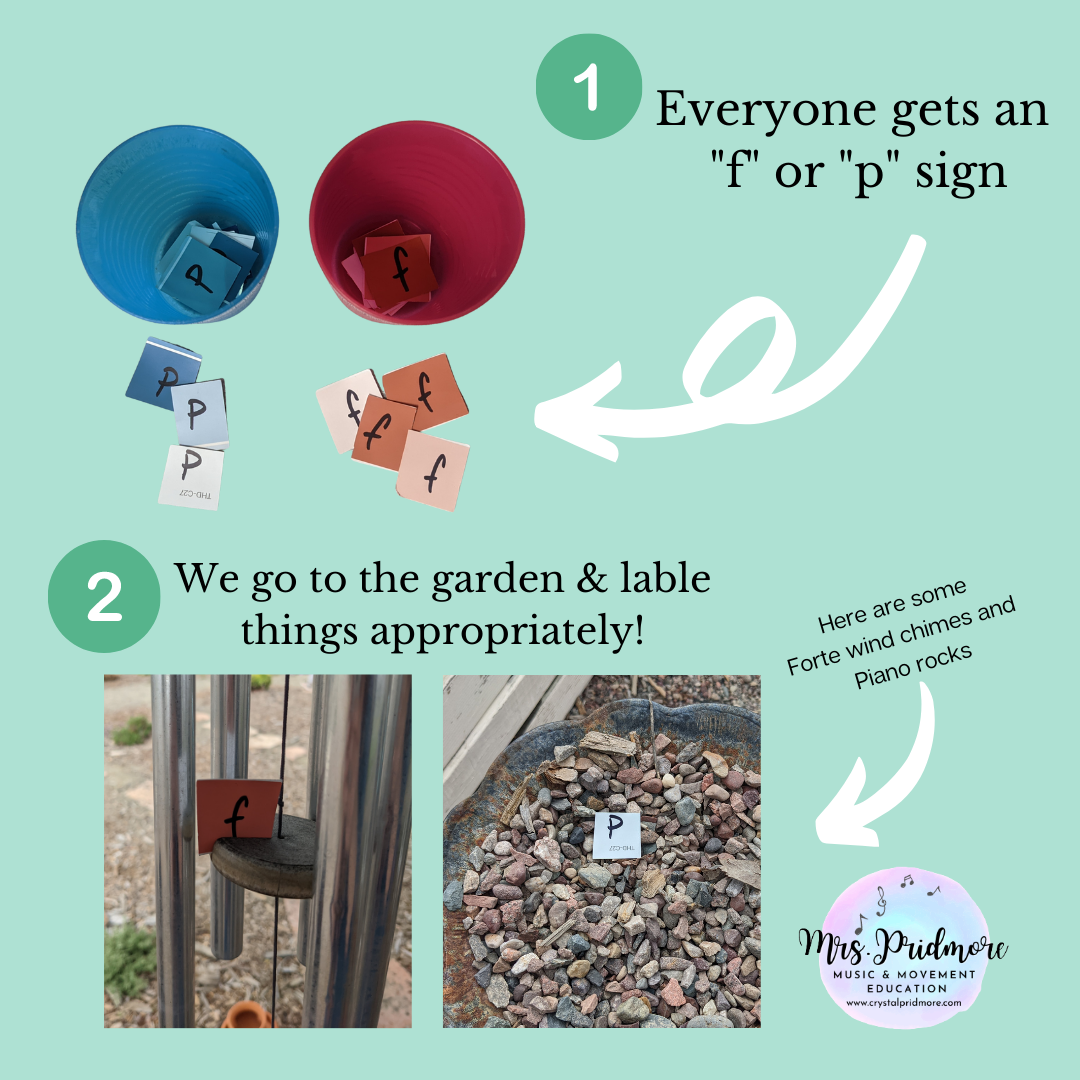
Crystal sent me an update to her song and the way she uses the book - here is a Forte/Piano Garden Scavenger Hunt using f and p cards made from paint chips!

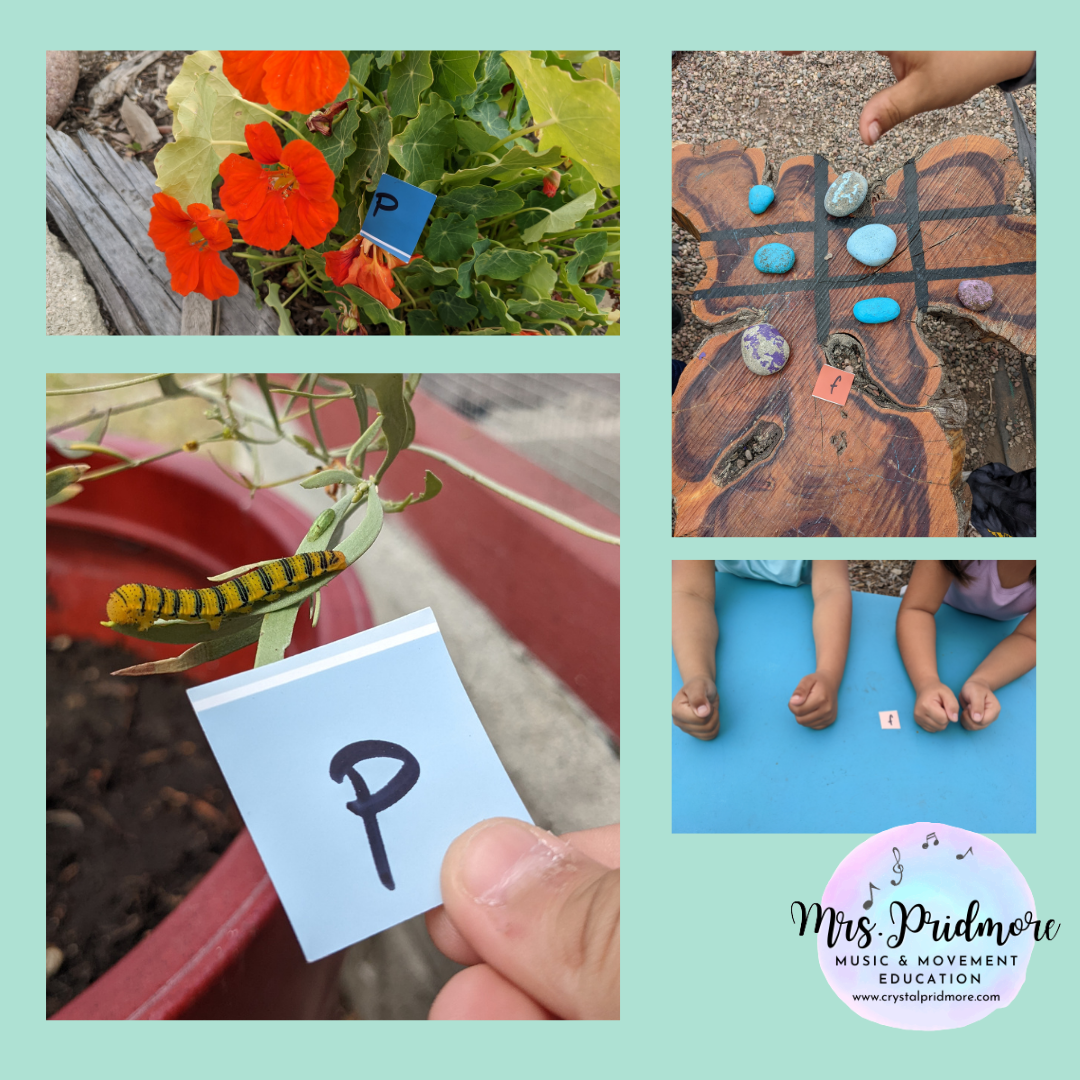

Hope you enjoy!

Friday, October 26, 2018
Monsters Love Underpants
There is nothing funnier than saying the word, "underpants" to children. It is hysterical. Giggles galore! If you have been on my blog before, you know I love giggles, in face, when my publisher asked me to name my site for my books, I had to get "smile" in there- it is www.singsmileplay.com!
I love this collection of books by Claire Freedman and Ben Cort- SO funny - if you haven't seen them, hop over to Amazon to see them! Monsters, Aliens, Dinosaurs, Pirates, It is a nice way to finish the craziness of Halloween without being too "Halloween-y". Of course, as the theme is monsters (and aliens, etc.) in underwear, these children's books are good for any time of the year!
A couple years ago in the Dollar Spot at Target they had some really wonderful heavy-duty chipboard underwear games. These were perfect for creating rhythms on one side with words! I have included a few cards with colors, shapes, and lines for you to begin the process as the underwear pieces are no longer available.
There is so much you could do with the rhythms once they have been created - transfer the rhythms to F and D in the d minor pentatonic scale being used, transfer to unpitched percussion, small groups could create non-locomotor or locomotor movement to illustrate their shape and pathway! Possibilities abound! If you would like the pdf, please send me an email at musicquilt@hotmail.com.
Happy Fall!


I love this collection of books by Claire Freedman and Ben Cort- SO funny - if you haven't seen them, hop over to Amazon to see them! Monsters, Aliens, Dinosaurs, Pirates, It is a nice way to finish the craziness of Halloween without being too "Halloween-y". Of course, as the theme is monsters (and aliens, etc.) in underwear, these children's books are good for any time of the year!
A couple years ago in the Dollar Spot at Target they had some really wonderful heavy-duty chipboard underwear games. These were perfect for creating rhythms on one side with words! I have included a few cards with colors, shapes, and lines for you to begin the process as the underwear pieces are no longer available.
There is so much you could do with the rhythms once they have been created - transfer the rhythms to F and D in the d minor pentatonic scale being used, transfer to unpitched percussion, small groups could create non-locomotor or locomotor movement to illustrate their shape and pathway! Possibilities abound! If you would like the pdf, please send me an email at musicquilt@hotmail.com.
Happy Fall!


Subscribe to:
Posts (Atom)