Showing posts with label vocal exploration. Show all posts

Sunday, March 6, 2022

Manipulatives - The Why and The What


Manipulatives are objects students or teachers use within a lesson to teach or reinforce a concept. 

Manipulatives are engaging and playful.  They make abstract musical concepts visual and concrete. 

Digital manipulatives made to be dragged/dropped, etc. do not engage the brain in the same way and do not impact fine motor skills.  Digital manipulatives are also not typically used in small groups and do encourage social interaction among peers.  There is a time and place for tech.  Using hands-on manipulatives, students develop and practice communication skills with small group composition or partner play.  Kinesthetic learners need the tactile experiences hands-on manipulatives provide. The best reason to use them is simple - they are inexpensive, and FUN!  

Learning Sequence


 This gives students  a variety of experiences and provides structure and familiarity while working in small groups, then partners, before individuals use manipulatives alone.

Pulse/Rhythm

When using manipulatives with rhythm I begin with imitation - students recreate the rhythms displayed. For example, students will recreate a displayed rhythm with popsicle sticks.  Then we explore rhythms using building bricks, later we would write rhythms with dry erase boards and eventually we would use pencil and paper after many experiences with imitating, exploring, and creating with manipulatives. 
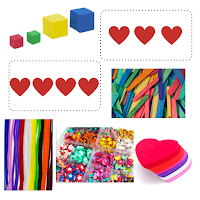
Beat strips - four hearts on one side, three on the other.  This way you can work in triple and duple meters!

Popsicle sticks for rhythm dictation and composition - I prefer just the large colored ones from Dollar Tree. Some people prefer small and large ones, but I really like to KISS - Keep It Simple Sweetie! 

Foam hearts - perfect to find at Dollar Tree or your favorite craft store!  Write various rhythms on each one. 

Pipe cleaners to create notes and Noteman (thanks to Shari and Ashley for this idea).

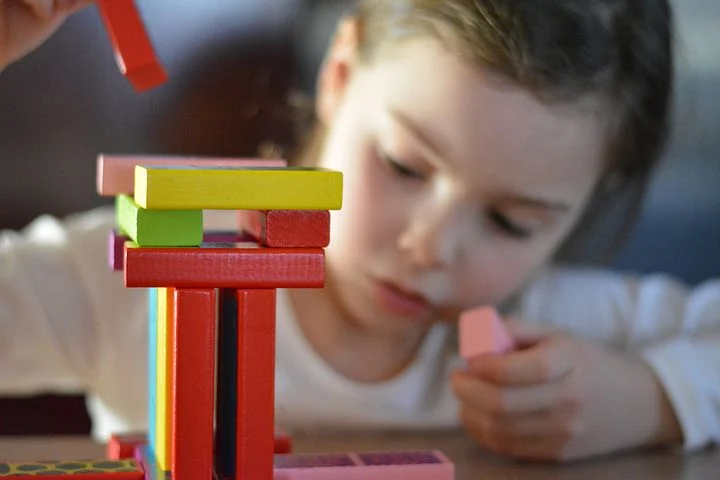
Two- beat building bricks.  I have so many sets of these for various activities and content areas available in my Patreon community.  Print, cut, and give to students! 

Rhythm Dice; these can be created from purchased wooden dice or foam - Dollar Tree has carried these in the past. Draw notes on each side with sharpie.  Make sets of these with quarter, eighth, and quarter rest, another set which includes two single eighth notes, and another set which includes sixteenth notes.  Each side of the die is a single pulse/beat.

Group together and put into a plastic baggie - get the good heavy freezer bags and punch a hole in the top so when students put them back in and close them the air escapes and they lay flat.  Four inch (or so) piece of string in the bag to show tied notes. 

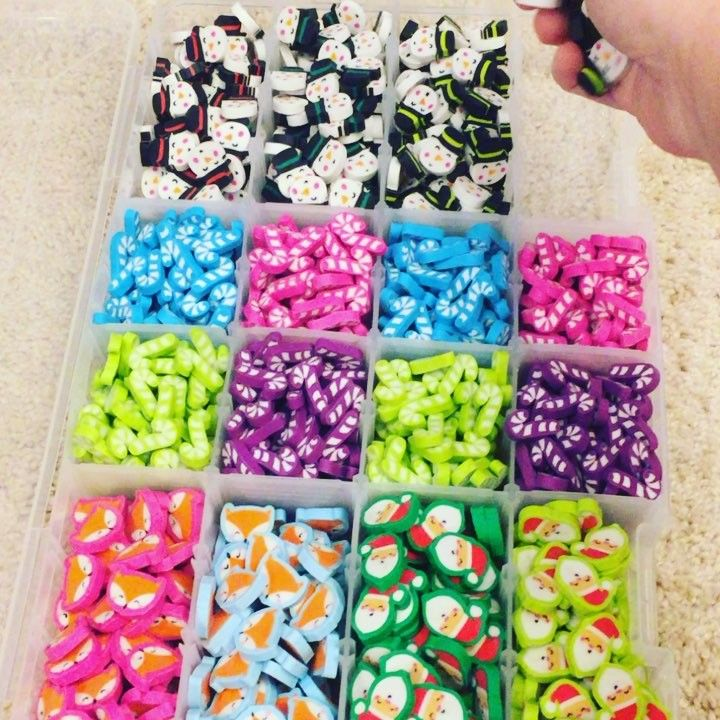
Mini erasers - These are great to use for notating the number of sounds on beat strips. Also, they are just SO cute! 


Melody

Staff boards                                                                                                                                                   

These are commercially available from your favorite music retailer but can be pricey.
I particularly like these staff boards made out of dollar store cookie sheets and electrical tape (also from dollar store).  Original idea from Elizabeth at Organized Chaos. On the back you could make a 2-line or 3-line staff or 4-beat rhythm blocks (the bottom shown here is 8-beats). 
You don't have to use the purchased magnets (they can be pricey); you could use foam (available in craft packs from Dollar Tree) and cut out circles to glue googly eyes on and then glue small round magnets (dollar stores and craft stores carry these).


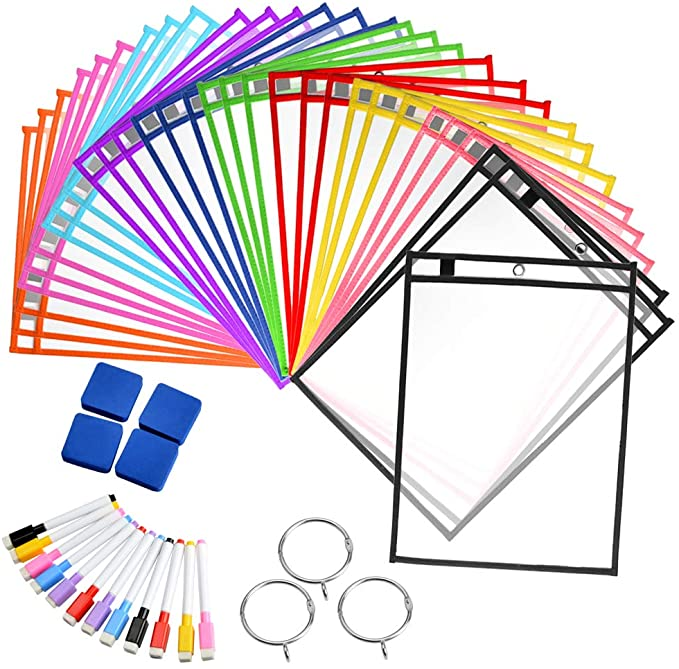
Draw a 2-line, 3-line, or full staff on a white piece of paper, draw four boxes on the back for a 4-beat rhythm area and place the page inside these page protectors (click on photo to go to Amazon link).  Use dry erase marker or your favorite mini-erasers, transparent bingo chips, or other manipulatives.


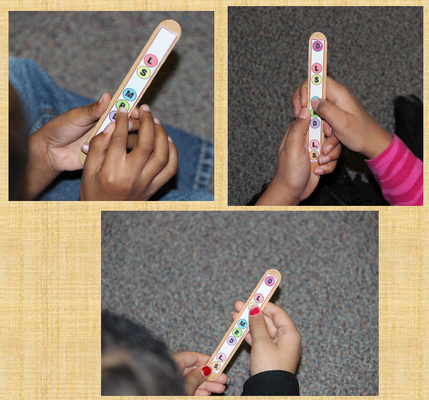
Popsicle Stick Texting Sticks

I love these as they make solfege ladders become more personal and interactive. Click on the picture to see Ms. Manguso's tutorial and free downloadable images.  Use a glue stick or Modge Podge to stick the printed letters on. 

Felt staff with notes. Sew a zigzag stitch or use fabric paint to create lines on rectangles of felt, cut black circles from black felt for the notes or use Bingo chips. 

Skittles and M & M's 

S printed on Skittles and M printed on M and M's - give a variety of each to students to dictate a 4-beat solfege phrase for So and Mi, notate a SM song, or have students create their own!

Mini Erasers

Great for kinesthetic learners (and everyone) and fun for students to manipulate. Target has these in the Dollar Spot often and are seasonally themed. 

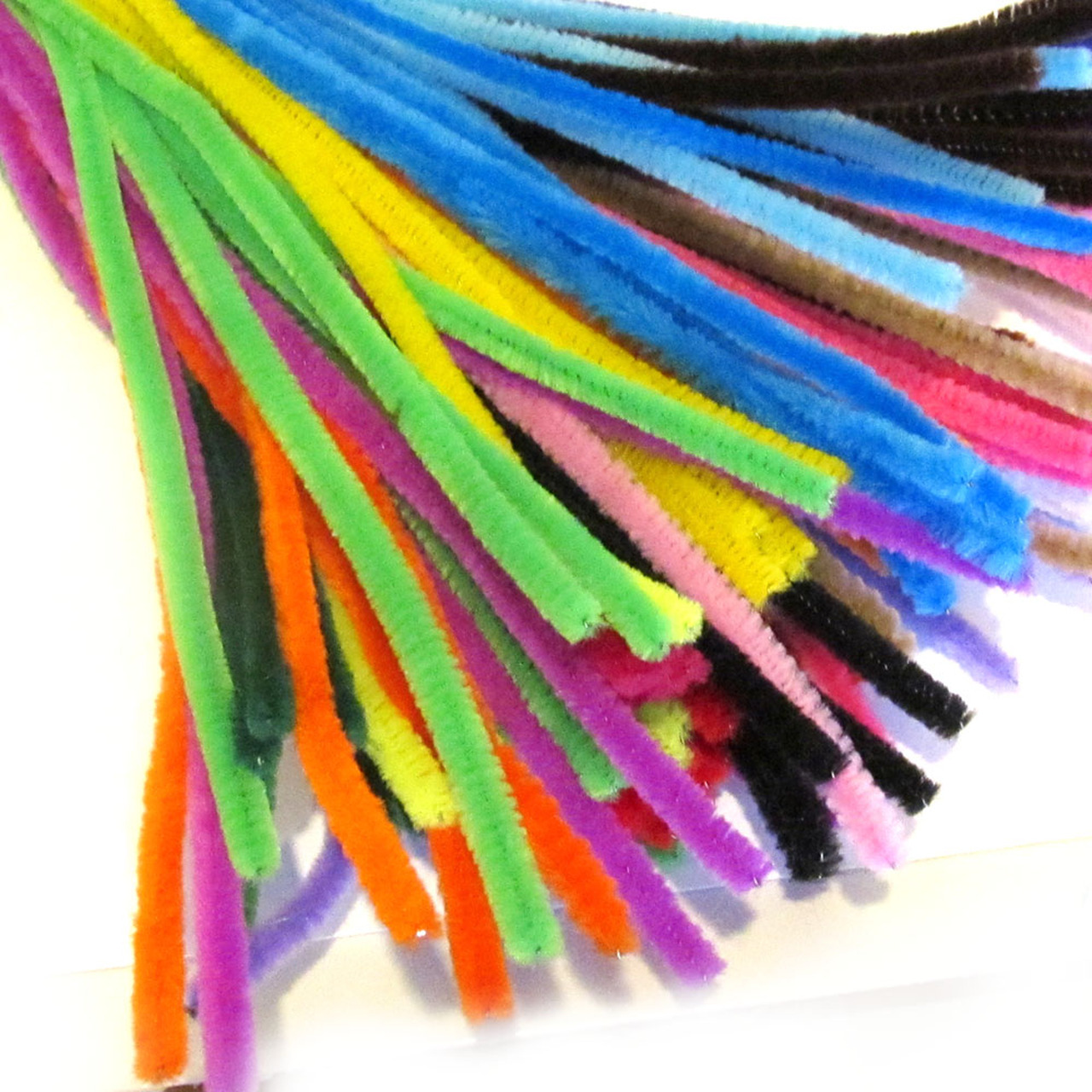
Pipe Cleaners/Chenille Stems

Children love the fuzzy texture and bright colors and most of them have not used them before! They are the most flexible (pun intended), highly underrated, and undervalued.  They are also wonderful for fine motor control!  You can roll and bend them into notation shapes, use horizontally to demonstrate so and mi/high and low, and bend them to show vocal exploration or movement pathways!  SO much fun in something so very small.  

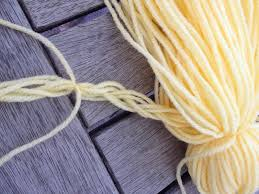
Yarn for students to create vocal exploration (and movement) pathways
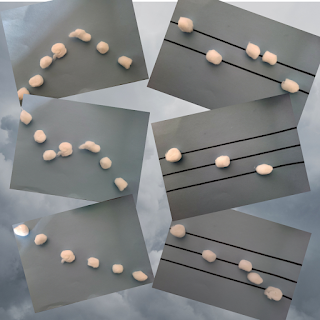
Cotton Balls for vocal exploration and melodies on a sky blue paper background.


Form

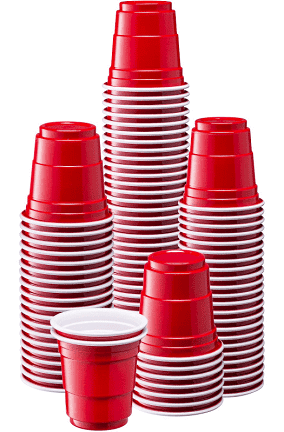
Cups - I like the Mini "Solo" Cups Dollar Tree has - they always have the red ones and at Christmas time they also carry green. You could also use any other cups in two or three colors to create elemental forms of ABAB, ABBA, AABB, etc. 

Construction paper or foam shapes cut into 4" squares, circles, triangles - one color per shape and one letter per shape - A, B, and C


I hope these give you some ideas. There are so many other favorite manipulatives - what are some of yours?

Enjoy,


Tuesday, January 8, 2019

How do you "do" vocal dictation/exploration within your classroom?

1.  I posted a video on my facebook site - @o for tuna orff  this morning so go check out some other things to do.  Check it out here!


2.  Vocal Exploration to Staff Notation

Click here for previous blog posts about vocal exploration including these (there are 113 slides in the set and it is FREE!).


3. Vocal Exploration Cards and Ideas

Bushfire Press also has a set of free cards and several ideas here.

4. Winter Vocal Exploration Cards

Another set of vocal exploration cards, these are from a Winter Set I made. Again, FREE!


5.  More and More!

My friend, Jennifer, from Yellow Brick Road blog, has a great blog post about why and how as well as several fun activities to explore. Check it out here. 

So, how do you "do" vocal exploration?

Friday, September 21, 2018

Vocal Exploration to Notation

This is a resource I created to help students go from vocal exploration to notation. Use the individual colored slides for younger students and ask - where does it move, high to low, low to high?  Does it go up and down, etc.  You could also use these for movement pathways. Notice there is no clef so you can use them right side up or upside down.   If you would like to have the full  pdf with 113 slides, please send an email to musicquilt@hotmail.com.

Each slide begins with a colored vocal exploration or movement pathway:
The next slide places the staff on the slide:
Notes are added:
Then the image is removed:
Here are a few others:


Hope you enjoy these!

Wednesday, April 25, 2018

No Robbers Out Today

End. Of. The. School. Year.
Those words can bring a slight feeling of dread to even the most seasoned teacher.  This time of year the kids can become a pack of wolves, feeding on the excitement of field trips and field days, summer birthday celebrations and the impending excitement of summer!  I am getting ready to start camp songs for the last four weeks of school, which for me begins next week into May 29th, the last day of school for us.  Check out @ofortunaorff on facebook as I just this morning posted a video of "Alligator" - one of my students favorite camp songs!
For now, with my first graders, we are reviewing rhythms, learning a game of teacher vs. student "Poison", and also playing songs with games which keep them singing and moving!
This lesson starts with the song, "Not Last Night But the Night Before" and the book, "Twenty Four Robbers" by Audrey Wood. I posted about the book and song before - check it out here.
I prep the students with the "response" of "step back baby, step back".  I tell them no matter what I sing, they sing their part, "step back baby, step back", not mine.  This takes some practice if you haven't done a lot of call and response with your children. 
The entire book can be sung to the melody - until you get to "H O T....".  I prep this part before we read the book. I tell the children that the robbers had a little crazy dance moment because they got so excited about the hot peppers!  We speak: "H O T, H O T, H O T, hot peppers, whoo! (repeat).  Rhythm is titi ta, titi ta, titi titi tikkati then quarter note glissando on "whoo".  They stand up and dance, throw hands in the air on "whoo".  This gives them a quick movement section in several parts of the book.  They think this book is so funny and the illustrations are zany and fun!

Then we move to "No Robbers Out Today".  For the full pdf, email me at musicquilt@hotmail.com and I will happily share it!  There are several versions of this North Carolina folk song; one which uses Sol La and Mi, another with SM only. I have included both along with teaching pages with rhythm and solfege and the game instructions-  SO fun!! The game uses unpitched percussion - we chose to use drum, tambourine, maraca, jingle bell, rhythm stick, triangle, coconuts, and a frog rasp.
Hope you enjoy!


Sunday, January 24, 2016

Teaching High/Low

I am linking up with Elizabeth at Organized Chaos today for a Fermata Friday linky party!  Several fellow music education bloggers join up together and share resources.  After you read this post, click on the link to see more from fellow bloggers and teachers!
I saw a recent post on the AOSA Facebook page: "How do you teach high and low to kindergarten students?".  I was already planning a post when I saw that and it made me think more about what "vehicle" used to take the "trip". 
I like structure, and though I am blessed with creativity, I find structure and organization comforting and makes lessons go much more smoothly!  I always begin lessons with the same format; knees-a-knees-a-pizza-pie, see the post about that here.  Echo clapping and singing, vocal exploration in some format, sometimes like this (always asking "Does it start high or low" and vocally demonstrate where to start.  Email me for full set of winter vocal exploration cards at musicquilt@Hotmail.com :


We also do a variety of movement activities; I consider all this to be warm-up activities. 
There are several lessons I use to prepare "high/low"; some of the warm up activities also include elements of high and low; I play the slide whistle while the children move (or sing) up and down; they love it when I play one scale degree, then another, slowly, make 'em wait for it, then quickly slide back down, (or up if we began high), adding a scale degree each time.  Hysterical giggles in the music room when I play very fast glissandi up and down. 
Someone Standing on a Big High Hill
I recently found this song and love it for it's flexibility to teach many concepts!


Up, Up, Down by Robert Munsch

Can I just say, BUY THIS BOOK!!! Wow... rife with possibilities for teaching high and low.  It's also a bit naughty.. hahaha... in a good way, people! It is about a little girl, Anna, who likes to climb things, but usually she falls down.  Can you see the musical values already?  I have the students go to the instruments after moving with the story up, up, up, up, fall..... down, then we learn to play up, up, up, up, faaaaall down (glissandi up and down).  We also sing "ow, ow, ow, ow, ow" (in the book) as S M L S M each time.  This is a definite keeper and the book and illustrations are pure Munsch magic!  Book available from amazon.com here. 

Mortimer by Robert Munsch


Another awesome Robert Munsch book about a naughty little boy this time, Mortimer, who likes to sing long after family members have told him to be quiet.  The repetitive lyrics make this a perfect choice to orchestrate for a song.  I know there are several out here; the one I use was composed by a friend many moons ago and I love the simple pentatonic melody and simple orchestration.  Of course we review this song in first grade and add to the orchestration and act it out.. which is simply divine!!!  Much happy music making and dramatic possibilities!

So there are a few things to get you started, hope you enjoyed some of these. What are your favorite ways to teach high and low?