Showing posts with label balance. Show all posts

Thursday, March 5, 2026

“Kids Have Changed.” Or Have We? A Look at Elementary Students in 2026

I think we've all heard someone recently say, “Kids have changed and teaching isn't what it used to be”. It's seen and heard on social media, in teachers lounges, and something I've experienced as an elementary music teacher of 30+ years.
Shorter attention spans, lower frustration tolerance, lack of independence, inability to follow directions,  lack of grit, BIGGER emotional reactions, and DySrEgUlAtIoN. 


Children didn’t wake up one day and collectively decide to be different. It's so much more complex. Over the last 10–15 years, parenting, technology, nutrition, and culture have shifted dramatically. Children today are growing up in a world fundamentally different from the one their teachers experienced as children.  

These shifts are not moral failures. They are environmental changes and when that happens, behavior follows. If we want different outcomes in classrooms, we have to understand what is "driving the bus".

Thursday, December 5, 2024

March from the Nutcracker Stretchy Band Activity

 Yes, I love the Nutcracker! There is so much fun to play with that is also a ballet and.. CLASSICAL music that children have most likely heard before! 

Here is a fun stretchy band activity for you and your students to enjoy! 

Please note this will force a copy- click HERE!


Enjoy!


Friday, December 31, 2021

Behavior Reboot

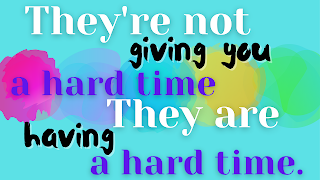
 Behavior. Say that word to any teacher this school year and you will get a multitude of responses and emotions including hands thrown up in the air, eye rolls, shaken heads, and sighs of frustration, disappointment, and discouragement.

How many of us are feeling the effects of Covid in our classrooms? Every. Single. One of us. And it isn't their fault - it seems we pressed the "pause" button on child development in March of 2020. You have probably seen the meme about the last time our fourth graders had a normal school year - they were in FIRST grade. Our second graders have NEVER had a normal school year. Once back from Remote Learning students came back into schools that tried to make them sit in desks, work in groups, walk in lines, be present, focused, on task, be around other children, with or without masks, and expect no differences.  Our students have been impacted by all of this in ways we cannot possibly understand. We can understand what we understand, but we need to understand we will never truly understand. We are not children who have been through what our children have been through. 


Students who have never been in a school before. Students who don't know how to lock the door on the bathrooms because they have never been in a public restroom. Students who don't know how to line up, even after 3 months of being in school. Students who don't know how to be around other children or in large groups, or work in a small group. We have probably all seen or know someone who has seen students tearing things off walls, throwing chairs, running out of classrooms, screaming, arguing, or just falling apart.  

They are trying to tell us something. Maybe we need to


That means we have more opportunities to show consistent and positive kindness and love, to set consistent and positive boundaries, to figure out how to love on those "prickly" kids, and to help our students be their best selves. 


It also means to expect the unexpected.

With the winter break it is now time for a Behavior Reboot in 2022.

With each class:

  • Before the class even comes in - are YOU ready? Are your materials close at hand, do you have a backup plan in case the lesson goes sideways? Do you have some pocket songs or books nearby you can sing or read in case that is what the class needs?
  • Are YOU centered and focused? I find that closing the door before the children come in the room and taking a 30 second inventory - closing my eyes, taking 3 deep breaths, setting an intention of positivity, care, and kindness, helps me enormously to feel grounded. 
  • Are YOU prepared to meet the children where they are? If they come in hyped up on sugar are you ready to do the Seven Jumps dance (my next post will be on how I use this dance - it's not the traditional one) or something else to get the wiggles out?  This helps in leading them down the path to where we need for them to be. Doing so is purposeful yet playful, and encourages relational teaching and builds community.
    Enforcing immediate compliance without time to transition into your class is similar to a prison guard trying to re-establish control during a prison riot and can lead to you and the students being at odds.
  • Set clear expectations and boundaries. Then set them again. And again. KEEP those lines drawn. What I say is what I mean and what I mean is what I say. The consequence may be different for different children and that is OK- fair and equal are not the same.  Part of this is knowing your students and being relational. A child who is trying to get away with behavior is not the same as a child who is acting out of anger or frustration. A child with mental health challenges is not the same as a child who is sneaky and manipulative.
  • What is your lesson flow or structure? Children, like adults, thrive with routine and structure. That doesn't mean there is rigidity and inflexibility. Here are some ideas for the first 5 minutes of class. Here are some ideas for the last 5 minutes of class or for when you need an additional quick activity. 
  • When difficult behaviors happen, don't get in a power struggle. Just don't. It doesn't work for you OR the child.
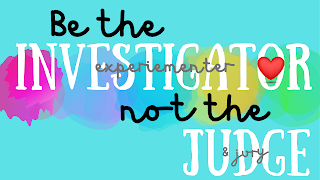
  • Be the investigator - what does this student need? Do they need a chance to feel successful? Do they need to be a helper and turn lights on or off or get things for you in the classroom? Do they need a time out or a time in? Are they overstimulated - Do they need a quick trip to get a drink of water/go to the bathroom? Do they need a side hug or just to be told they are not in trouble or that you care about them? 
  • Remember we teach children. Say it with me. I teach children. I teach tiny humans. Then say, "I teach tiny humans music."  When teachers say, "I teach music" it takes out the human element. We teach music to children, but we teach children first.  
  • If what you are doing isn't working, put on the investigator/experimenter hat and try something different. Talk to classroom teachers to find out what is working for the class or specific children and try, try again. 
  • Also, it's important to say we as teachers are going through a lot. A LOT. A LOT A LOT A LOT. Take your mental health as important as you would a serious physical illness. Take a walk, do yoga, get a massage, cry, play piano, sing, journal, see a counselor, talk to someone, ask for a hug. DO the things you need to and don't feel you have fall on your sword as a teacher - you matter, your life matters, your health matters. Teaching is not more important than you. Prioritize your health and well being. 
Please know I'm always here for you.
Much affection, best always.


Tuesday, May 29, 2018

The Top 5 Things I Would Tell My First Year Teacher Self

Reflection, self-awareness, consciousness, mindfulness.  We hear these words often, particularly within the educational realm.  Looking back upon my 24 years of teaching, what would I tell my first year teacher self? 

Teaching is a Marathon, Not a Sprint.

You don't have to do it all in one year, or in the first three, or first five years.  For most of us, we don't really "figure out" teaching; content, classroom management, protocols of school, student development, how to deal with those "frequent fliers", political/social/emotional context of school, etc. until about year four or five! 
Create/make/enjoy five lessons and activities that worked well the first year, add five more the next year. Within four years you will have TWENTY slam dunk lessons and activities.  But don't stop changing them - never feel like you are "done" with lessons - always change them to meet the students needs and whatever direction they choose or need to take them.

Get into Orff!

Find a local chapter and get involved in workshops and in the organization.  It will change your teaching and the students learning in a beautiful, musical, artful, creative, and wonder-filled way!  I didn't really know about Orff until year 6 of teaching!  Oh how I wish I had known about it earlier and gotten Levels courses earlier!  Open yourself to all the experiences - your teaching and your students will be drastically changed - for good!

Be Kind, Then Be Kinder.

Be kind to those teachers who call you "green", or treat you as inferior simply because you are new. You have value, ideas, and strengths to contribute. Be kind to those who come over to slam your door or complain because they placed you next to the reading teacher and she can hear your music. Be kind to the front office staff, the school secretary, cafeteria workers, bus drivers, and the janitors.Their jobs are hard and full of juggling and discouragement.  Be kind and then be kinder to students - they are little and someone loves them- yes, even the ones who frustrate and annoy you to beyond the world's end - they are someone's sweetheart, and sadly, if they are not, YOU need to find a way to love on them.

Love the Cactus Kids.

Prickly, sticky, mean, grumpy, dirty, matted, annoying, frustrating.  Describe any of your students?  These are the kids who need you the most- not the perfect singer or dancer, not the kid who can rap like crazy and throw down "beats". The ones who you know are not getting enough - food, shelter, hugs, warmth, affection, and yes, love. What the world needs now is love, sweet love - it's not just a song- it is the sad reason many school shootings have happened.  Find a way to make the outcast become part of, not apart from.  Love the unlovable and lead by example. You never know what seeds you are planting. A little kindness goes a long way.

It's OK, Just Breathe.


Your first year will be stressful - reach out to others for help and advice.  There will be very busy times and not so busy times - breathe and ask questions. There is a wonderful network of teachers who are wanting and waiting for you to ask questions.  I started teaching pre-internet (dinosaur era) and now teachers have access to thousands of years of experience via facebook and online groups for music teachers. I wish I had spent more time asking what I felt were "stupid questions".  Suck up your pride and ask.  Stay balanced with a healthy amount of school time and maintain your other "you" - continue to read historical fiction, make jewelry, go antiquing, take walks, perform, etc. Your identity as "music teacher" is not your only identity.


Tuesday, May 1, 2018

Games to Play Outside (Or In) FUN!!!

Singing games are so much fun and there are so many fun games that work inside as well as out!
Here are a few of my favorite:


One, Two, Three O'Leary/One, Two, Three a Learie

This song is often cited as Irish, although it was first collected in California as an Anglo-American playground game, see Sail Away book, page 24.
There are several versions and ways to play.  My favorite way to play is version 2 (see songs below) and can be found here:
 Here is a different view:


Hope you enjoy all of these and get outside (or stay in and have some fun)!

Thursday, July 6, 2017

How to Teach and Not Lose Your Mind


At times teaching music can be particularly overwhelming. Duh, you say. At times you may feel like that poor spud; coming apart at the seams. Oh YES, you say.
Like the beginning of the year when you have hundreds of children's names to learn, or the first concert of the year, or how to deal with all those IEP's or behavior plans.  Or holiday concerts; sacred versus secular, or how about recapturing their attention after the holiday break, or what about that one class that consistently misbehaves? And how to integrate technology in a meaningful way?   Time management, how do you balance it all?  Or how about keeping up with whatever new educational trend your leaders are encouraging/mandating?  Project Based Learning, technology integration, differentiation, relational teaching, integration, Maker Space activities, Assessment Models, Gamification, Flipped Classrooms, Autonomous Learning Model, Brain Based Education, and more! 

Which can lead us to all feeling like this:
 
See the horse on the top, yes, at times that is me.  Although with a bit more of bottom horse's eye roll and neck twist. 
Is your head feeling like an overfilled balloon? Is it going to explode or simply take off on a five year trip to Mars?  Deep breath.  Music teaching (without losing your mind), really filters down to two BIG ideas. PAB and Tightrope walking.  Yup, really.
PAB:  Plan, Anticipate, Be (Prepared).  I'll go over that in just a minute.  Let's get to the one you are scratching your head over first. 
Let me ask you, tightrope walkers, what do they do?  If you answered eat or drink nothing for an hour before a performance you are probably right, but we are not talking about that.  BALANCE!!  Read on...
 

1.  Plan, Anticipate, Be Prepared

Plan

Many successful, happy teachers will tell you it's all in the planning.  Organize and plan your scope and sequence for the year, anticipate the problem areas in the lessons, and be prepared to adjust. I know teachers who have a complete specific plan for the year, but snafus happen with snow days, field trips and those lovely, last-minute assemblies or pep rallies.  Hip hip hooray! 
What skills, concepts, and behaviors will be studied each month?  I have lists of songs along with musical elements and select ones that will work together.  At the beginning of each month, and then each week, I plan more specifically. This allows for adjustments to be made without throwing off (and out) the complete scope and skill sequence for the year.
Plan how you are going to organize your materials and files; everything digitally, a mix of digital and written, files organized by theme, grade level, month, etc.  Sometimes these evolve over time and there is no "One Size Fits All".  Everyone has their own system that works for them and sometimes they need BIG overhauls; plan for what works for your strengths and situation.
Plan to be involved in your school; frequency, length of time, etc. This is a BIG one folks; plan for balance between home and school.  Will you work an extra hour on that program after school in order to avoid bringing it home?  My rule is always "Family First".  My family, and my daughter who is in elementary school, come first before anything else, hard and fast rule and NO apologies about it.  Plan ahead to understand the IEP's or behavioral issues, plan for consequences when students misbehave, plan for the bad days; they will happen.  If your school follows a specific educational model, engages in a behavioral idea, or uses technology 1:1, plan for how YOU are going to use it in the music classroom. 

Anticipate

Anticipate not only the lesson (what might they struggle with) but for the time when your principal walks in with visitors and the superintendent and wants your "elevator speech" (quick 5-7 sentences, 1-2 minutes) about music education. Anticipate that there will be days when a parent might give you a dressing down in the hallway, or send you a nasty email about how you treated their child.  Anticipate that the copier might not be working today, or that the secretary forgot to order post-it notes, or that your paperwork request for _____ got lost.  Breathe, smile, force your face to relax (be mindful of wrinkles, dear), and move ahead.  The world will not end, I promise.

Be Prepared

As you anticipated, you also were probably thinking, "If that happened, I would do _____".  Be prepared to follow through on your plan of action, whatever it may be.  Be prepared when the classroom teacher is 5 minutes late picking up their class. Oh, that never happens?  Lucky you!  Here is a blog post about ideas and activities for just those times.
Be prepared when the classroom teacher drops them off and says, "Have fun singing!".  Instead of knee-jerking to let them know there is more to music than singing and going into a long explanation about Italian dominant 7th chords, say, "Thank you, we are going to be making some fabulous music, can you come back a minute or two before the end so the children can share with you?".
Make sure that your attitude is prepared also; "Choose your 'tude".  You have the power to make it a lousy day, and to crawl home feeling like a worm, or to have a little cry, pick yourself up, slap on some lip gloss, and sing "Let It Go" at fff!   
 
A friend once told me to think of teaching as a marathon:  The good stuff doesn't happen all at once. 
A moral of a race between a rabbit and a turtle:  Slow and steady wins the race.
Sometimes you just need to give it time.


2.  Balance

When I first started teaching I gave ALL my energy to the students. I quickly found I had no energy left for anything else. I still struggle with this as I really love what I do.  As my sister says, "Everything in moderation including moderation".   That is not to say I don't give my all every day, I do, just as there are moments I have to give 110%,.  But I also have had to learn to pace my energy levels for each class and not to jump/dance/move with the kids for every lesson when there are 6 classes all doing the same thing that day!  Although it is a fabulous workout and gets my workout out of the way, I just end up hot, sweaty, and tired by lunch!
I have taught for 24 years and in that time I have had some major life changes; cancer, 14 surgeries, moving from Maine to North Carolina, marriage, adopting from China, 6 more surgeries, knee issues, presenting at workshops and conferences, publishing my first and second books and now working on third and fourth.  Oh, and blogging.  All of these things were filled with many emotions and all of these were time consuming.  I didn't fall into a black hole in the sense they consumed my whole life, but I was able to have balance through most of these life events.
Teaching music is different from many other educational fields in that our jobs are often 24/7; music is pervasive. Whenever we go to a concert//listen to music/go shopping we are analyzing the music and looking to see if that ____ (book, bowl, ball, etc., fill in the blank) can be used in our classroom.  Most of us perform in an ensemble or as a soloist outside of school, and music is as much a part of our lives as breathing.
A teacher friend once said, "School is school and home is home".  Define in your mind where that line is drawn.  Try to NOT work on school outside of school.  I know... easier said than done. 
When I began this blog it was an extension of teaching music, but it's not school related. I happen to enjoy writing music and sharing lessons and ideas, so while it is music education related, it is not school related and it is something I enjoy greatly! This brings balance to my life.
I also exercise, hike, draw, sew, craft, bake, and ensure that my weekends and summers are not filled with school stuff; I have found I need summers and weekends "OFF".  That means while I enjoy children, I do not teach Sunday school at church or summer camps at my school.  I indulge in binge watching Orphan Black or Odd Mom Out, read books that are not about education, usually Dean Koontz or thrillers, travel, hike, watch movies, and enjoy my family. 
Find other things you enjoy and ways to become involved in those activities; recharge your batteries and leave some energy in reserve at the end of your teaching day so you can find your balance and be
.
Have a wonderful week!