Saturday, February 12, 2022

2-22-2022!

 An auspicious day to be sure - February 22nd, 2022, 2-22-2022 is also happening on a TUEsday!  


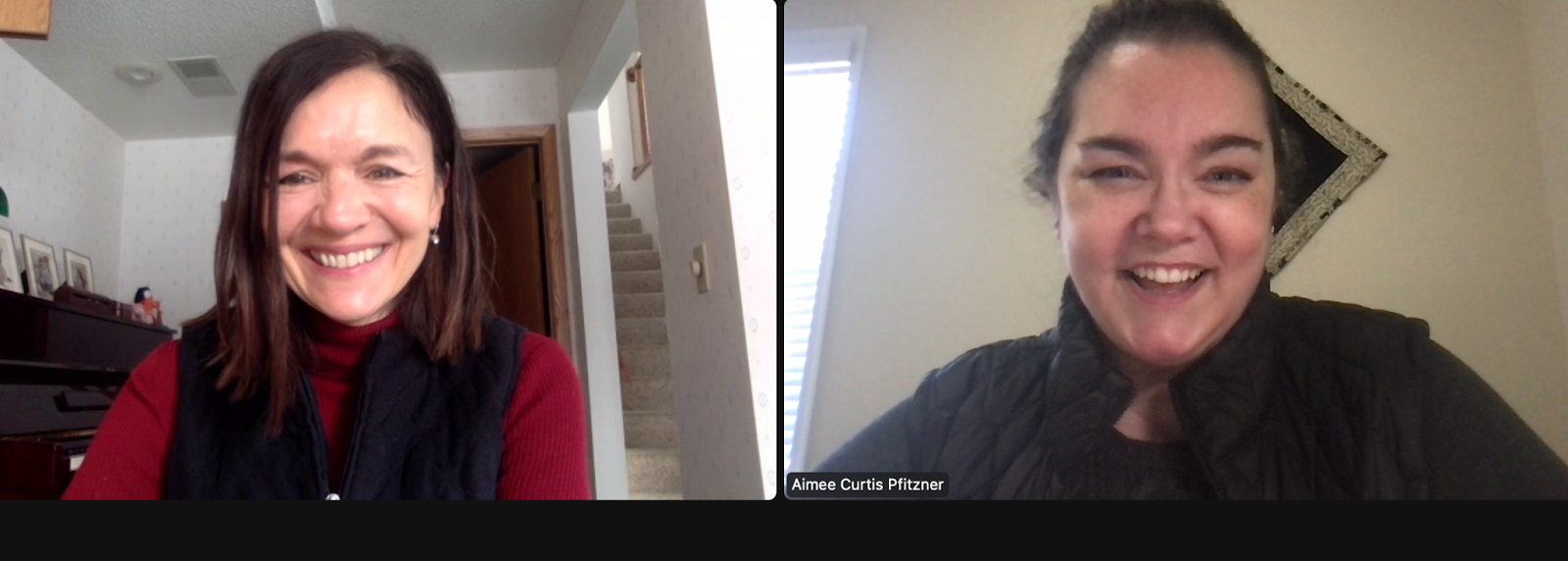
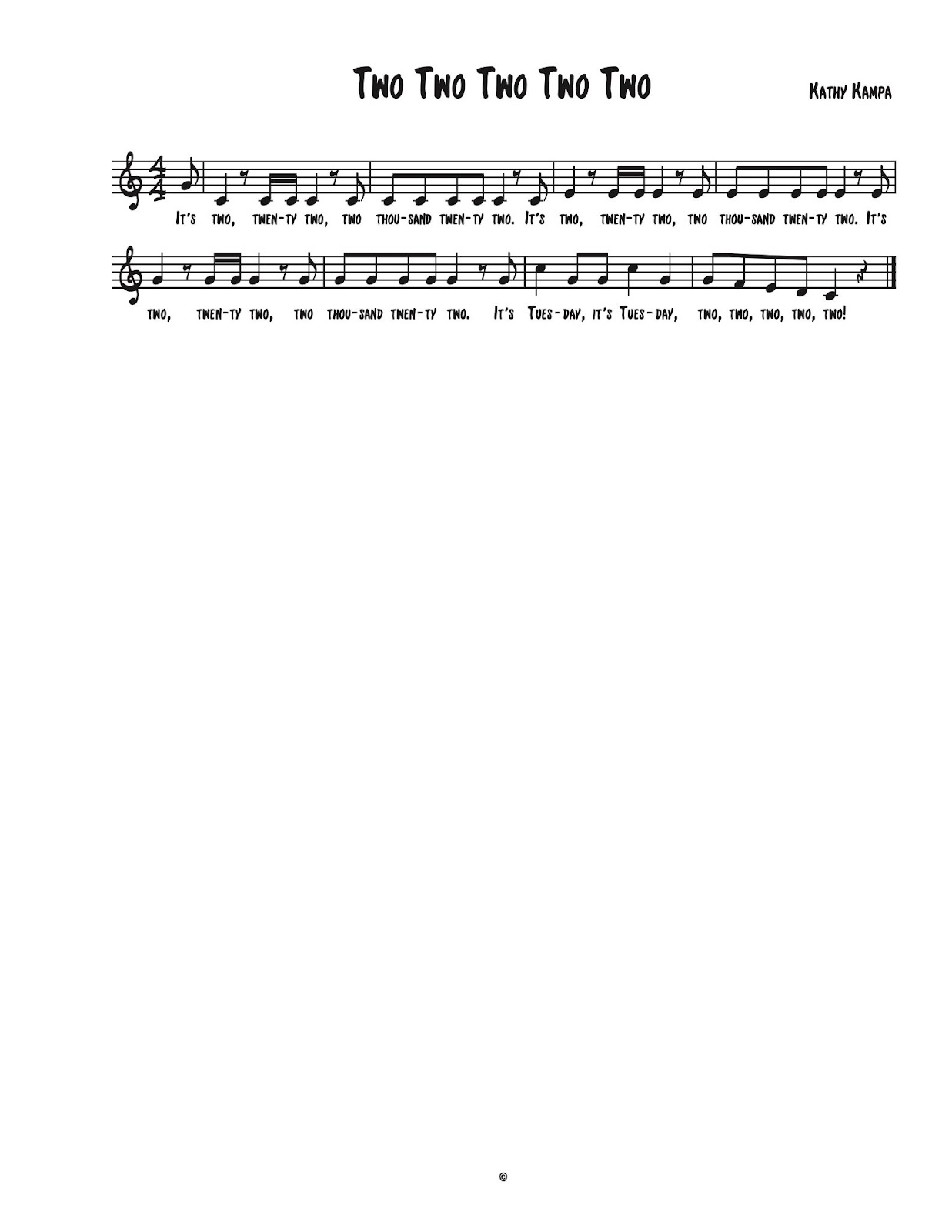
One of the most wonderful things that has come from the pandemic are some amazing friendships forged online. Kathy was teaching in Japan when we met and we have chatted many times about collaborating as we both love playful music making.  Kathy wrote this fun song to celebrate the occasion.  Many thanks to her for sharing it! Here are Kathy and I zooming Saturday!


Kathy's bio:
Kathleen Kampa specializes in working with young learners. As a PYP (Primary Years Program) teacher, she uses an inquiry-based approach to teaching through which students develop global skills. Kathleen strives to help all students feel supported, balanced, and successful in the classroom. She supports the development of English language skills by creating songs, chants, and movement activities targeted to young learners' overall needs.
 
Kathleen and her husband Charles Vilina are co-authors of Beehive, Magic Time, Everybody Up, and the ELTon award-winning course Oxford Discover, published by Oxford University Press.  Kathleen's two CDs for young learners, Kathy Kampa's Special Days and Holidays and Jump Jump Everyone, build English language skills through music and movement while nurturing creativity and imagination.

This song would be perfect to have 2-3 small groups create 4 or 8-beat body percussion ostinato patterns to accompany the song!  You might want to wear your tutu or have a dance party with your class at 2:22 PM! 


Here is the song with a bordun pattern and percussive ostinato that could be adapted for body percussion or instruments.

Hope you enjoy it! 


Friday, February 4, 2022

Mini Workshop with James Allen

 Friends, I am so excited about this mini-workshop! James is an amazing music teacher and drummer and recently presented at the AOSA Conference.  When I saw his presentation I was awed at how masterfully and beautifully he taught - I can't wait for you to have some fun with him Monday! As always, for those who can't make it live, the mini-workshop will be recorded and posted within 24 hours. 

All for about the price of a cup of coffee!

https://www.patreon.com/Aimee_ofortunaorff?fan_landing=true


Friday, January 28, 2022

Chinese Rowing Song


The Chinese Folk Song Project is a collection of popular Chinese children's songs, nursery rhymes, games, and folk songs formatted for English speakers. It is intended to be a resource for English-speaking music teachers to teach their students Chinese songs in a culturally responsive way. This project is made possible with the support of the Confucius Institute in Edmonton, Canada.

The songs often have a video, have audio files with pronunciation guide and a recording of song being sung, as well as and is presented with Pinyin, English, and Chinese text as well as Western music notation. 

I follow the wonderful Moriah of holmessweetmusichome on instagram and she recently shared the song 

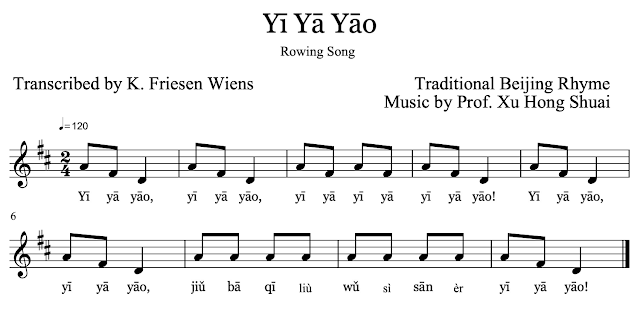
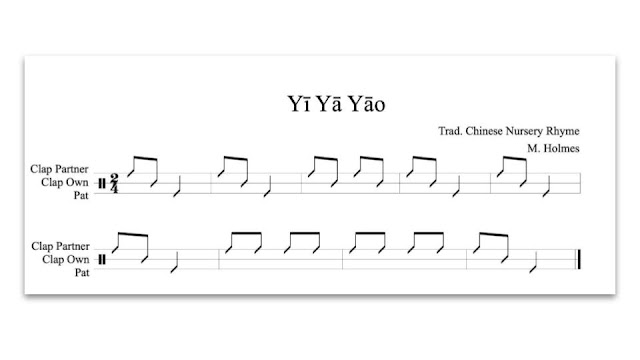
Yī Yā Yāo (Rowing Song).  This is a traditional Chinese nursery rhyme, the melody added by Xu Hong Shuai. Click here to see additional information on the Rowing Song from the Chinese Folk Song Project. 


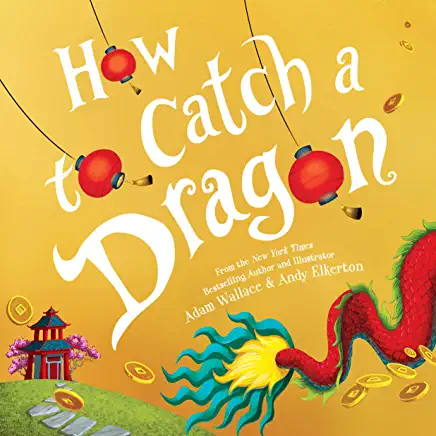
Moriah paired the song with the book, How to Catch a Dragon by Adam Wallace, illustrated by Andy Elkerton. 

The rowing rhyme and song would be used to help rowers stay in rhythm to row a dragon boat across water. At the end of the song, we countdown and sing the numbers 9-1. In the book, the children are working together as a team to catch the dragon. Moriah sang the song and added a clapping game every few pages in the book to help encourage the children to work together to catch the dragon.


Use this song to work on home tone or low do, or decode this on barred instruments. Students could also create ostinati or their own clapping patterns to accompany the song.

Enjoy!


Wednesday, January 26, 2022

Teaching Melody and Melodic Contour

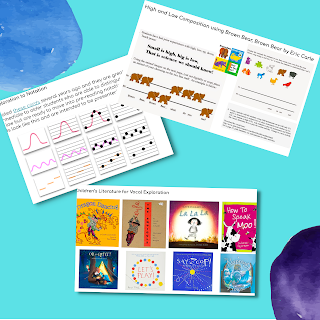
On a recent poll, music teachers were asked what they struggle the most with and melody and melodic contour was the top answer. So, I spent my morning while home sick with Covid, yup, it has finally arrived - gave it my best shot - 3 in fact, but it hit my family this week and you know me, I can't sit still. I have been working on this for a while and this is a Patreon exclusive.  This is a 24-page mini-book available for less than the cost of Starbucks. You also get access to everything already posted there and I continue to add new material weekly. There are monthly mini-workshops and opportunities to work with me 1:1 to delve deeper into organization, lesson planning, behavior management, or anything else you might be interested in. 

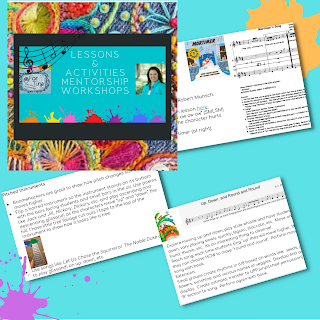
So, this mini-book includes lessons, activities, and ideas about teaching Melody and Melodic Contour. There are twelve children's books listed with several lessons from my Playful Possibilities and Painted Music books. Ideas on using manipulatives, songs, games, and instruments and many other things are part of the mini-book.

Check it out today, click here.

Here is a sampling:


Enjoy,


Tuesday, January 25, 2022

The Dumpling Song


Our daughter was born in China and so our family is Chinese American. We have tried to honor her culture and ensure she is involved in her culture and surrounded by people who look like her. Not always easy or comfortable, but it shouldn't be, right? SO incredibly important, and it has helped me understand on a deep level that representation matters. 
My daughter loves noodles; specifically, rice noodles. And dumplings. And rice. And more noodles. Last year we bought her a shirt that said, "This girl lives on Anime and noodles".  It was spot on! 
I don't remember where I first heard this dumpling song but when my daughter was little and we were making dumplings I learned it and then promptly forgot about it.  Fast forward to last year when I fell in love with the wonderful Miss Katie on instagram. She reminds me so much of Mr. Rogers and so thoughtfully and lovingly talks about difficult topics with littles. She works with preschool aged children and you can see how much she cares and spreads love and joy. 
Here is her video on the Dumpling Song:

Simple version, this one is so cute as it is Katie doing this with her 

Chao ji dan, chao ji dan, chao, chao, chao. (Fry the egg.)
Qie luo bo, qie luo bo, qie, qie, qie.  (Cut the carrots/radishes.)
Bao jiao zi, bao jiao zi, nie, nie, nie. (Wrap dumplings, pinch.)

包饺子(bāo jiǎozi) – Making Dumplings from echineselearning.

This is an other version -  (Mandarin Chinese - pinyin on top, Chinese characters in the middle, and English on the bottom):

Chǎo luóbo, chǎo luóbo, qiē qiē qiē, mǒ diǎn yóu, sǎ diǎn yán, huó  diǎn xiàn.
炒       萝卜,炒     萝卜,切  切  切,抹   点    油, 撒  点    盐,和     点    馅。
Stir-fry the carrots, stir-fry the carrots, and chop them up. Then add some oil and salt to make the stuffing.

Bāo jiǎozi, bāo jiǎozi, gǎn gǎn pí, gǎn hǎo miànpí zhuāng hǎo xiàn, bāo jiǎozi.
包    饺子,包   饺子,擀   擀   皮,擀  好     面皮     装       好   馅,  包   饺子。
Make dumplings, make dumplings. We roll the dough into the pieces. After that, we put the stuffing in to make the dumplings.

Bāo jiǎozi, bāo jiǎozi,  niē niē niē, fàng jìn guōlǐ gài gàizi,  zhǔ jiǎozi.
包    饺子,包   饺子,捏  捏  捏,放    进  锅里  盖  盖子,煮  饺子。
Make dumplings, make dumplings. Pinch them shut then put them into the pot. Close the lid and boil the dumplings.

Boil the dumplings, boil the dumplings. They smell good. Get everything ready to serve the dumplings and enjoy.Zhǔ jiǎozi, zhǔ jiǎozi, xiānɡ pēnpēn, duān shànɡ jiǎozi bèi hǎo liào, chī jiǎozi.
煮    饺子,煮  饺子,香     喷喷,     端      上     饺子  备   好   料,吃   饺子。


Pair this with Children's Literature:


Friday, December 31, 2021

Behavior Reboot

 Behavior. Say that word to any teacher this school year and you will get a multitude of responses and emotions including hands thrown up in the air, eye rolls, shaken heads, and sighs of frustration, disappointment, and discouragement.

How many of us are feeling the effects of Covid in our classrooms? Every. Single. One of us. And it isn't their fault - it seems we pressed the "pause" button on child development in March of 2020. You have probably seen the meme about the last time our fourth graders had a normal school year - they were in FIRST grade. Our second graders have NEVER had a normal school year. Once back from Remote Learning students came back into schools that tried to make them sit in desks, work in groups, walk in lines, be present, focused, on task, be around other children, with or without masks, and expect no differences.  Our students have been impacted by all of this in ways we cannot possibly understand. We can understand what we understand, but we need to understand we will never truly understand. We are not children who have been through what our children have been through. 
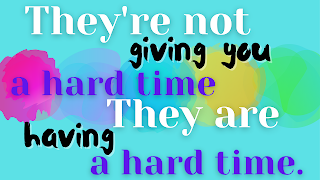


Students who have never been in a school before. Students who don't know how to lock the door on the bathrooms because they have never been in a public restroom. Students who don't know how to line up, even after 3 months of being in school. Students who don't know how to be around other children or in large groups, or work in a small group. We have probably all seen or know someone who has seen students tearing things off walls, throwing chairs, running out of classrooms, screaming, arguing, or just falling apart.  

They are trying to tell us something. Maybe we need to


That means we have more opportunities to show consistent and positive kindness and love, to set consistent and positive boundaries, to figure out how to love on those "prickly" kids, and to help our students be their best selves. 


It also means to expect the unexpected.

With the winter break it is now time for a Behavior Reboot in 2022.

With each class:

  • Before the class even comes in - are YOU ready? Are your materials close at hand, do you have a backup plan in case the lesson goes sideways? Do you have some pocket songs or books nearby you can sing or read in case that is what the class needs?
  • Are YOU centered and focused? I find that closing the door before the children come in the room and taking a 30 second inventory - closing my eyes, taking 3 deep breaths, setting an intention of positivity, care, and kindness, helps me enormously to feel grounded. 
  • Are YOU prepared to meet the children where they are? If they come in hyped up on sugar are you ready to do the Seven Jumps dance (my next post will be on how I use this dance - it's not the traditional one) or something else to get the wiggles out?  This helps in leading them down the path to where we need for them to be. Doing so is purposeful yet playful, and encourages relational teaching and builds community.
    Enforcing immediate compliance without time to transition into your class is similar to a prison guard trying to re-establish control during a prison riot and can lead to you and the students being at odds.
  • Set clear expectations and boundaries. Then set them again. And again. KEEP those lines drawn. What I say is what I mean and what I mean is what I say. The consequence may be different for different children and that is OK- fair and equal are not the same.  Part of this is knowing your students and being relational. A child who is trying to get away with behavior is not the same as a child who is acting out of anger or frustration. A child with mental health challenges is not the same as a child who is sneaky and manipulative.
  • What is your lesson flow or structure? Children, like adults, thrive with routine and structure. That doesn't mean there is rigidity and inflexibility. Here are some ideas for the first 5 minutes of class. Here are some ideas for the last 5 minutes of class or for when you need an additional quick activity. 
  • When difficult behaviors happen, don't get in a power struggle. Just don't. It doesn't work for you OR the child.
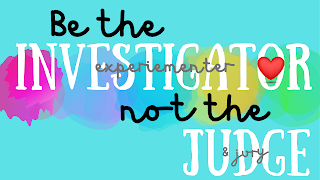
  • Be the investigator - what does this student need? Do they need a chance to feel successful? Do they need to be a helper and turn lights on or off or get things for you in the classroom? Do they need a time out or a time in? Are they overstimulated - Do they need a quick trip to get a drink of water/go to the bathroom? Do they need a side hug or just to be told they are not in trouble or that you care about them? 
  • Remember we teach children. Say it with me. I teach children. I teach tiny humans. Then say, "I teach tiny humans music."  When teachers say, "I teach music" it takes out the human element. We teach music to children, but we teach children first.  
  • If what you are doing isn't working, put on the investigator/experimenter hat and try something different. Talk to classroom teachers to find out what is working for the class or specific children and try, try again. 
  • Also, it's important to say we as teachers are going through a lot. A LOT. A LOT A LOT A LOT. Take your mental health as important as you would a serious physical illness. Take a walk, do yoga, get a massage, cry, play piano, sing, journal, see a counselor, talk to someone, ask for a hug. DO the things you need to and don't feel you have fall on your sword as a teacher - you matter, your life matters, your health matters. Teaching is not more important than you. Prioritize your health and well being. 
Please know I'm always here for you.
Much affection, best always.


Friday, November 26, 2021

Candy! Candy! Rondo

 December is a month full of holidays and is a perfect month to talk about sugar! 

This is an International Candy Rondo idea focusing on first American candies and then involving the students in an exploration of international candies. Thanks to my friend Tammy for creating this idea- she created this as a Project-Based Learning activity with her students so you could easily have your students research a cultures candy and/or treats. 

Click here to make a copy of the google slides. 


Enjoy!