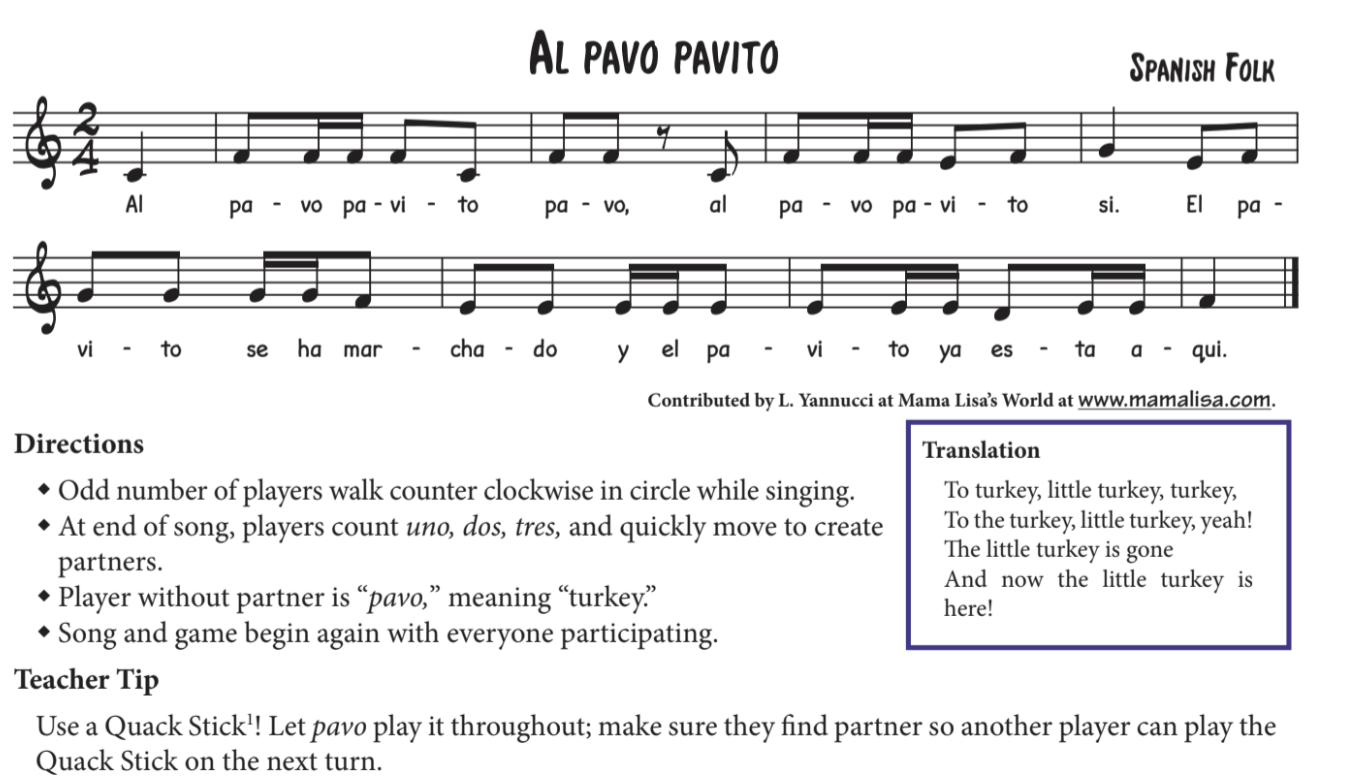
I love using In the Hall of the Mountain King but with little ones I do this activity. It is a fun activity using locomotor movement and a modified melody.
Older Students
If you have the book, In the Hall of the Mountain King, I start this lesson by reading the book.
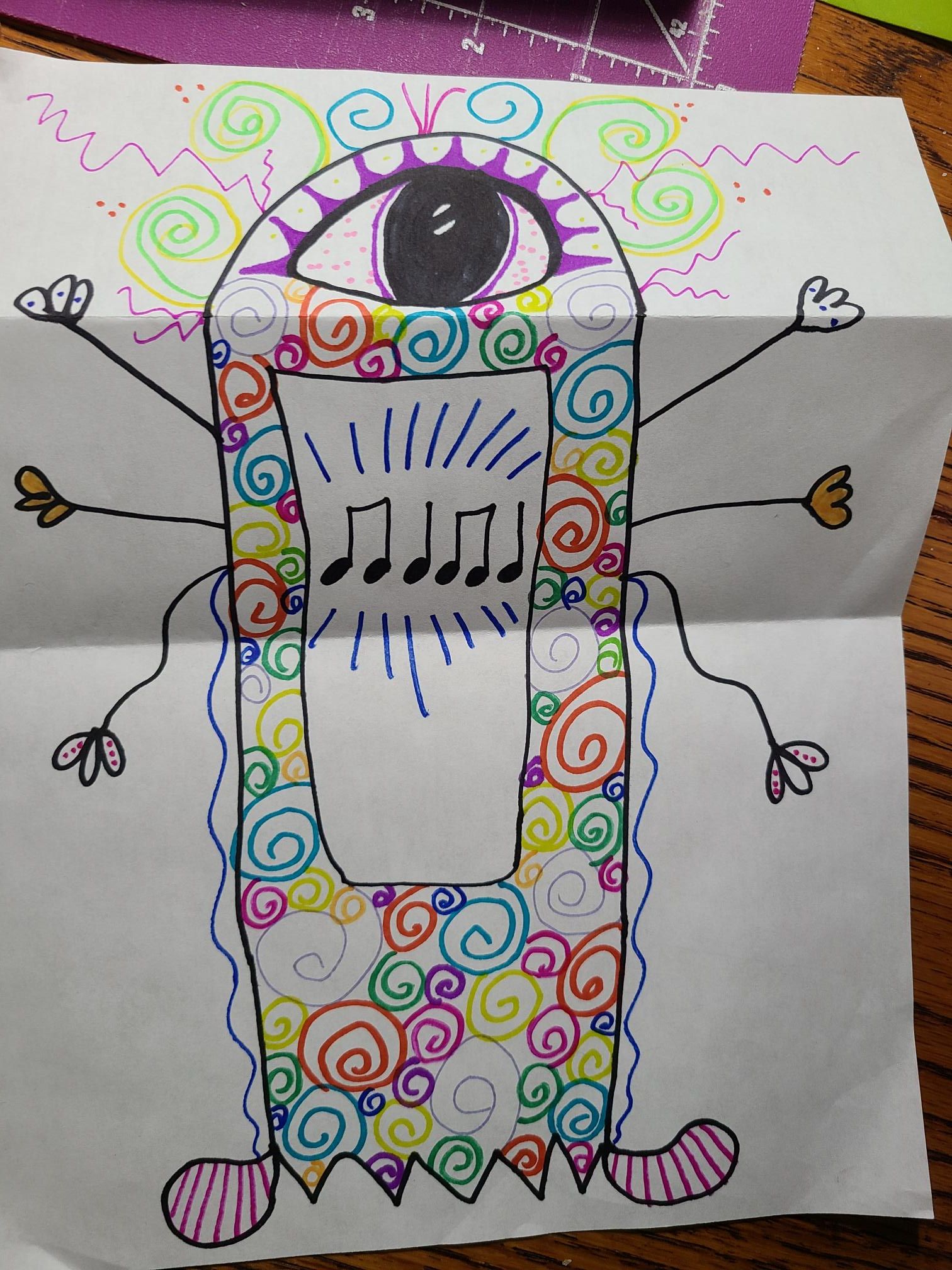
Create Music "Trolls" or "Troll Kings" or "Monsters":
Here is my example:
Step by step directions:
Some of my students creations:
Next, we learn this speech piece and perform it by opening the monster (high), closing it (low), turning around for "monster everywhere" and moving it side to side quickly for "fast" and slow for "slow", then running in place for "go go go".
Then we perform the speech piece with the book, Monster Trouble, every 3-4 pages. SO MUCH FUN!
If you have been on my blog before, you know my love of cute, adorable monsters!
I have so many monster books, as you can see here!
Monster's Don't Eat Broccoli is a very cute book with a visual "twist" at the end. The kids love the illustrations and they always make me giggle, too!
I have several ways I use this book in the music room, here are two:
Song with Book:
Read book, sing song every time "Fum, Foe, Fie, Fee" appear.
Improvisation:
Print the 2-beat vegetable building blocks found here. Here are a few to show what they look like:
Small groups create elemental forms using ABAB (each letter is one 2-beat building brick), ABBA, AABB, AAAB, or ABCA. Practice performing with body percussion, transfer to barred instruments set up in C pentatonic.
Could be performed in rondo form:
A: Song
B: Group 1 performs improvisation using their 16-beat rhythm.
A: Song
C: Group 2 performs improvisation
Etc.
Rhythmic Speech and Body Percussion
Here are a few slides to show what this looks like. Click here for the link.
I enjoy the costumes, trick or treating, and the silly, playful fun of Halloween. I have leaned more towards monsters in the past several years as they aren't really Halloween and can be use any time of year.
On my Patreon site there are SEVERAL posts using children's lit, songs, games, speech pieces, solo singing activities, etc. This is one recent massive post, with 3 embedded videos! Here is a pic of some of the things from that one post:
Por aqui paso un caballo from my Hands to Hands book. The first version is more traditional and played with a partner. Version 2 is for a group of four.
Try this version for a *little* more fun!
En le calle ventricuatro from Hands to Hands.
This lesson on Tito Puente, complete with moveable building blocks using elemental forms is a Patreon exclusive - for less than the cost of your monthly coffee - resources, webinars, children's literature resources, videos, etc. More and more is added every month - come join the community!
Hope you enjoy all of these! Happy Hispanic and LatinX Heritage Month!
So many lovely songs to sing, books to read, and games to play! I always struggle this time of year to celebrate Hispanic Heritage Month, starting September 15, the Chinese holiday Mid-Autumn Moon Festival September 21st, fall, and Halloween.
So let's start with Hispanic Heritage Month! My next post will be about Mid-Autumn Moon Festival.
Hispanic Heritage Month, September 15-October 15
Songs
Click this link to make a copy of the Google Slides with 8 songs.
Sol solecito - check it out here at my Patreon community. This is a member exclusive.
Children's Literature
The ADL (Anti-Defamation League) has an article of their "must-reads" for this month. Click the picture to go to their site and read a short description and age range for each book on the list.
I created an activity to go with the beautiful Tito Puente book and it's another Patreon exclusive. Check it out here!
Hello, friends - first, an exciting announcement! I have a new community full of music educators who are trying to simplify their planning and grow professionally. I welcome you to come join for exclusive video lessons, activities, organization ideas, children's literature lessons, workshops, and one on one mentoring opportunities. We are going to have so much fun learning and growing with each other!
Diwali is coming soon- November 4. Diwali (orDeepavali as it’s sometimes called) means “row of lights” in Sanskrit. During this festival, people decorate their homes with lights and oil lamps, calleddiyas. The lights and lamps are said to help the Hindu goddess of wealth, Lakshmi, find her way into peoples’ homes, bringing prosperity in the year to come. It is also a celebration of good triumphing evil.Diwali is areligious holiday and festival originating in India. People often think of Diwali as a Hindu festival, but it is also celebrated by Sikhs and Jains. The celebration lasts for five days and marks the start of the Hindu New Year. The exact dates change each year and are determined by the position of the moon but usually fall between October and November.
Check out the Nat Geo page for more interesting facts.
Last year was the first year I incorporated Diwali more fully. I began by talking with some of my families who are Indian. I had some wonderful moms come in and teach me some Dandiya (stick) dances and we created a very simple one for our young students. There is some footwork involved in Dandiya dances but we focus more on performing with the sticks. I also talked with a few of my students who are Indian privately, asking if they wanted to speak or tell us during class about how they celebrated, or if any of them were performing classical Indian dance or song (I have a first grader who takes classical Indian singing lessons!) and invited them to perform.
Book to Begin
This is a lovely book and a perfect introduction to the customs and celebrations. This year I am recording two sisters who are Indian reading the book to show to all my classes.
Diwali, Diwali Song
Then we learned Manju Durairaj's Diwali, Diwali song and sang the chorus together.
Dandiya (Stick) Dance
We created a simple Dandiya dance on the chorus of the song. All movements are to the beat. Facing a partner tap right sticks together, tap left sticks together, tap own sticks to the right, tap own sticks to the left. Step back with one foot and tap sticks behind back, step same foot forward and both stick face right (like windshield wipers) and tap both partners sticks making a # hashtag, then trade places while turning around in a circle. Of course this can be modified but this is what the Moms at school and I came up with.
I would highly recommend wooden sticks - aluminum ones are available from Amazon but my experience is they break far too easily. Rhythm Sticks or dowels could also be used as long as they are the longer ones (12" or so).
Here is a video of Dandiya Dancing.
And an excellent teaching video to show you the footwork and sticking. The first one is just right for beginners and children.
Concert with Indian Instruments, Songs
This is an excellent 30 minute concert made for children from Lincoln Center featuring Grammy nominated artist Falu. I like beginning at 7:47 and end at 15:00 if I am pressed for time as they talk about traditional solfege, then Indian solfege, then sing a song incorporating the solfege.
Sitar and Tabla - played by KIDS!
A fun little video about sitar made for children:
Garba Dancing
My students love to see both the women and the men dancing here - and they love the music!
More Books Featuring India and Indian Characters
The Many Colors of Harpreet Singh - this is a google slide presentation featuring a video of the book, rhythms created from colors, along with discussion points for students about tone color. The end features several Bhangra dance videos.
The Wheels on the Tuk Tuk is sung to the tune of The Wheels on the Bus and is a great introduction to India.
Festival of Colors is just one of the most beautiful books and is about the Indian festival of Holi.
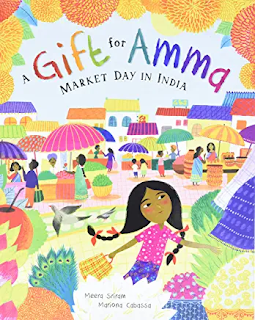
A Gift for Amma follows a girl as she goes through the vibrant rainbow colors of the market trying to find a gift for her mother.
10 Gulab Jamuns is the story of two brothers discovering a sweet treat from India.
Hope you enjoy all of these and Happy Diwali (in November)!