Thursday, September 16, 2021

Hispanic Heritage Month

So many lovely songs to sing, books to read, and games to play!  I always struggle this time of year to celebrate Hispanic Heritage Month, starting September 15, the Chinese holiday Mid-Autumn Moon Festival September 21st, fall, and Halloween. 

So let's start with Hispanic Heritage Month! My next post will be about Mid-Autumn Moon Festival.


Hispanic Heritage Month, September 15-October 15


Songs


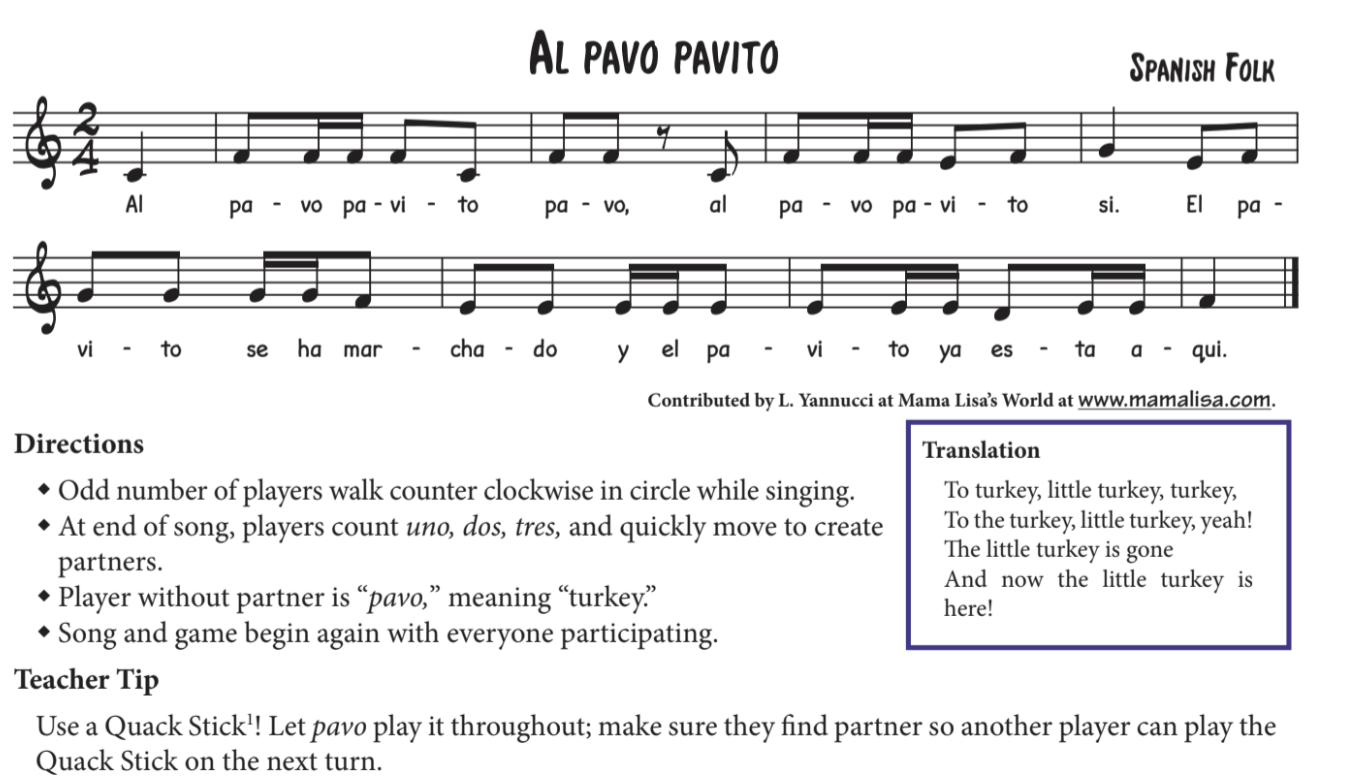
 Click this link to make a copy of the Google Slides with 8 songs. 

Sol solecito - check it out here at my Patreon community. This is a member exclusive. 


Children's Literature 

The ADL (Anti-Defamation League) has an article of their "must-reads" for this month. Click the picture to go to their site and read a short description and age range for each book on the list. 

I created an activity to go with the beautiful Tito Puente book and it's another Patreon exclusive. Check it out here! 


Several other books I love for this month:


Hope you enjoy!


Sunday, September 5, 2021

Diwali!

 Hello, friends - first, an exciting announcement! I have a new community full of music educators who are trying to simplify their planning and grow professionally. I welcome you to come join for exclusive video lessons, activities, organization ideas, children's literature lessons, workshops, and one on one mentoring opportunities. We are going to have so much fun learning and growing with each other! 

Join here!

Diwali is coming soon- November 4. Diwali (or Deepavali as it’s sometimes called) means “row of lights” in Sanskrit. During this festival, people decorate their homes with lights and oil lamps, called diyas.  The lights and lamps are said to help the Hindu goddess of wealth, Lakshmi, find her way into peoples’ homes, bringing prosperity in the year to come. It is also a celebration of good triumphing evil.Diwali is a religious holiday and festival originating in IndiaPeople often think of Diwali as a Hindu festival, but it is also celebrated by Sikhs and Jains. The celebration lasts for five days and marks the start of the Hindu New Year. The exact dates change each year and are determined by the position of the moon but usually fall between October and November. 

Check out the Nat Geo page for more interesting facts. 


Last year was the first year I incorporated Diwali more fully.  I began by talking with some of my families who are Indian. I had some wonderful moms come in and teach me some Dandiya (stick) dances and we created a very simple one for our young students. There is some footwork involved in Dandiya dances but we focus more on performing with the sticks.  I also talked with a few of my students  who are Indian privately, asking if they wanted to speak or tell us during class about how they celebrated, or if any of them were performing classical Indian dance or song (I have a first grader who takes classical Indian singing lessons!) and invited them to perform. 

Book to Begin

This is a lovely book and a perfect introduction to the customs and celebrations.  This year I am recording two sisters who are Indian reading the book to show to all my classes. 


Diwali, Diwali Song

Then we learned Manju Durairaj's Diwali, Diwali song and sang the chorus together. 

Dandiya (Stick) Dance

We created a simple Dandiya dance on the chorus of the song.  All movements are to the beat. Facing a partner tap right sticks together, tap left sticks together, tap own sticks to the right, tap own sticks to the left. Step back with one foot and tap sticks behind back, step same foot forward and both stick face right (like windshield wipers) and tap both partners sticks making a # hashtag, then trade places while turning around in a circle. Of course this can be modified but this is what the Moms at school and I came up with.

I would highly recommend wooden sticks - aluminum ones are available from Amazon but my experience is they break far too easily. Rhythm Sticks or dowels could also be used as long as they are the longer ones (12" or so).


Here is a video of Dandiya Dancing.

And an excellent teaching video to show you the footwork and sticking. The first one is just right for beginners and children.


Concert with Indian Instruments, Songs

This is an excellent 30 minute concert made for children from Lincoln Center featuring Grammy nominated artist Falu. I like beginning at 7:47 and end at 15:00 if I am pressed for time as they talk about traditional solfege, then Indian solfege, then sing a song incorporating the solfege.


Sitar and Tabla - played by KIDS!


A fun little video about sitar made for children:


Garba Dancing

My students love to see both the women and the men dancing here - and they love the music!


More Books Featuring India and Indian Characters

The Many Colors of Harpreet Singh - this is a google slide presentation featuring a video of the book, rhythms created from colors, along with discussion points for students about tone color. The end features several Bhangra dance videos.

The Wheels on the Tuk Tuk is sung to the tune of The Wheels on the Bus and is a great introduction to India.

Festival of Colors is just one of the most beautiful books and is about the Indian festival of Holi.


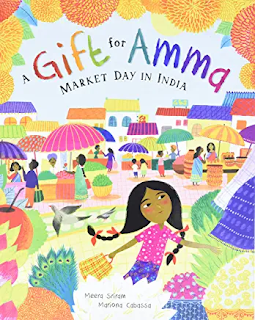
A Gift for Amma follows a girl as she goes through the vibrant rainbow colors of the market trying to find a gift for her mother.

10 Gulab Jamuns is the story of two brothers discovering a sweet treat from India.

Hope you enjoy all of these and Happy Diwali (in November)!


Sunday, August 22, 2021

The Magical Yet book and Lesson

Many thanks to my friend Jeaneau Julian for sharing this lovely lesson she created! 

Don't forget to check out my new Patreon community of music teachers for exclusive content, workshops, and mentoring opportunities.


Click here to download the Google Slides and make a copy. 

There are a couple "pathways" you can use for this- the composed song below or the one from the Volumes (see lesson idea below).  Either way you go, this is a MUST READ book for every child- and adult, too! 


Saturday, August 21, 2021

New Community to Learn and Grow With!

 I am so excited to announce my new community of music makers and teachers!  


If you have spent any time on the blog you know how important sharing is to me. Sharing my creativity and experience in teaching music using the Orff Approach has been gratifying, exciting, and a tremendous honor.  There are a plethora of posts here, on Facebook, and Instagram, and I present at workshops and conferences in the US and Canada.  I also create lesson activities and exclusive playful and process-based lessons and video chats on my Patreon page for the O For Tuna community. 

We are all looking for ideas to streamline and energize our music classrooms. We are all wanting to be the best we can be for our students- more organized, prepared, excited, and to make lesson planning easier. For about the price of a latte mocha once a month, you will connect with other music teachers who are excited to grow and learn together. We will have Zoom discussions, work on lesson planning, develop children's literature into music activities, attend workshops, and much, much, more.  I hope you will consider joining us! Check it out here! 


Thursday, July 29, 2021

Planning for the New School Year - Celebrating Tanabata

 Are you feeling this way-

Yay, school planning should be starting.  Ummm... Covid.. higher numbers, Delta variant, what does that mean for school this year?  Will we be able to sing, play instruments, get back to "normal" or does that mean we will have to continue social distancing, quarantining, masking, no instrument playing?  How do I plan for that?

The short answer- I don't know. The long(er) answer - much depends on CDC recommendations, Governor, state, and local school board decisions. And then there is vaccination issues, and the comfortability of those wanting to mask or unmask. SO many decisions. 

I am making plans as I know my students will be in person and we will be able to do a little singing and will be able to share instruments as long as we are sanitizing hands and cleaning.

I have been enjoying the Olympics, which in turn renewed my interests in learning about Tanabata, a Japanese holiday celebrated on July 7. Although the holiday will be over when we return to school, I am going to be teaching about Tanabata as part of the first few lessons. 

Tanabata

First, share these images: 


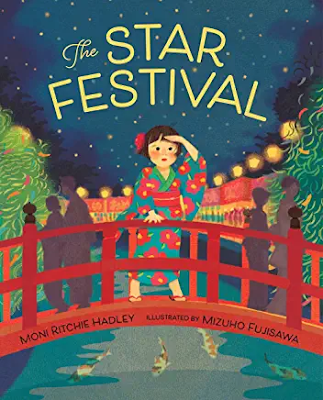
We will chat about the Olympics and events students may have seen or cheered for, then we will talk about the holiday of Tanabata and read this book which shares the story of Tanabata, also called the Star Festival.
For older students, we might make this origami "paper river":

We may also watch this story of the two stars, Orihime and Hikoboshi:
Then we will learn this speech piece and develop the lesson.


Since Tanabata are wishes, we can create wishes for students for the new school year. 

Then we will learn the Tanabata-sama song. Many thanks to Beth from bethsnotes!  Check out the beautiful video! 


Then to further connect culture and knowledge of Japan, here is another book to share about an artist who wants to fill the world with polka dots and a couple further books featuring polka dots! 

Hope you enjoy these ideas!


Sunday, May 23, 2021

Korean Children's Book and Ocean Songs

One of the wonderful things about social media is finding wonderfully inclusive children's literature. JoJos Book Club is one of my favorite pages on instagram. I appreciate the honest and straightforward reviews and have found some really beautiful inclusive books there.  A couple days ago I found The Ocean Calls which is very new- just published in August 2020. Written by Asian American Tino Cho and illustrated by Asian Canadian Jess Snow this is a beautifully told and illustrated story of a South Korean island community of haenyeo - deep-sea divers. Grandma and her fellow divers, all older women, dive without oxygen deep into the ocean to gather abalone, sea urchins, and other treasures. Granddaughter Dayeon wants to be a haenyeo like her "treasure hunting Grandma" but she’s scared. Grandma shows patience as she listens then says, “Can’t you hear what the waves are saying? They’re calling to us to come home.”
The book can be used as a jumping off point to connect culture in so many ways.

Friday, May 21, 2021

Campfire Time!

Campfire Songs! 

A recent social media post asked if camp songs are still culturally relevant. The post challenged me to consider how and why I use "camp" songs and I realized I do use some "camp" songs but the emphasis is on singing around a campfire a wide variety of diverse and inclusive songs and they aren't all considered to be "songs learned at camp."  It is all about the kinds of songs used, not the experience of camping. The post also asked how others use camp songs in their classrooms and this was my response.  

Your post challenged me to think about why I use campfire songs with my students. First, the emphasis is on singing around a campfire (community singing) not about going to summer camp. It simply isn't  discussed and is not the focus. Appropriate, diverse, and inclusive campfire songs are repetitive, easy to learn, playful, memorable, and meaningful.  That does not mean that they are culturally exclusive if done with a lens of using culturally relevant song material (not exclusively American "camp song literature") that acts as a mirror, window, or door. For the last month of school students sing campfire songs that  feature call and response, canons and rounds, expressive singing, instrument play, movement, and ensemble singing. Playful songs from cultures not my own are included that are diverse and inclusive.  Each class on their last day comes in to experience a campfire and we sing around the (pretend) fire.  Some of my students talk about sitting in the backyard with fires, or of building fires while going camping with family and friends, and using fire to celebrate Diwali, Hanukkah, the Persian fire festival (related to Nowruz), and many other holidays and festivities. Many students share how they have sung these memorable songs to siblings and family members and they quickly become multi-generational songs for all to sing.

It is worth noting that campfire songs are made up of folk songs, spirituals, work songs, sea shanties, cumulative songs, call and response songs, fingerplays, movement activities, and often include folk dances and storytelling elements.  


Our ancestors, wherever they were in the world, sang while cleaning animal skins, paddling canoes, pounding grain, hoisting sails, or gathering food.  One person tapped a beat, another sang a melody, and others would join in or add harmony. Often, at the end of the workday, they might have joined around a fire to sing songs about love, family, travel, and hope.  

Singing songs around a campfire leads to ensemble singing, reinforces concepts and skills, and can be celebratory, inclusive, and meaningful.  They can lead to collaborative, enjoyable, memorable, and playful musical moments. It’s not about camping, at least not for me. It is about making memorable and enjoyable music with my students while celebrating the end of a school year.  


My students love this time of playful music making and ending our year in this way keeps the music and laughter flowing. 

A couple years ago I posted on a facebook live for how my campfire is made- here it is- How I Make My Campfire Video

This year it will be about TWICE AS BIG!!! 

Here are pics of how my campfire is made- all materials from Dollar Tree except the wire stands (which are my glockenspiel stands), and the brown construction paper (from school). 


Enjoy!